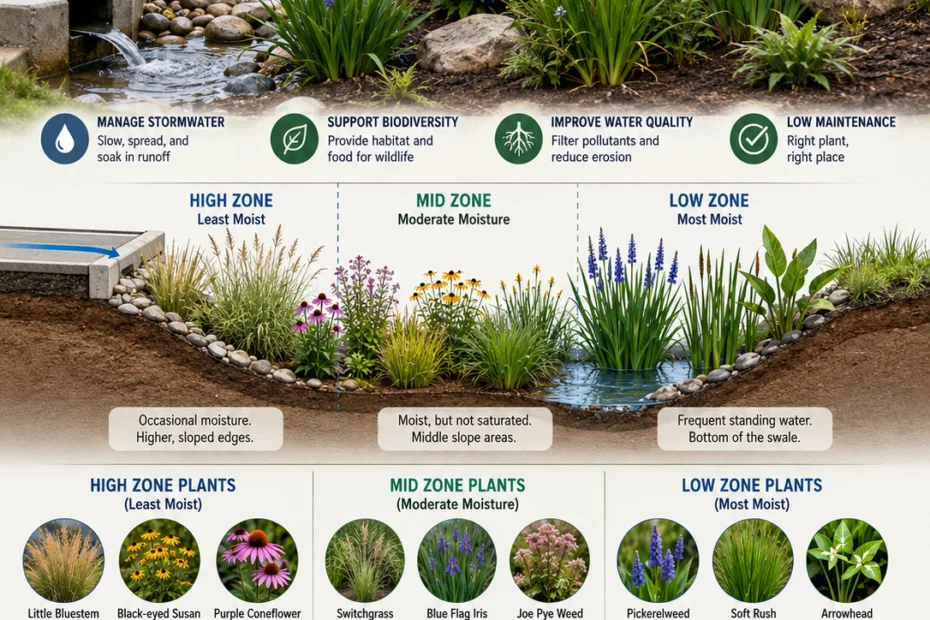
Bioswale Planting Plan: How to Arrange Plants by Moisture Zone
A bioswale planting plan should follow the path of water, not a decorative pattern. Plants that tolerate short periods of ponding belong in the lowest…
A bioswale planting plan should follow the path of water, not a decorative pattern. Plants that tolerate short periods of ponding belong in the lowest…
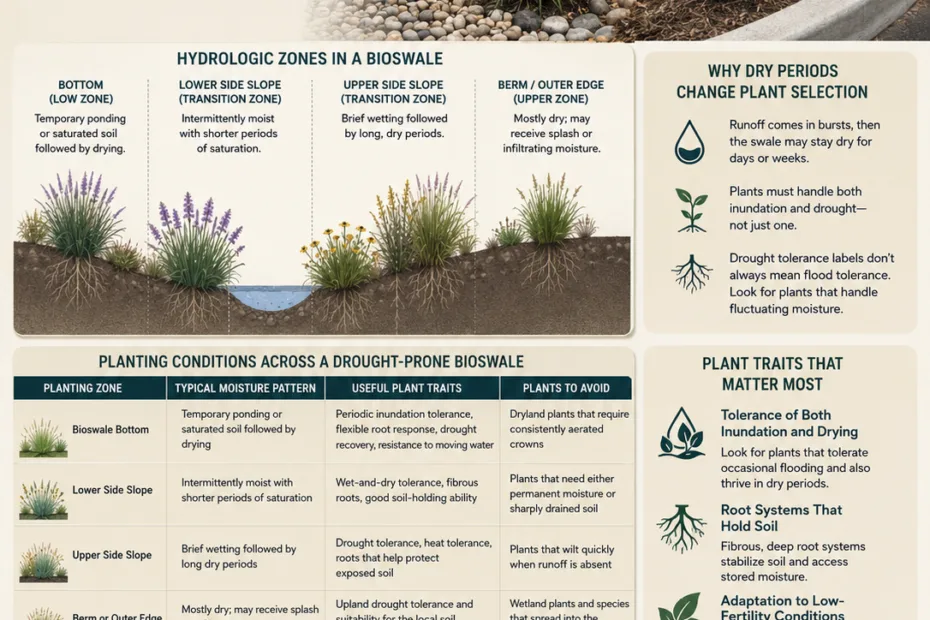
A plant can be drought-tolerant and still fail in a bioswale. The most useful drought-tolerant bioswale plants survive two very different conditions: temporary saturation after…
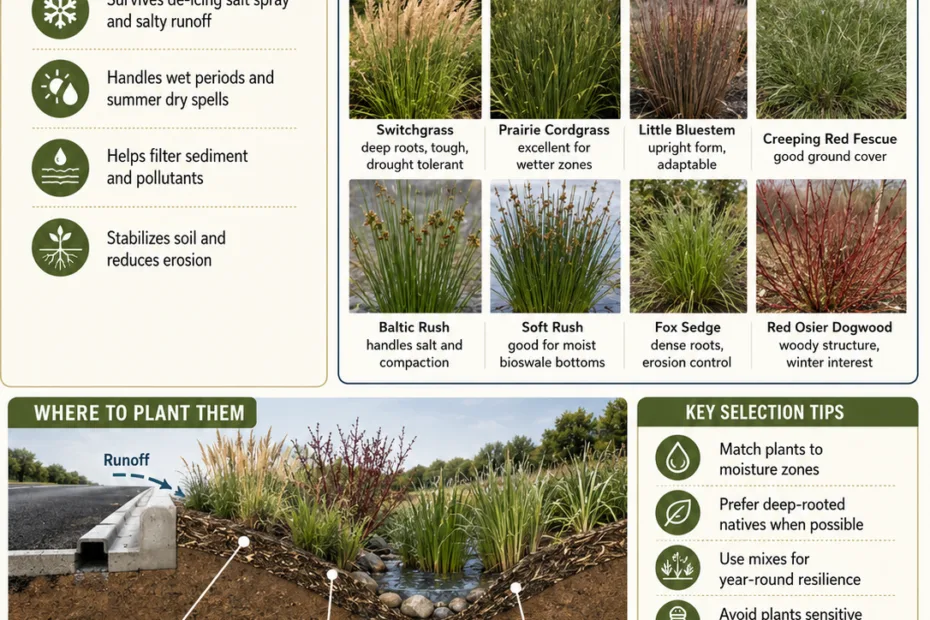
Salt-tolerant plants for roadside bioswales must handle more than salty soil. They may face chloride-rich runoff, salt spray from traffic, sediment deposits, compacted edges, short…
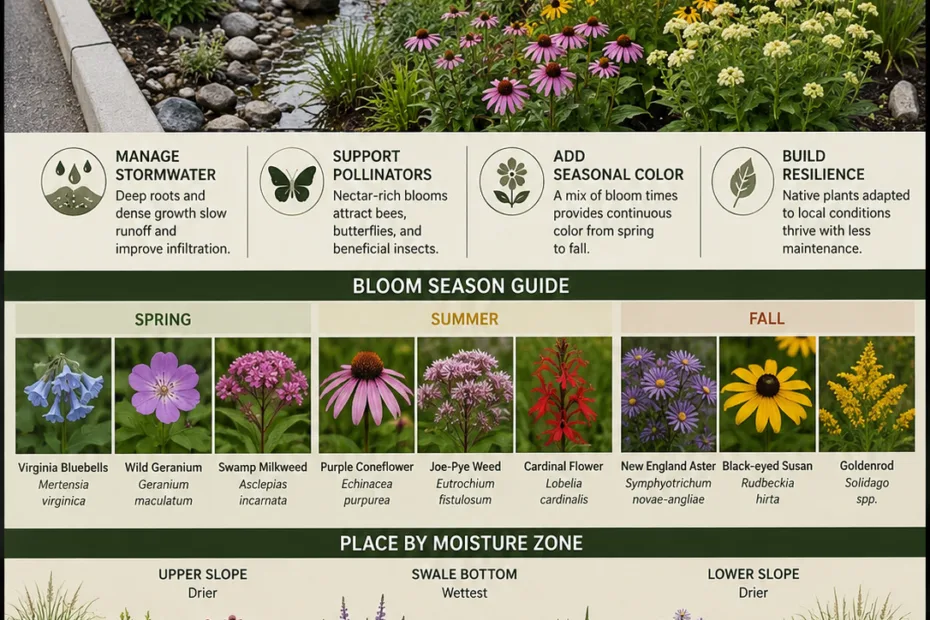
Flowering plants for bioswales must do more than add color. They need to tolerate changing soil moisture, hold soil during runoff, recover after dry periods,…
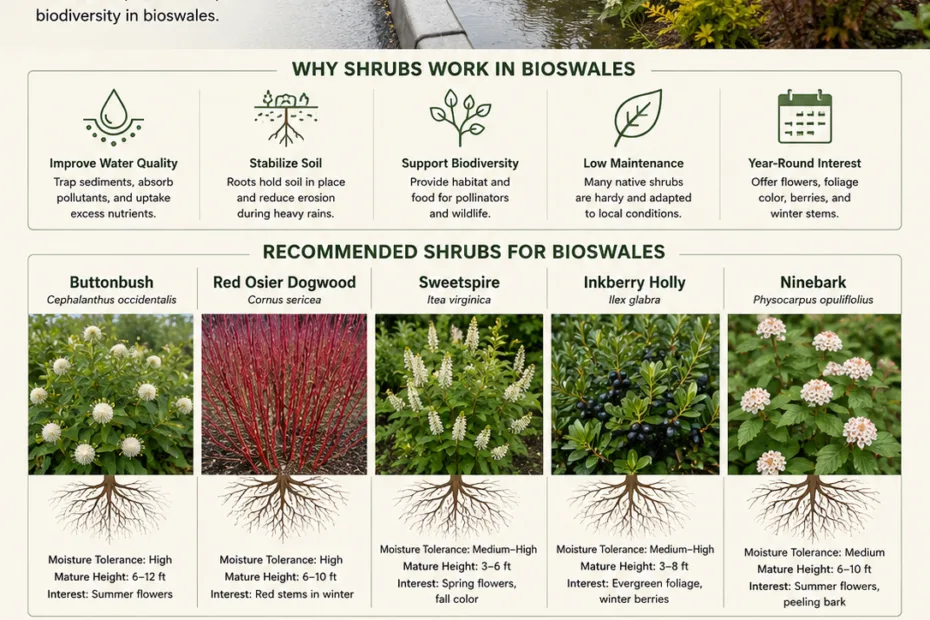
Shrubs can give a bioswale a stable woody layer, deeper root structure, winter form, and a longer season of interest, but only when their size…
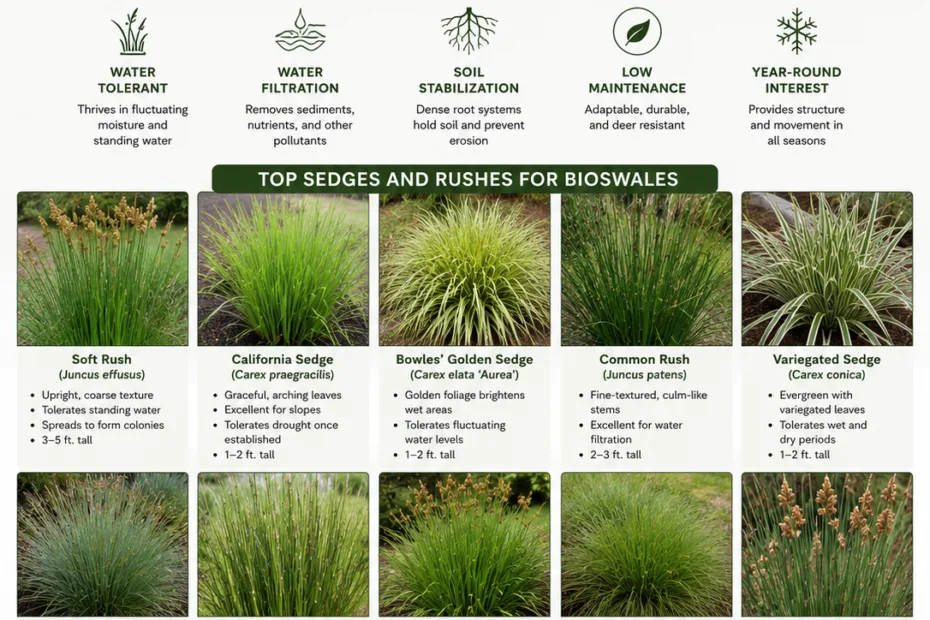
The best sedges and rushes for a bioswale are plants matched to its wettest bottom, periodically moist side slopes, and drier upper edge. Species that…
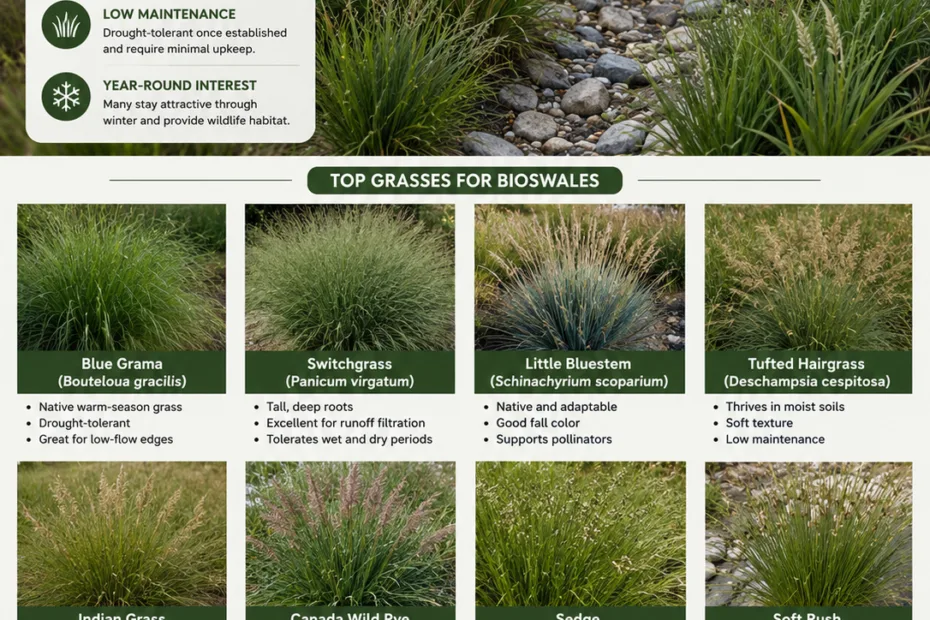
The best grasses for bioswales are dense, perennial, locally adapted species that can hold soil, slow shallow runoff, and recover after alternating wet and dry…
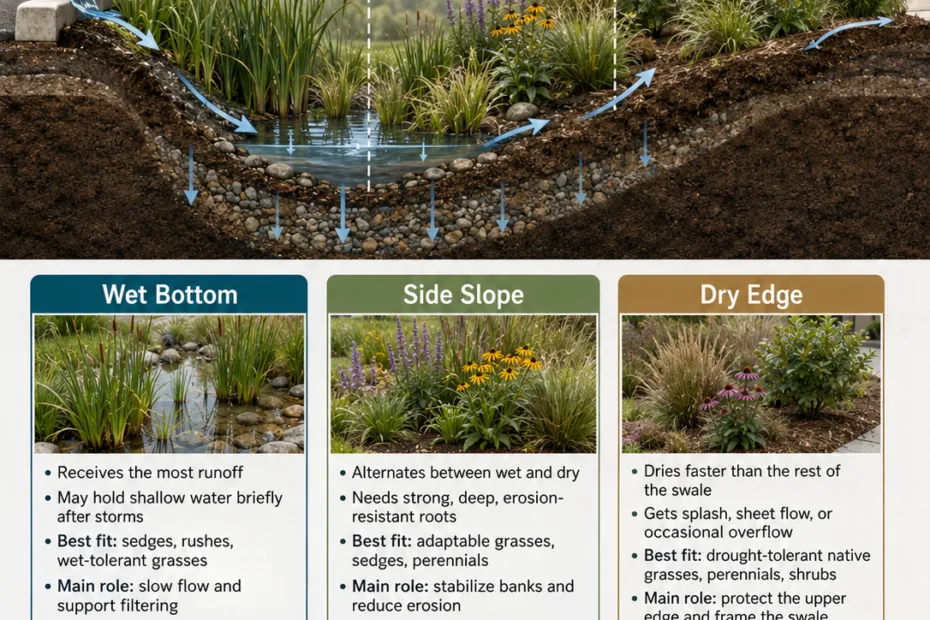
A bioswale rarely has one uniform planting condition from edge to edge. The bottom may stay wet after runoff enters, the side slope may shift…
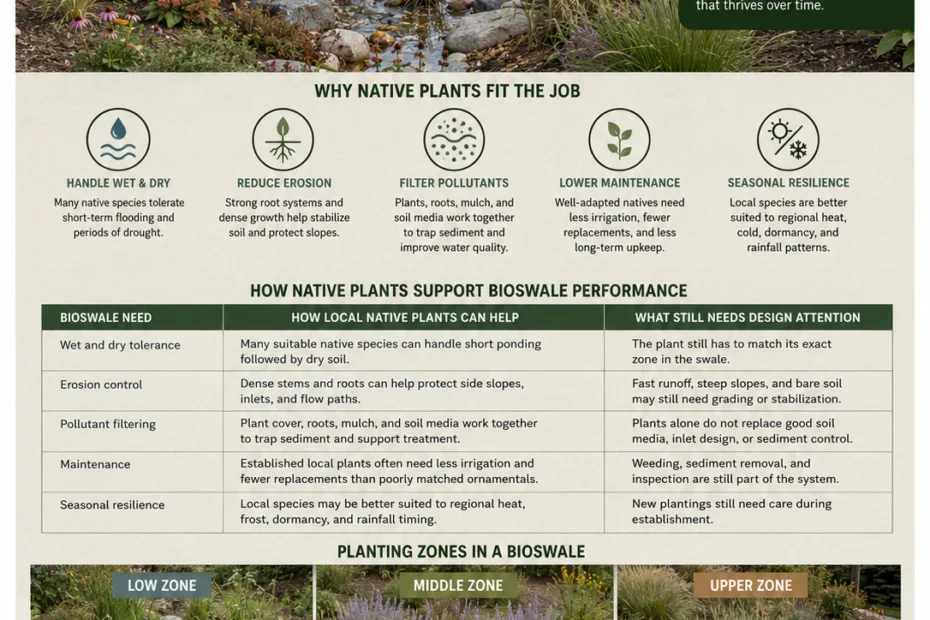
Native plants often work best in bioswales because they are already shaped by local rainfall patterns, seasonal dry spells, soil conditions, heat, cold, and the…
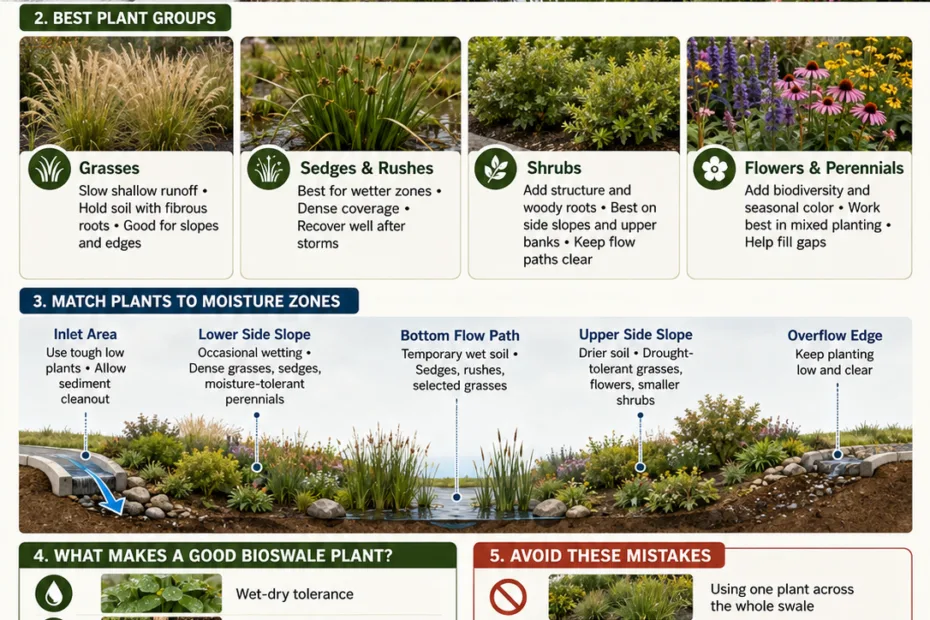
The best plants for bioswales are not chosen only for beauty. They need roots that hold soil, stems that slow shallow runoff, and enough tolerance…