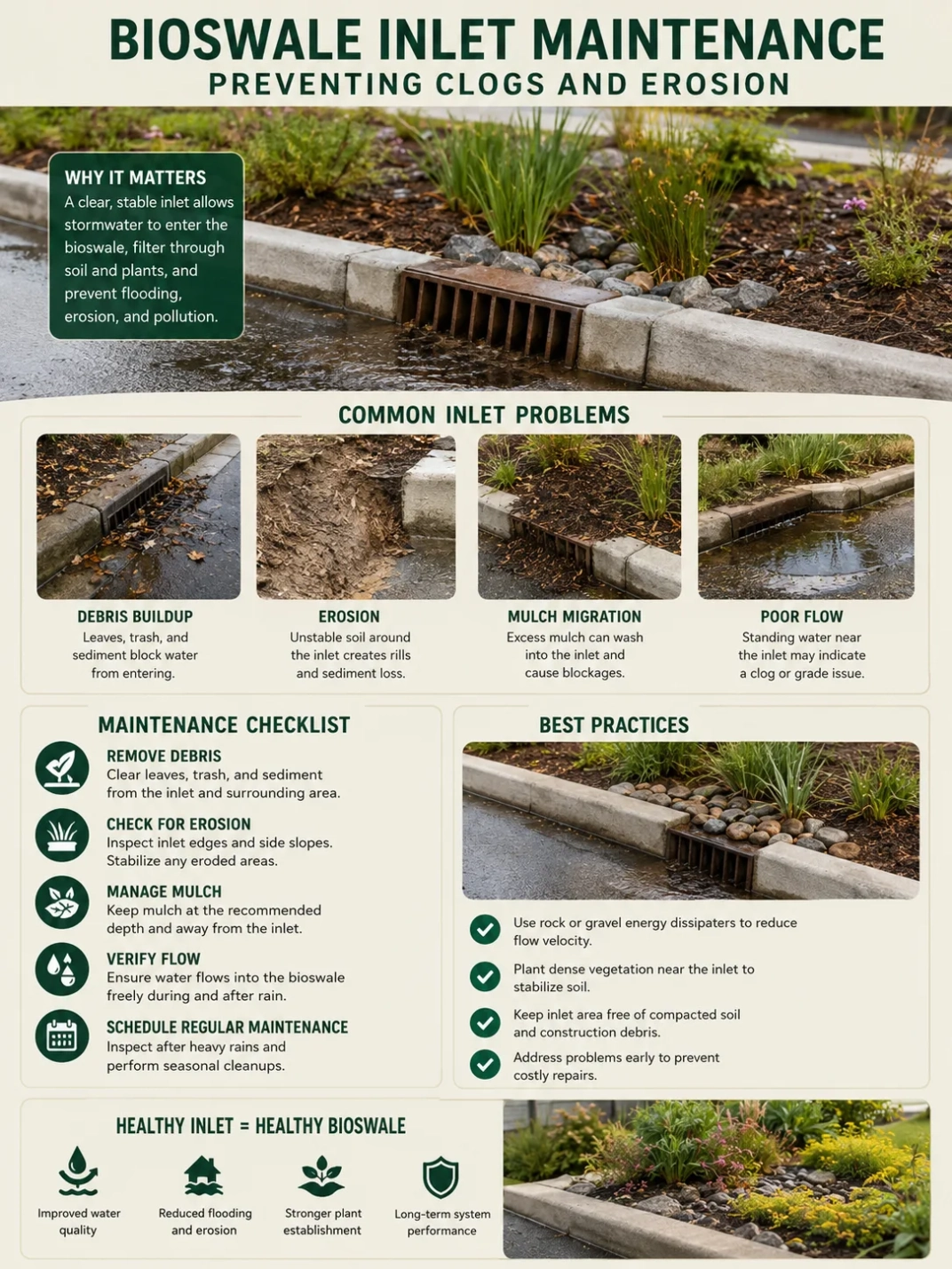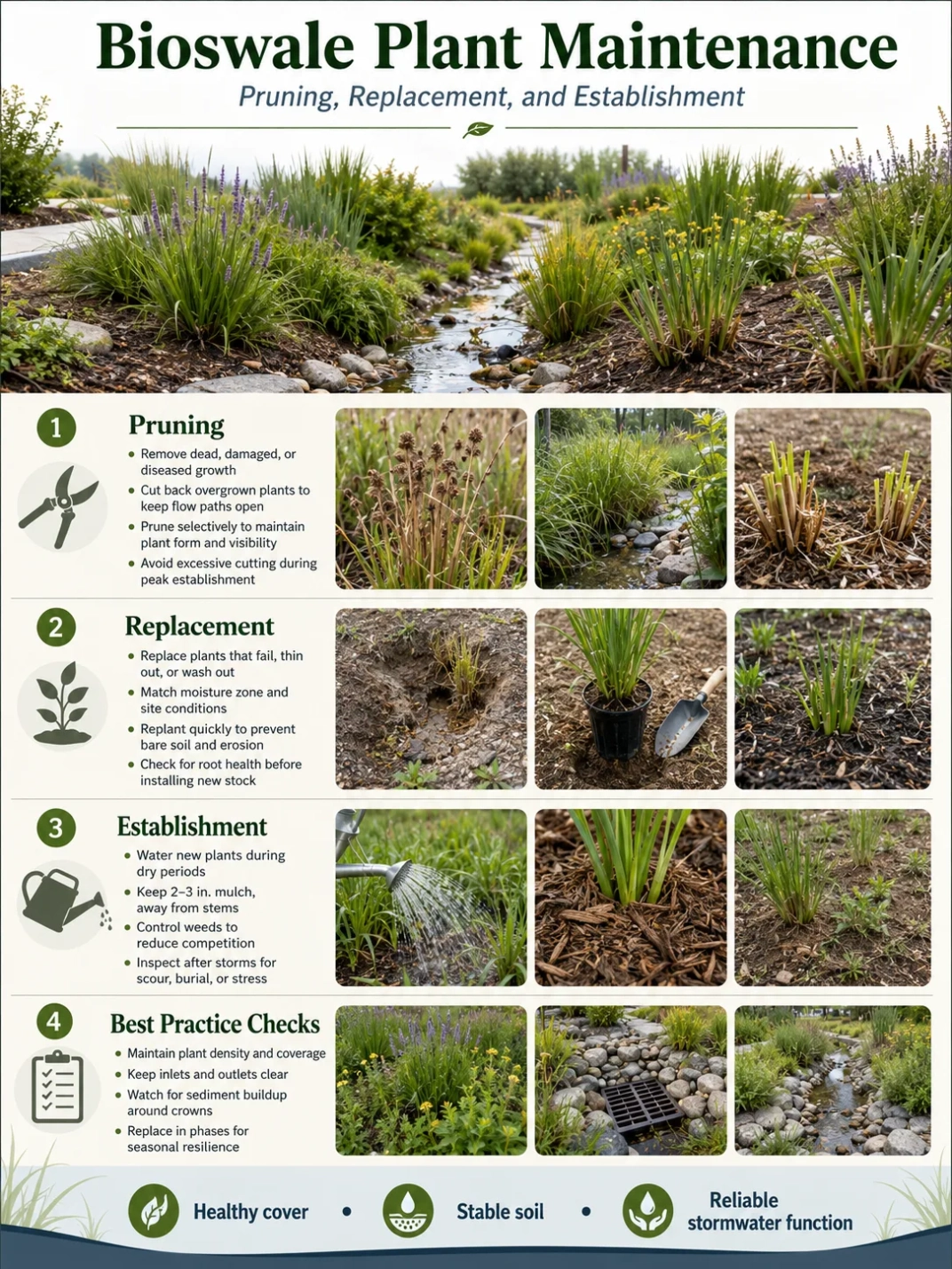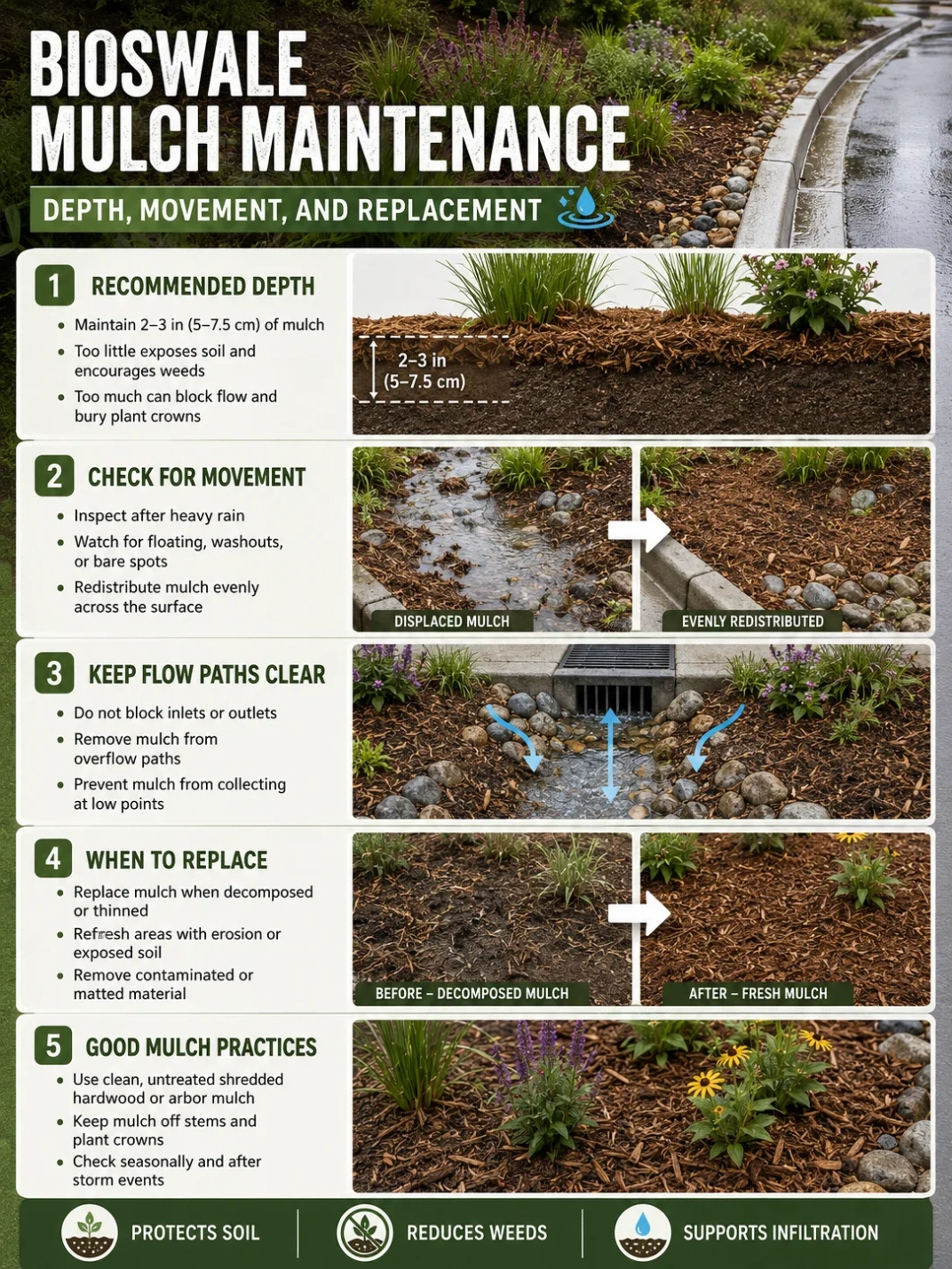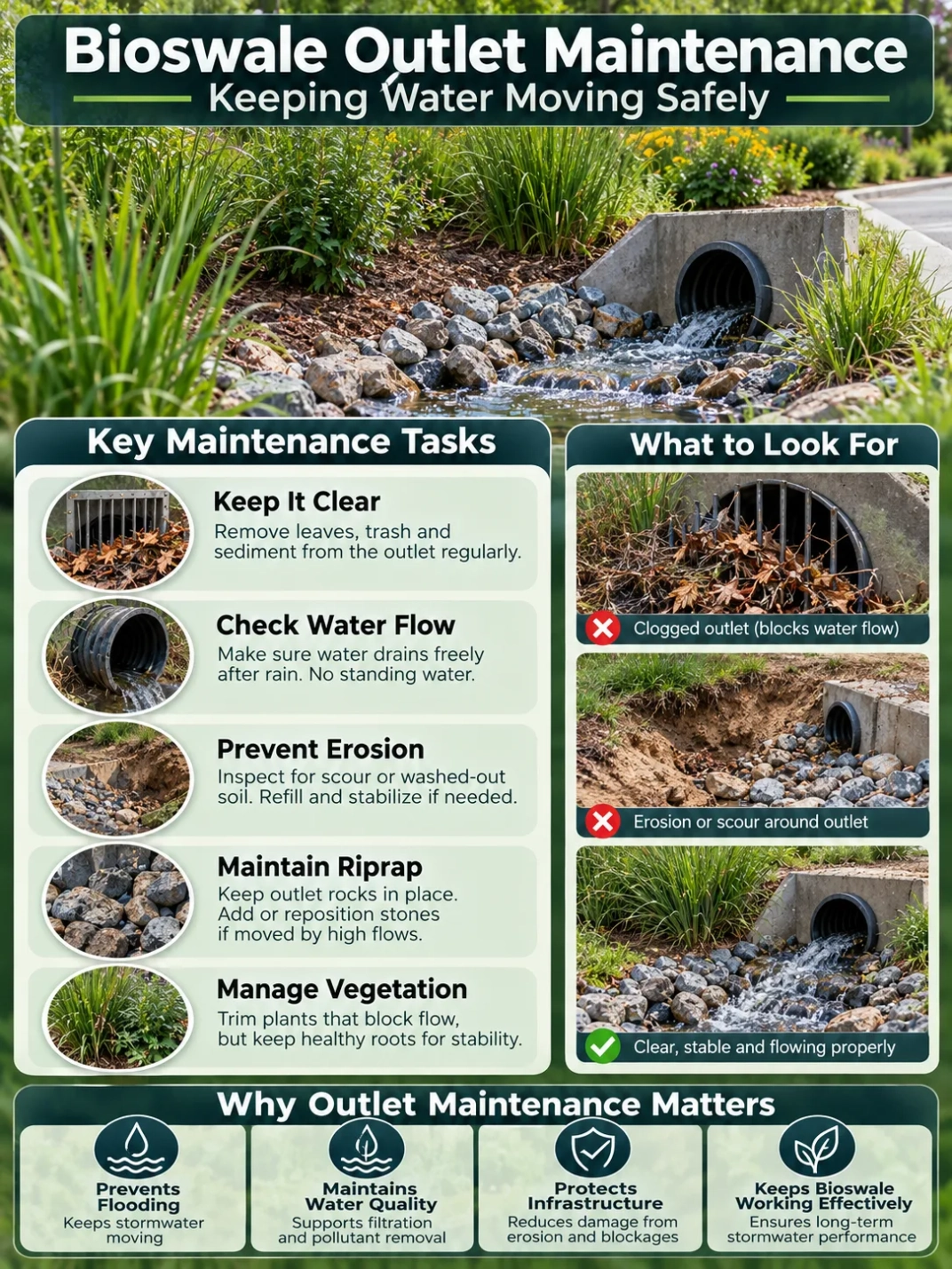
Water can only leave a bioswale as well as the outlet allows. Even when vegetation is healthy and the soil still infiltrates runoff, a blocked, eroded, or damaged outlet may slow drainage, create unnecessary ponding, or redirect water outside the intended flow path. Routine outlet maintenance helps preserve controlled discharge while protecting surrounding soil, plants, and downstream drainage features.
| Condition | What It May Cause | Typical Response |
|---|---|---|
| Sediment buildup | Reduced flow capacity | Remove accumulated sediment without disturbing stable vegetation. |
| Leaf and debris blockage | Standing water near the outlet | Clear organic debris during routine inspections. |
| Rock displacement | Localized erosion | Reset or replace energy dissipation stone where needed. |
| Vegetation overgrowth | Restricted discharge path | Selective trimming while maintaining erosion protection. |
| Scour around the outlet | Soil loss and channel formation | Repair damaged soil and restore outlet protection. |
How a Bioswale Outlet Works
The outlet controls how water leaves the bioswale after it has slowed, spread across the vegetation, and moved through the designed flow path. Depending on the site, the outlet may connect to another vegetated swale, a storm drain, an overflow channel, a level spreader, or another drainage feature.
The outlet is not intended to move water as quickly as possible. Its purpose is to release runoff in a controlled manner while reducing erosion and allowing infiltration where site conditions permit.
Many outlet problems begin upstream. Sediment entering from inlets, nearby pavement, or bare soil often reaches the outlet long before vegetation shows signs of stress.
What to Inspect During Routine Maintenance
Regular inspections are usually more effective than waiting for visible drainage problems. Outlet checks often fit naturally into seasonal bioswale maintenance schedules and after larger rainfall events.
- Check whether water leaves the outlet without obvious obstruction.
- Look for accumulated sediment around outlet structures.
- Remove branches, litter, leaves, and other debris that reduce flow.
- Inspect erosion around riprap, splash pads, or outlet channels.
- Confirm that outlet elevations have not changed because of settling or soil movement.
- Look for signs that runoff is bypassing the intended discharge route.
- Inspect nearby vegetation for damage caused by concentrated flow.
Keeping Sediment Away from the Outlet
Sediment is one of the most common maintenance concerns. Fine particles gradually collect where water slows before leaving the bioswale. Over time, this layer can reduce discharge capacity and encourage longer periods of ponding.
When removing sediment, avoid disturbing established root systems or excavating stable filter media unless a larger rehabilitation project has been planned. Gentle removal generally preserves plant stability and soil structure.
Managing Vegetation Around the Outlet
Plants help stabilize soil and reduce erosion, but excessive growth can partially block the discharge area. Routine trimming should maintain a clear flow path while leaving enough vegetation to protect exposed soil.
Native grasses, sedges, and rushes often tolerate periodic moisture changes well, although growth habits vary by species and local climate.
Avoid removing healthy vegetation simply because it grows close to the outlet. The goal is to maintain open water movement without exposing bare soil to erosion.
Recognizing Early Signs of Outlet Failure
Small changes often appear before major drainage issues develop.
- Water remains ponded much longer than usual.
- Fresh soil erosion appears below the outlet.
- Channels begin forming through mulch or planting areas.
- Water exits around the outlet instead of through it.
- Riprap stones shift or settle after repeated runoff events.
- Wet areas appear beside the designed discharge point.
These observations do not always indicate a structural failure. They may simply suggest that maintenance is overdue or that upstream runoff patterns have changed.
Protecting Energy Dissipation Features
Many bioswale outlets include riprap, splash pads, or similar energy dissipation features that slow water before it reaches downstream areas. These materials reduce scour by spreading flow across a larger surface.
If stones have shifted, settled, or washed away, replacing them with materials appropriate for the original design helps maintain outlet performance. Simply adding random rock sizes without considering the existing layout may create uneven flow paths.
How Outlet Maintenance Differs from Inlet Maintenance
Both components require inspection, but they serve different functions.
| Outlet | Inlet |
|---|---|
| Controls discharge from the bioswale. | Receives runoff entering the system. |
| Focuses on safe downstream release. | Focuses on distributing incoming flow. |
| Often monitored for erosion and blockage. | Often monitored for sediment entry and debris accumulation. |
When Site Conditions Require Closer Review
Some outlet problems may reflect changes elsewhere in the drainage system rather than damage at the outlet itself. Increased runoff from new impervious surfaces, soil compaction, altered grading, or changes to upstream drainage patterns can all influence outlet behavior.
If repeated erosion, persistent standing water, or discharge outside the intended drainage route continues after routine maintenance, the overall drainage design may benefit from professional evaluation. Site grading, local drainage requirements, and downstream conditions should all be considered together.
Seasonal Maintenance Priorities
- Remove accumulated debris before periods of heavier rainfall.
- Inspect outlet protection after major storm events.
- Repair small erosion areas before they expand.
- Trim vegetation where it restricts water movement.
- Monitor sediment buildup throughout the growing season.
- Check that downstream flow remains stable and unobstructed.
FAQ
Why does a bioswale outlet need regular maintenance?
Routine maintenance helps keep runoff moving through the intended discharge path while reducing blockage, erosion, and unnecessary standing water.
Should standing water always indicate an outlet problem?
Not necessarily. Temporary ponding may be part of normal operation. Water that remains much longer than expected or repeatedly appears after moderate rainfall may justify closer inspection.
Can vegetation completely cover the outlet?
Dense vegetation may restrict flow if it blocks the discharge path. Selective trimming is usually more appropriate than removing all plants.
What causes erosion below the outlet?
Concentrated flow, displaced energy dissipation stone, changing drainage patterns, or excessive runoff volumes can all contribute to erosion below the outlet.
How often should a bioswale outlet be inspected?
Inspection frequency depends on site conditions, nearby sediment sources, rainfall patterns, and maintenance schedules. Many systems benefit from seasonal inspections and additional checks after larger storm events.