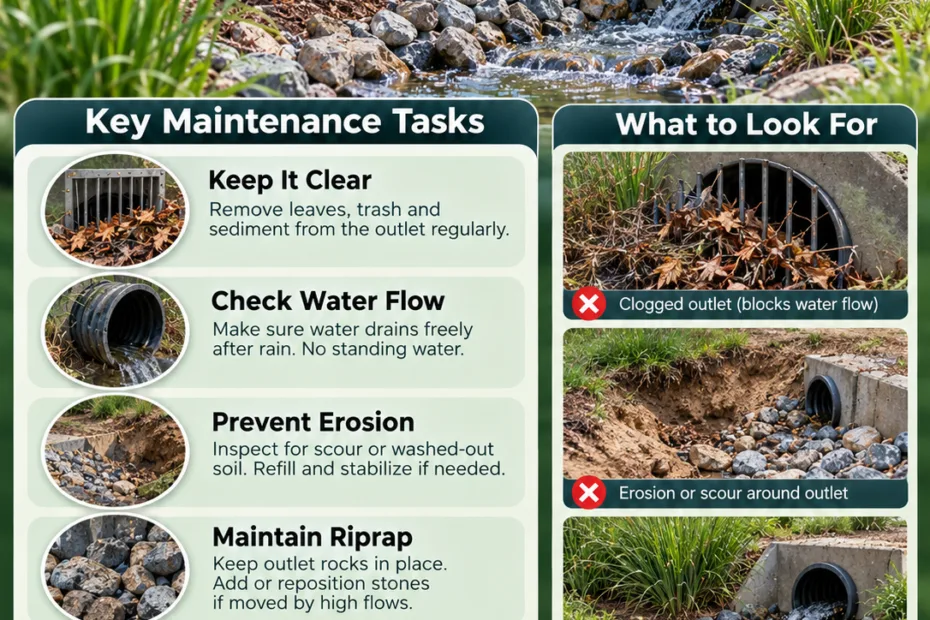
Bioswale Outlet Maintenance: Keeping Water Moving Safely
Water can only leave a bioswale as well as the outlet allows. Even when vegetation is healthy and the soil still infiltrates runoff, a blocked,…
Water can only leave a bioswale as well as the outlet allows. Even when vegetation is healthy and the soil still infiltrates runoff, a blocked,…
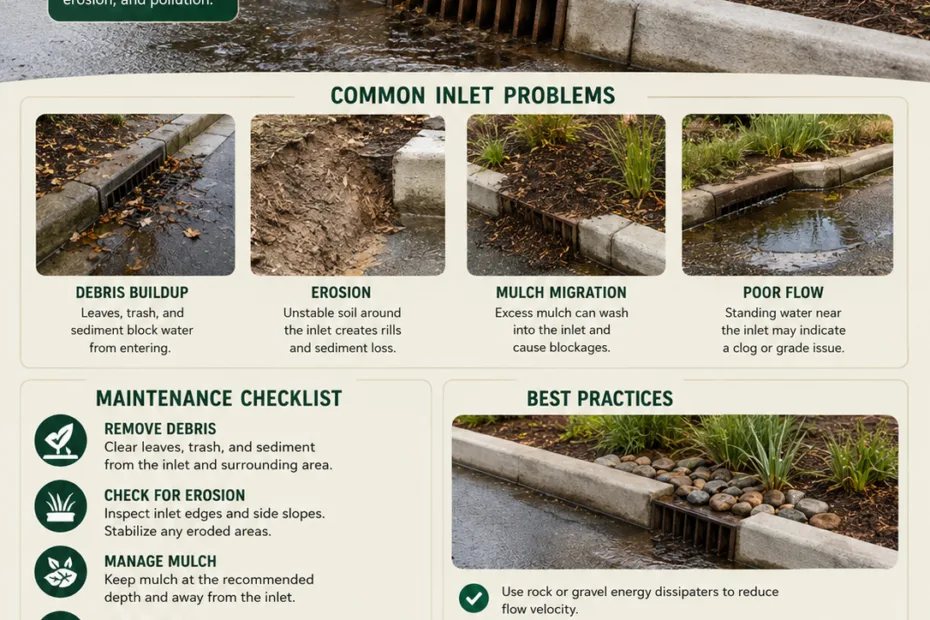
A bioswale inlet is the point where stormwater runoff first enters the planted drainage area. When sediment, leaves, trash, or displaced mulch block that opening,…
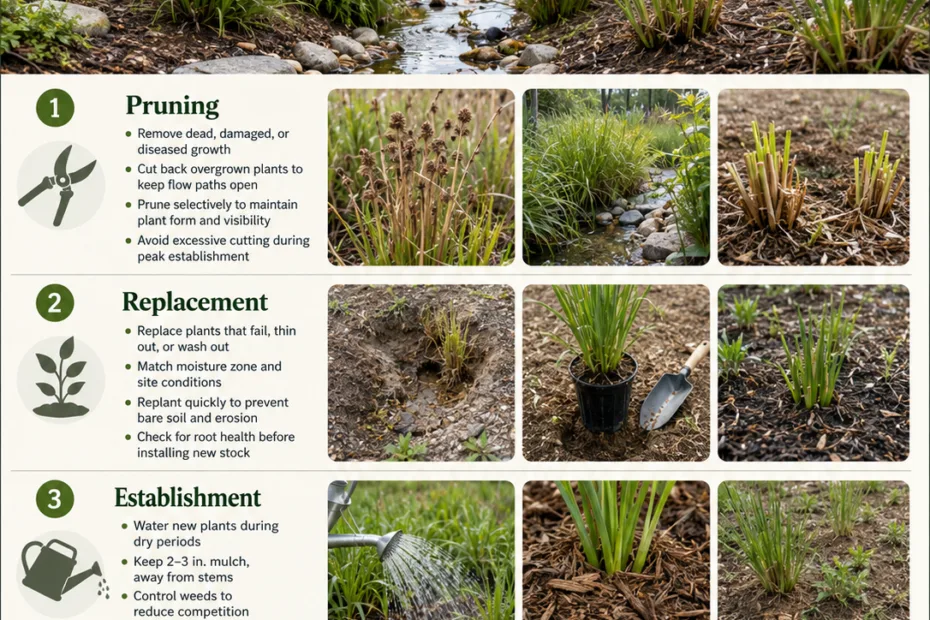
Bioswale plant maintenance is not mainly about keeping vegetation neat. It is about preserving plant cover, root function, open flow paths, and soil protection so…
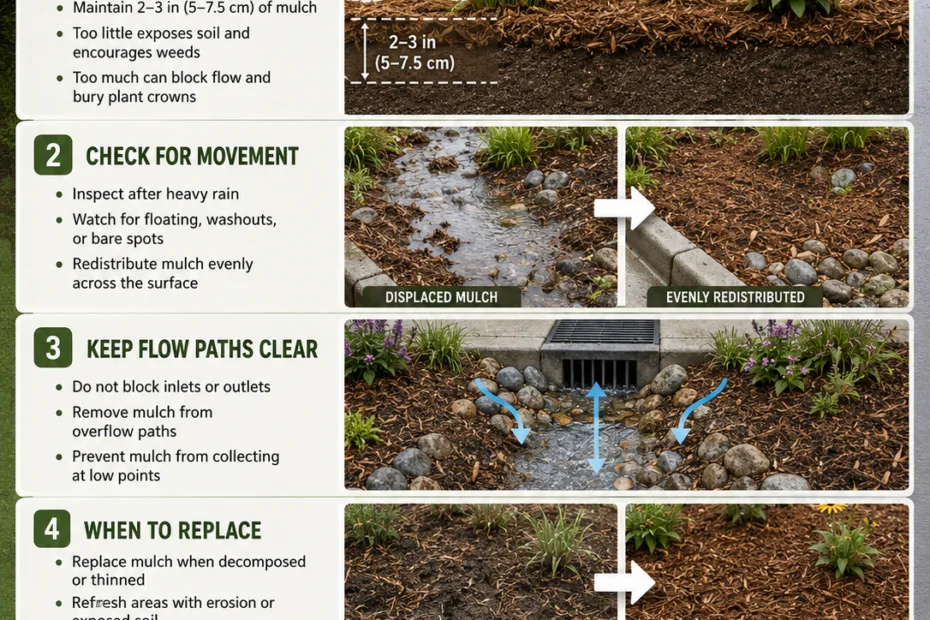
Mulch is more than a surface covering in a bioswale. It helps reduce soil erosion, cushions the impact of incoming runoff, limits weed growth, supports…

Weed control in a bioswale is not mainly about appearance. Dense weeds can crowd out intended plants, trap sediment near an inlet, restrict visible inspection…
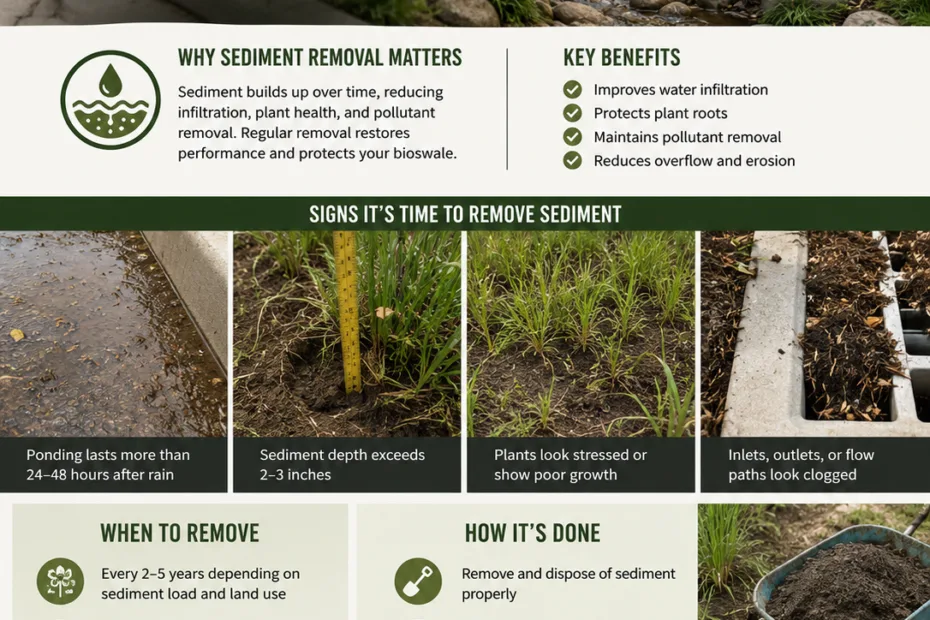
Sediment should be removed from a bioswale before it blocks water entry, buries vegetation, seals the soil surface, or redirects runoff around the treatment area.…
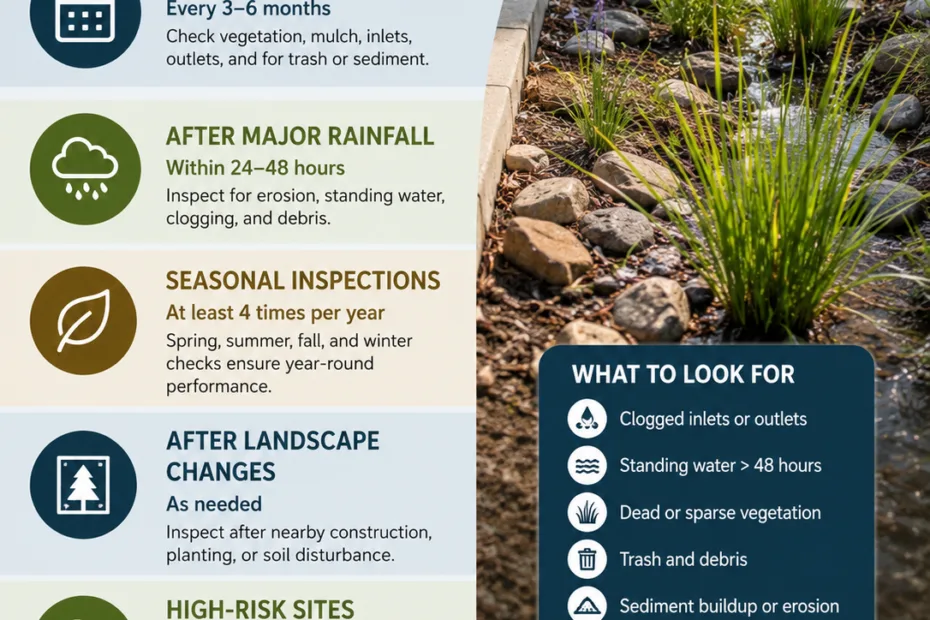
A bioswale should be inspected on a regular schedule rather than only after problems appear. Most sites benefit from a routine visual inspection every few…
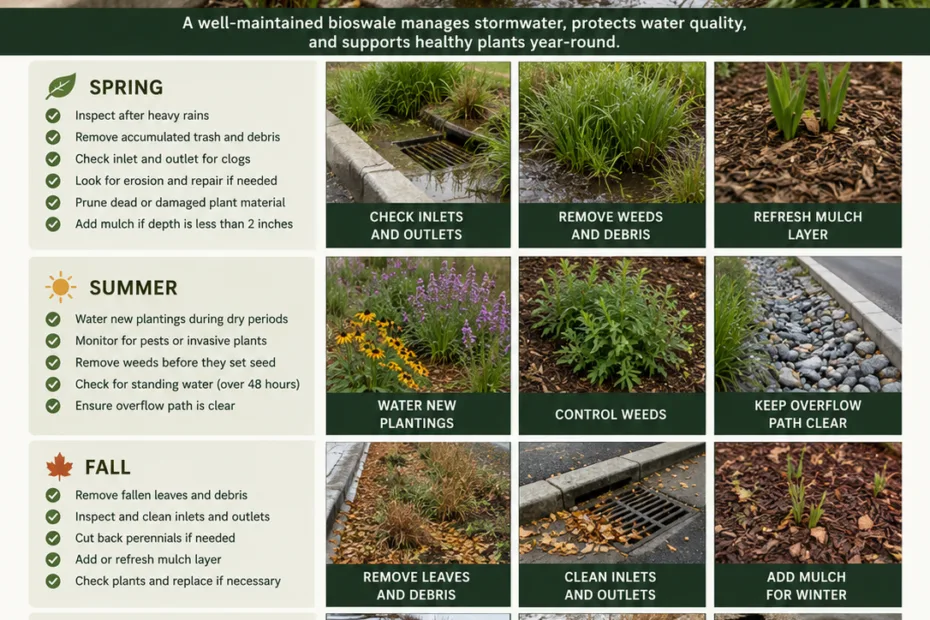
A bioswale stays effective when small issues are found early. Most maintenance takes only a few minutes during routine inspections, while delayed care can allow…
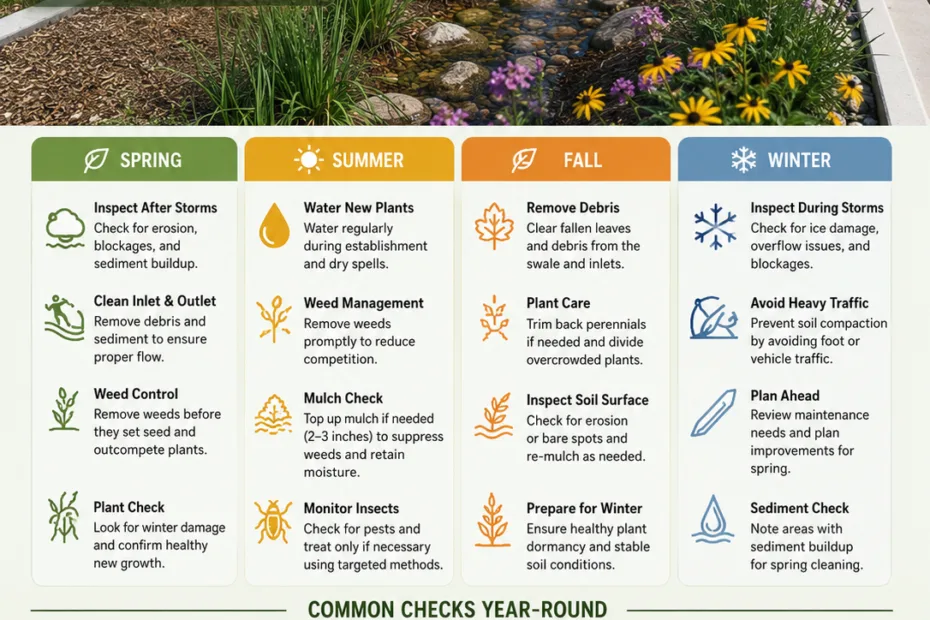
A bioswale usually gives early warning before its drainage function declines. Water begins to enter through a narrower path, sediment builds at the inlet, plants…
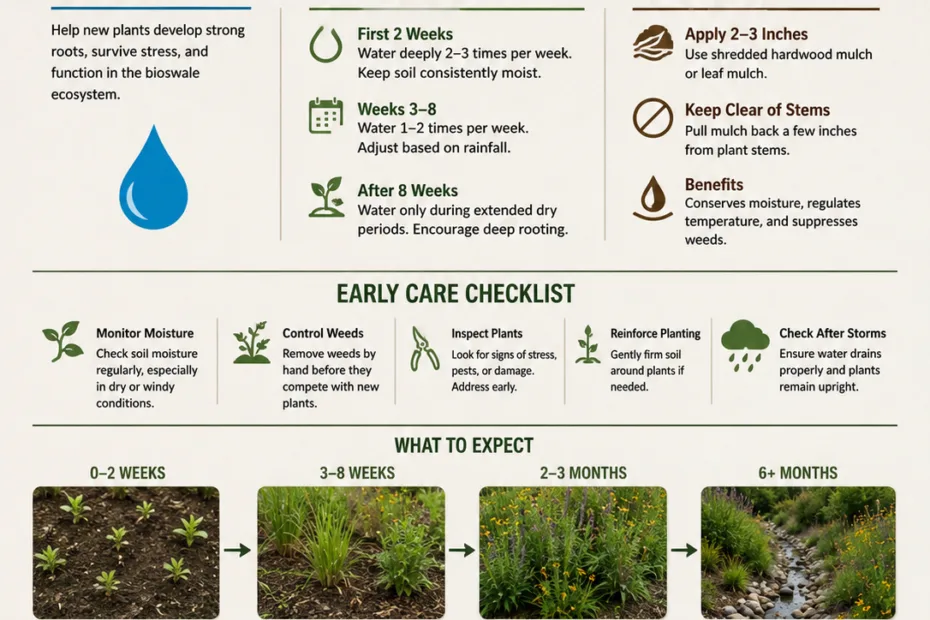
New bioswale plants need deliberate care before their roots can hold soil, compete with weeds, and recover from alternating wet and dry conditions. Good bioswale…