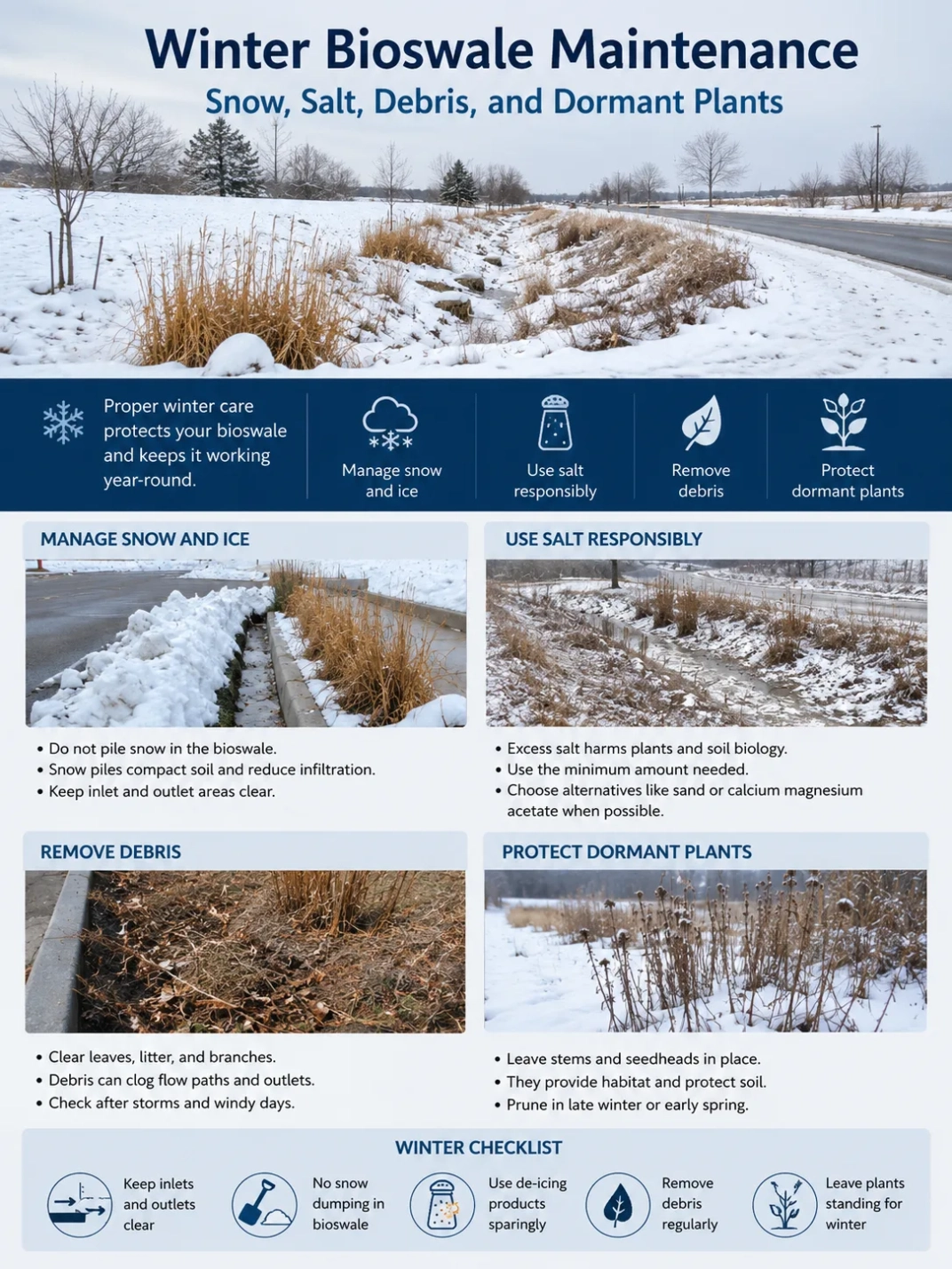
Winter changes how a bioswale behaves. Snow can store runoff for days, road salt may move into the system with meltwater, fallen debris can block flow paths, and many plants appear inactive even though their roots continue to support soil structure. Winter maintenance focuses on keeping water moving, limiting unnecessary disturbance, and preparing the bioswale for healthy spring performance.
Why Winter Maintenance Is Different
Unlike growing-season inspections, winter work often takes place between snow events or during thaw periods. Runoff patterns can change quickly as melting snow reaches inlets and low areas. Small maintenance issues that seem minor in autumn may become larger problems once water freezes or repeatedly refreezes.
Maintenance should remain light whenever possible. Frozen soils, dormant vegetation, and saturated conditions are less forgiving than dry summer conditions.
| Winter Condition | Why It Matters | Typical Response |
|---|---|---|
| Snow accumulation | Can redirect runoff or bury inlets | Keep drainage entrances visible when practical |
| Road salt | May affect soil and salt-sensitive plants | Reduce unnecessary salt input where possible |
| Leaves and debris | Can block flow paths during snowmelt | Remove accumulated material from inlets and outlets |
| Dormant vegetation | Above-ground growth may appear inactive | Avoid unnecessary cutting or heavy traffic |
Managing Snow Around a Bioswale
Snow itself is not usually harmful. Problems develop when large piles alter drainage patterns or concentrate meltwater into a small portion of the bioswale.
Where space allows, avoid creating extremely large snow piles directly over planting zones. Repeated heavy loading may compact soil beneath thawing conditions and can delay spring recovery.
Snow removal equipment should avoid scraping mulch, soil, or vegetation. Damage to the surface layer may reduce filtration performance once runoff returns.
Salt Exposure During Winter
Roadside and parking-lot bioswales often receive runoff containing deicing salts. Salt can accumulate in surface soils, particularly where winter applications are frequent and natural flushing is limited.
Possible effects include:
- Reduced vigor in salt-sensitive plants.
- Changes in soil chemistry over time.
- Slower establishment of young vegetation.
- Stress on roots during repeated freeze-thaw cycles.
Many roadside bioswales use plant selections that tolerate occasional salt exposure, but tolerance varies by species and local conditions. Areas receiving unusually high salt loads may need closer observation during spring.
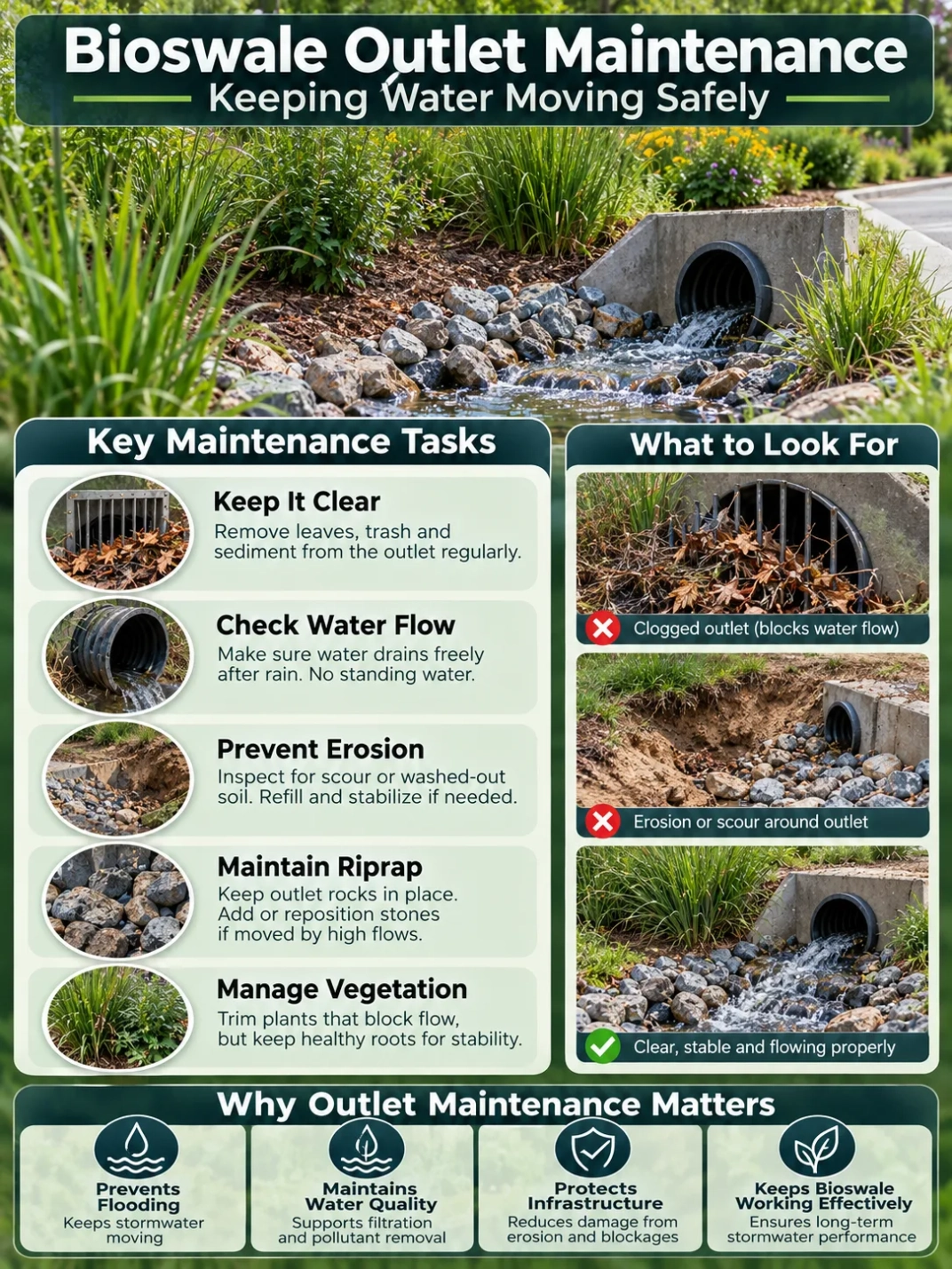
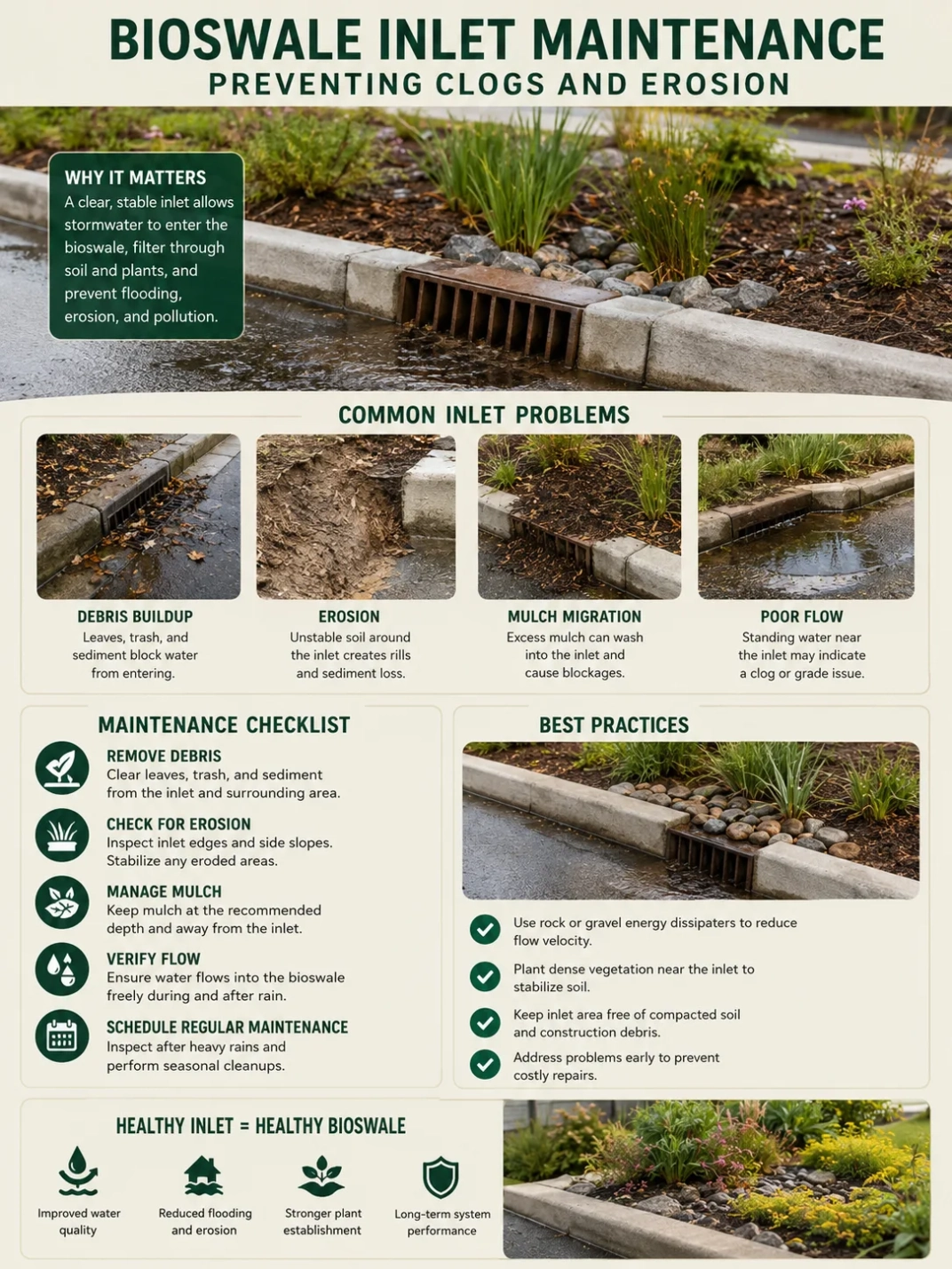
Keeping Inlets and Outlets Open
Flow paths remain important throughout winter. Leaves, twigs, litter, sediment, and ice can partially block curb openings, pipe inlets, level spreaders, or outlet structures.
Inspection is often most useful shortly after snow begins to melt, when runoff reveals where water is entering and leaving the bioswale.
If water repeatedly bypasses the bioswale because an inlet is blocked, sediment and pollutants may reach downstream drainage systems instead of entering the vegetated treatment area.
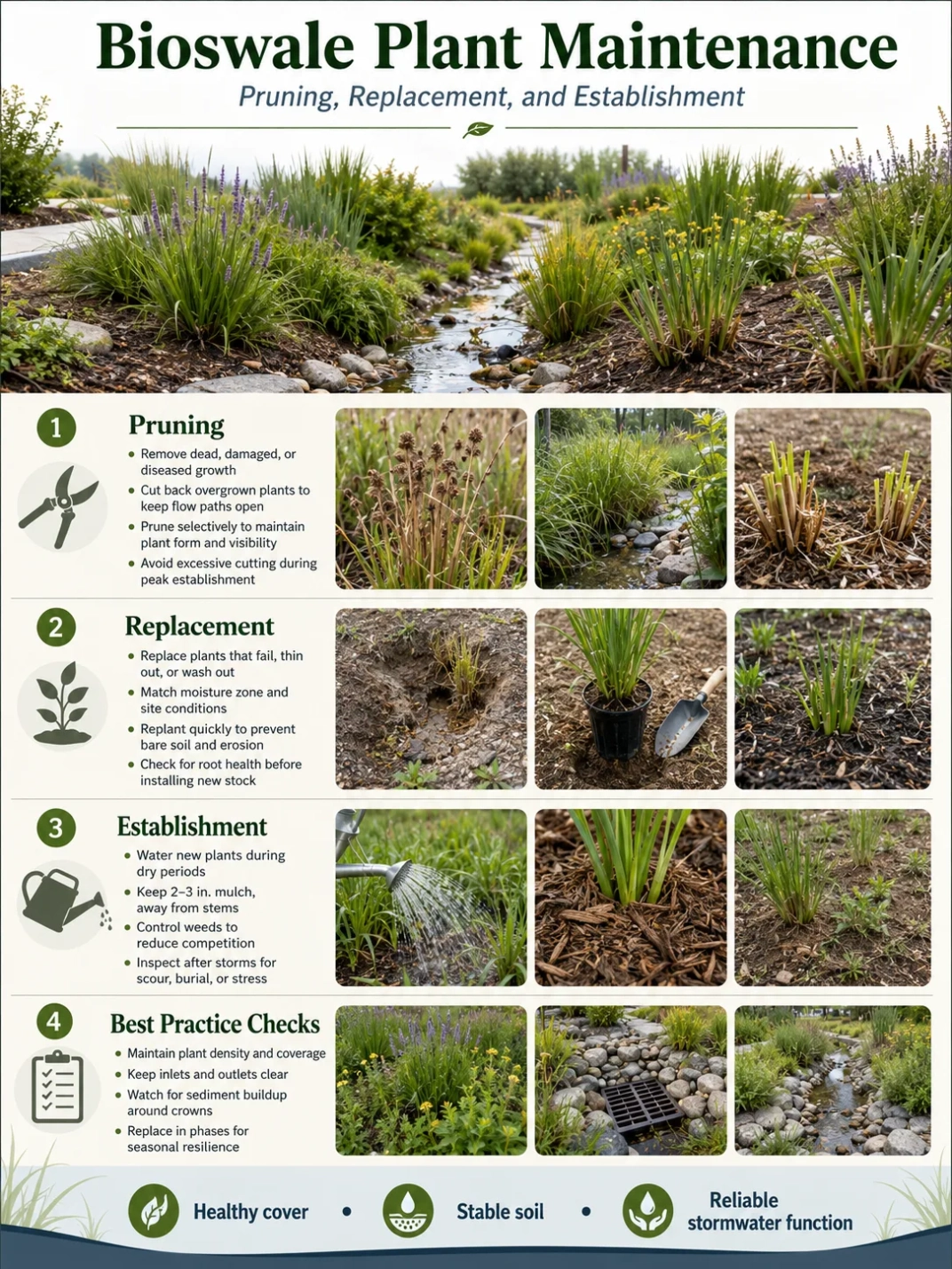
How Dormant Plants Support the System
Brown stems and inactive foliage do not necessarily indicate unhealthy vegetation. Many native grasses, sedges, rushes, and perennial species naturally enter dormancy while their root systems continue to stabilize soil.
Leaving standing stems through much of winter may also help protect crowns, reduce erosion, and capture light windblown sediment.
Large-scale seasonal pruning is generally better suited to the appropriate maintenance window before vigorous spring growth, depending on local climate and management goals.
Debris That Should Be Removed
Not every natural material requires removal. Organic matter can contribute to healthy soils, while excessive accumulation may interfere with drainage.
- Remove trash and windblown litter.
- Clear branches that obstruct runoff.
- Remove sediment deposits covering inlet openings.
- Retain stable mulch where practical.
- Leave healthy dormant root systems undisturbed.
Freeze-Thaw Effects on Soil
Alternating freezing and thawing can shift mulch, expose roots, or move fine sediment toward low points within the bioswale.
Soil compaction is often a greater concern than freezing itself. Heavy vehicles or repeated foot traffic over wet winter soils can reduce infiltration after temperatures rise.
Roadside and Parking Lot Bioswales
Winter maintenance demands are usually greater where runoff originates from paved surfaces. These locations may receive higher sediment loads, more deicing materials, and larger volumes of meltwater during rapid warming events.
Routine inspection should focus on curb openings, sediment accumulation near inflow points, and any signs that runoff is bypassing the intended flow path.
What Deserves Attention Before Spring
- Inspect inlet and outlet structures.
- Remove accumulated trash.
- Check for erosion caused by concentrated meltwater.
- Look for displaced mulch.
- Identify damaged or missing vegetation for later replacement if needed.
- Observe whether standing water drains normally after thaw periods, recognizing that frozen ground may temporarily slow infiltration.
When Site Conditions Need Additional Review
If repeated ponding continues after frozen conditions have ended, or if erosion, severe sediment buildup, damaged structures, or declining vegetation become widespread, the bioswale may benefit from a more detailed inspection. Depending on site conditions, this could involve evaluating soil condition, drainage structures, or maintenance practices rather than assuming a single cause.
FAQ
Should snow always be removed from a bioswale?
No. Snow alone is usually not the issue. The goal is to avoid blocking drainage features or creating unusually large piles that alter meltwater flow.
Do dormant plants need to be cut back during winter?
Not necessarily. Many dormant plants continue supporting soil with their root systems, and standing stems may provide seasonal benefits until routine spring maintenance.
Can road salt damage a bioswale?
Repeated exposure may stress some plants and affect soil conditions, especially in roadside installations. The degree of impact depends on salt use, runoff volume, soil properties, and plant selection.
When is the best time to inspect a bioswale during winter?
Inspection is often most informative during or shortly after snowmelt, when runoff reveals how water enters, moves through, and exits the system.
Should all leaves and organic material be removed?
No. Natural organic matter can be beneficial, but excessive debris that blocks inlets, outlets, or surface flow should be cleared.