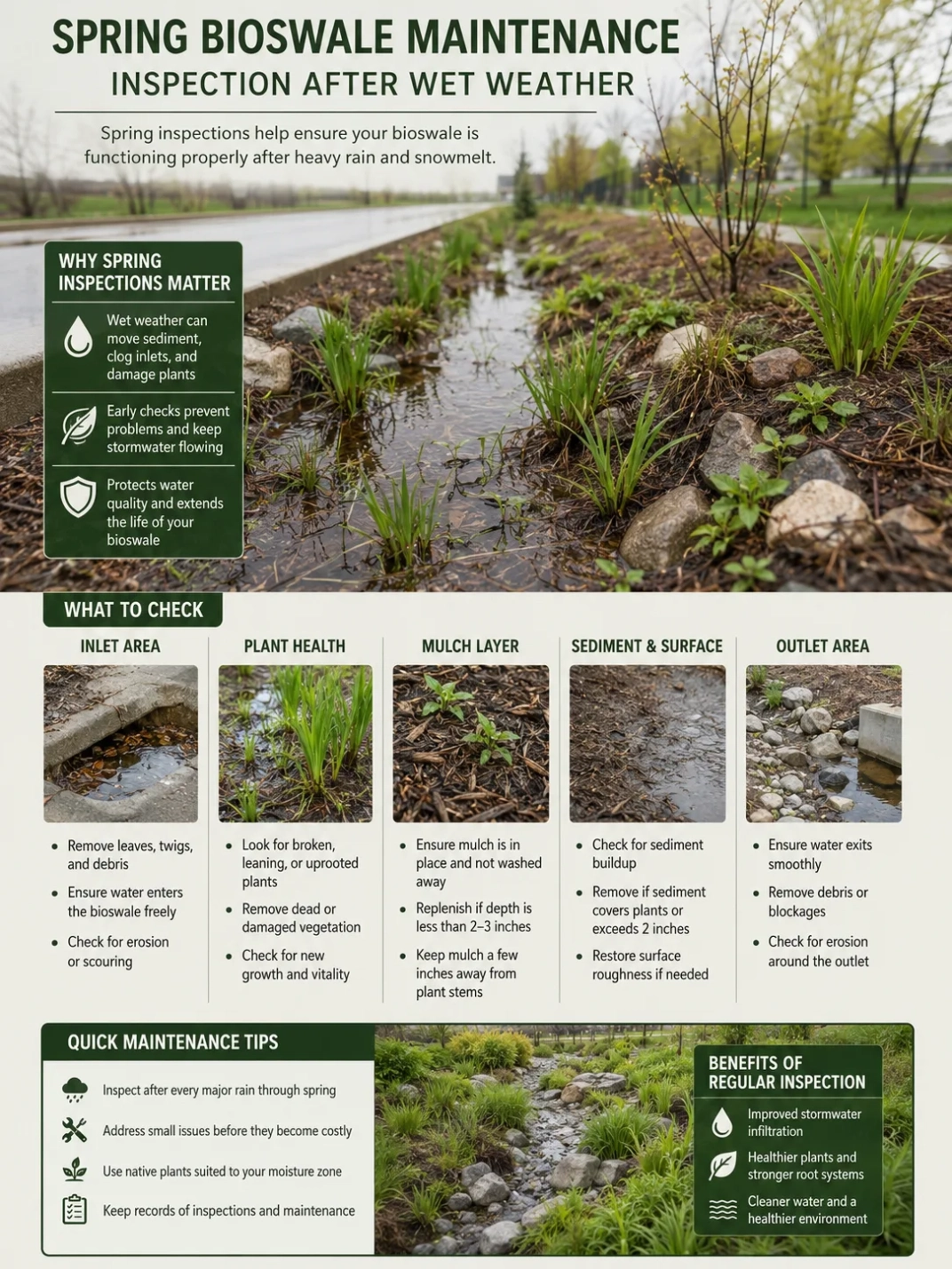
A spring bioswale maintenance inspection after wet weather is one of the best times to see how the system actually performs. Flow paths, ponding, sediment deposits, erosion, and early plant growth become visible while the site is still responding to recent rainfall. Small maintenance tasks completed during this period can help preserve infiltration, support healthy vegetation, and reduce the chance of larger repairs later in the season.
Why Wet Weather Reveals Hidden Problems
Dry inspections can identify obvious damage, but they rarely show how runoff behaves under real conditions. A recent rain event highlights where water slows, where it bypasses vegetation, and where sediment begins to collect.
Inspecting within a day or two after rainfall often provides useful observations while soils remain moist and drainage patterns are still visible.
Inspection Priorities
| Component | What to Look For | Typical Response |
|---|---|---|
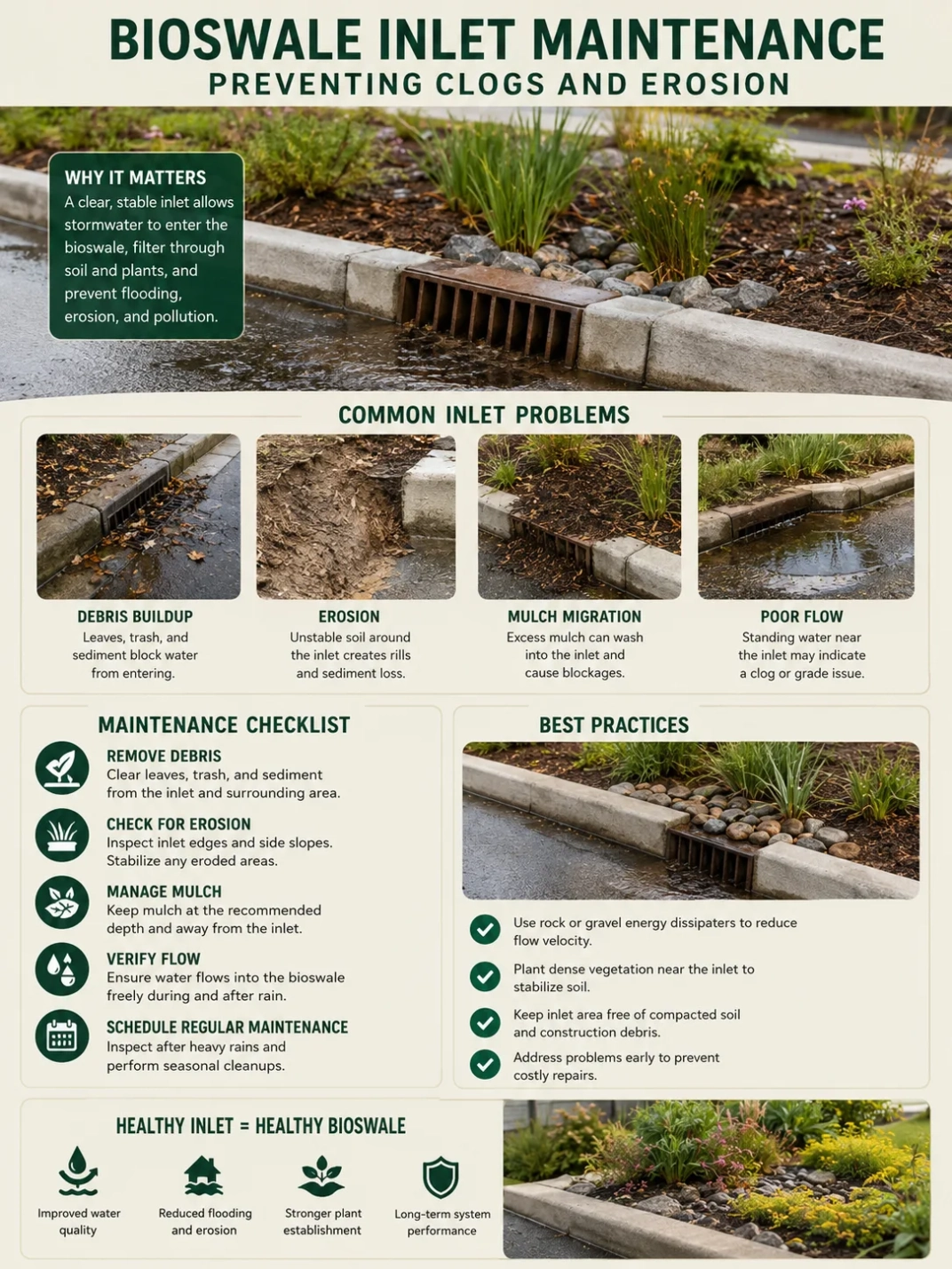
| Inlet | Sediment buildup, debris, blocked openings | Remove accumulated material and restore flow |
| Flow Path | Scour marks, uneven channels, concentrated runoff | Stabilize affected areas and monitor future storms |
| Vegetation | Flattened plants, exposed roots, missing vegetation | Replace damaged plants where necessary |
| Mulch | Floating, washed away, or piled against edges | Redistribute or replenish as appropriate |
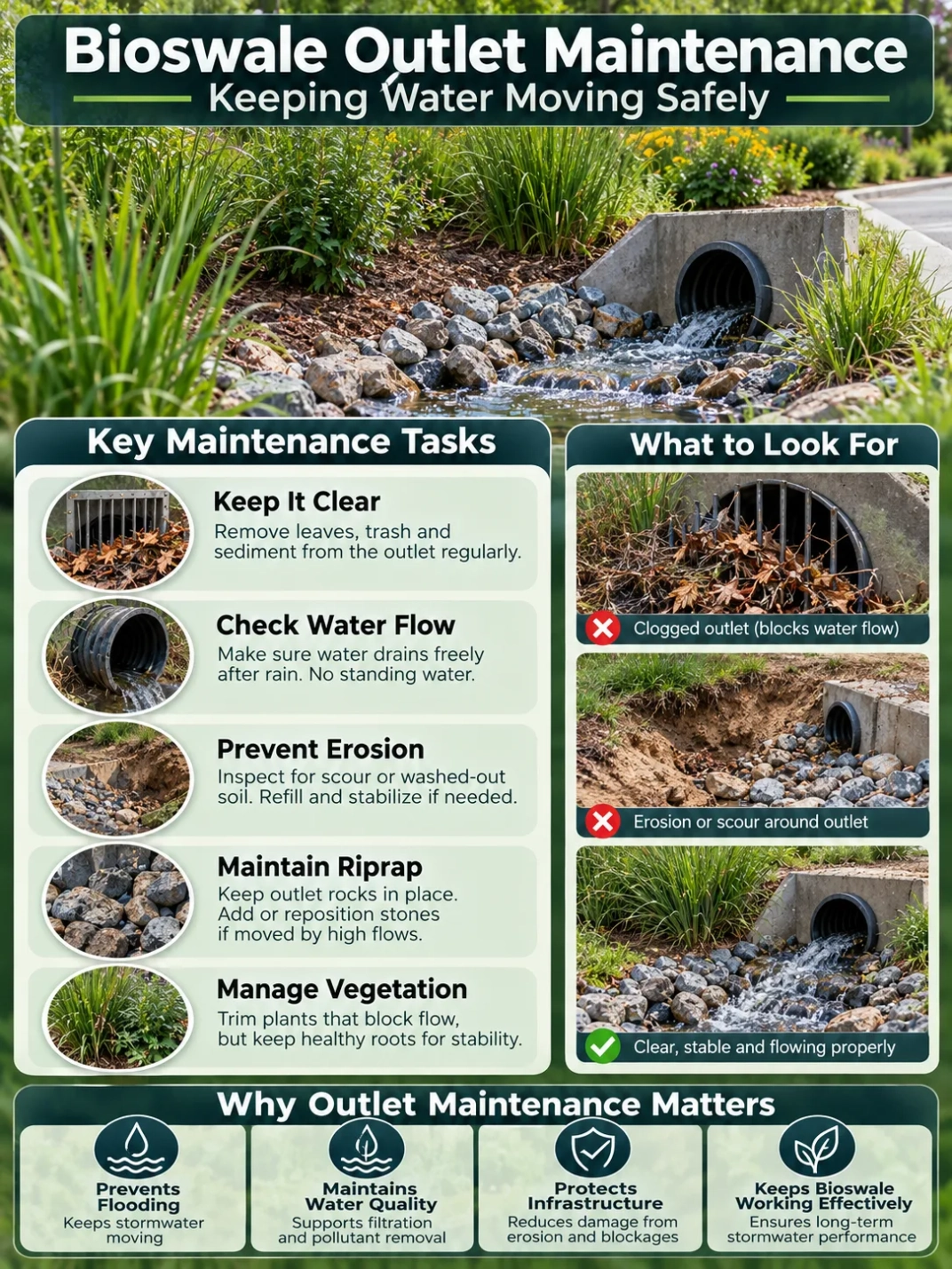
| Outlet | Standing debris, erosion, restricted discharge | Clear obstructions and inspect downstream flow |
| Overflow Route | Erosion or unexpected flow direction | Confirm overflow remains stable and unobstructed |
Inspect the Inlet First
The inlet receives the highest sediment load. Leaves, gravel, litter, and fine particles often settle here before water reaches the planted area.
A partially blocked inlet changes the entire hydraulic pattern, forcing runoff around the bioswale instead of through it.
- Remove accumulated sediment if practical.
- Clear branches, trash, and organic debris.
- Check that curb cuts or inflow openings remain fully open.
- Look for erosion where incoming water enters the bioswale.
Watch How Water Moved Across the Surface
Shallow sheet flow usually distributes runoff across vegetation. Deep narrow channels suggest water has become concentrated.
Repeated channel formation may reduce contact between runoff and the soil media, lowering filtration performance and creating localized erosion.
Check for Temporary Ponding
Some temporary surface ponding is expected in many bioswale designs. The important observation is whether water continues draining after rainfall instead of remaining in isolated pools.
If water appears to remain for an unusually long period under similar weather conditions, inspect for sediment accumulation, compacted soil, clogged filter media, or blocked outlets. Site conditions vary, so drainage performance should be evaluated within the context of the original design.
Inspect Soil and Surface Condition
Wet weather often exposes areas where soil has compacted or where fine sediment has sealed the surface.
- Look for crusted soil that sheds water.
- Identify exposed filter media.
- Check whether mulch has shifted away from planting areas.
- Notice footprints or equipment tracks that may have compacted wet soil.
Compaction reduces infiltration and may require careful remediation if it becomes widespread.
Evaluate Plant Health
Spring inspections coincide with new seasonal growth, making it easier to identify plants that survived winter and those that may need replacement.
Healthy vegetation usually shows upright stems, fresh leaves, and stable root systems. Newly installed plants deserve extra attention because repeated runoff events can loosen root zones before establishment.
Signs That Need Attention
- Plants buried by sediment.
- Roots exposed by erosion.
- Broken stems after strong runoff.
- Large bare patches where vegetation failed to establish.
- Invasive weeds spreading into open spaces.
Inspect the Outlet and Overflow Route
The outlet should discharge runoff without causing downstream erosion. Overflow routes should remain stable even after heavier storms.
Check for:
- Undercutting around outlet structures.
- Sediment blocking discharge points.
- Scour immediately below the outlet.
- Debris trapped against check dams or energy dissipation features.
Small Issues That Should Not Be Ignored
Minor maintenance items often develop gradually rather than suddenly.
- Thin sediment layers building after each storm.
- Small mulch displacement.
- Localized weed growth.
- Loose edging materials.
- Early erosion around plant bases.
Addressing these conditions before repeated rainfall can reduce maintenance effort later in the growing season.
When Professional Review May Be Appropriate
Routine inspections can identify visible maintenance needs, but some conditions warrant additional evaluation.
- Repeated standing water after similar storms.
- Persistent erosion despite repairs.
- Structural damage to inlet or outlet features.
- Large settlement areas.
- Runoff bypassing the bioswale entirely.
Where these conditions continue, a review of grading, drainage patterns, soil condition, or other site-specific factors may be appropriate.
FAQ
How soon after rain should a bioswale be inspected?
Within the first day or two is often ideal because runoff patterns, sediment deposits, and wet soil conditions are still visible.
Is temporary standing water always a problem?
No. Many bioswales are designed to temporarily hold runoff. The concern is water that remains unusually long or appears to drain poorly under similar site conditions.
Should mulch be replaced every spring?
Not necessarily. Mulch should be redistributed or replenished where runoff has displaced it or where soil is left exposed.
What is the first maintenance task after heavy rainfall?
Inspect and clear the inlet. Restoring unrestricted inflow helps the rest of the bioswale function as intended.
Why is spring a good time for plant replacement?
Moderate temperatures and regular rainfall often provide better conditions for root establishment than the hotter, drier parts of the growing season.