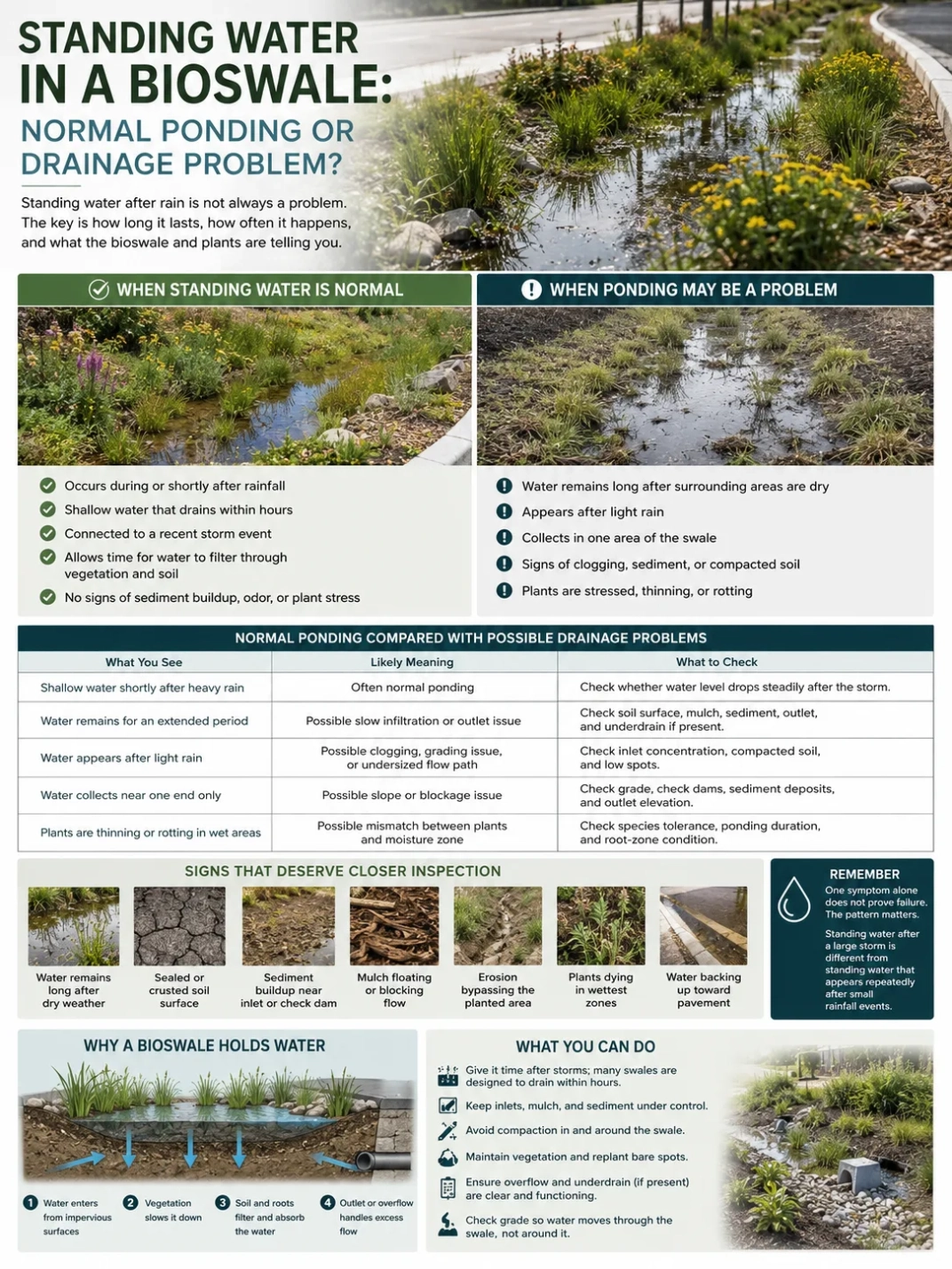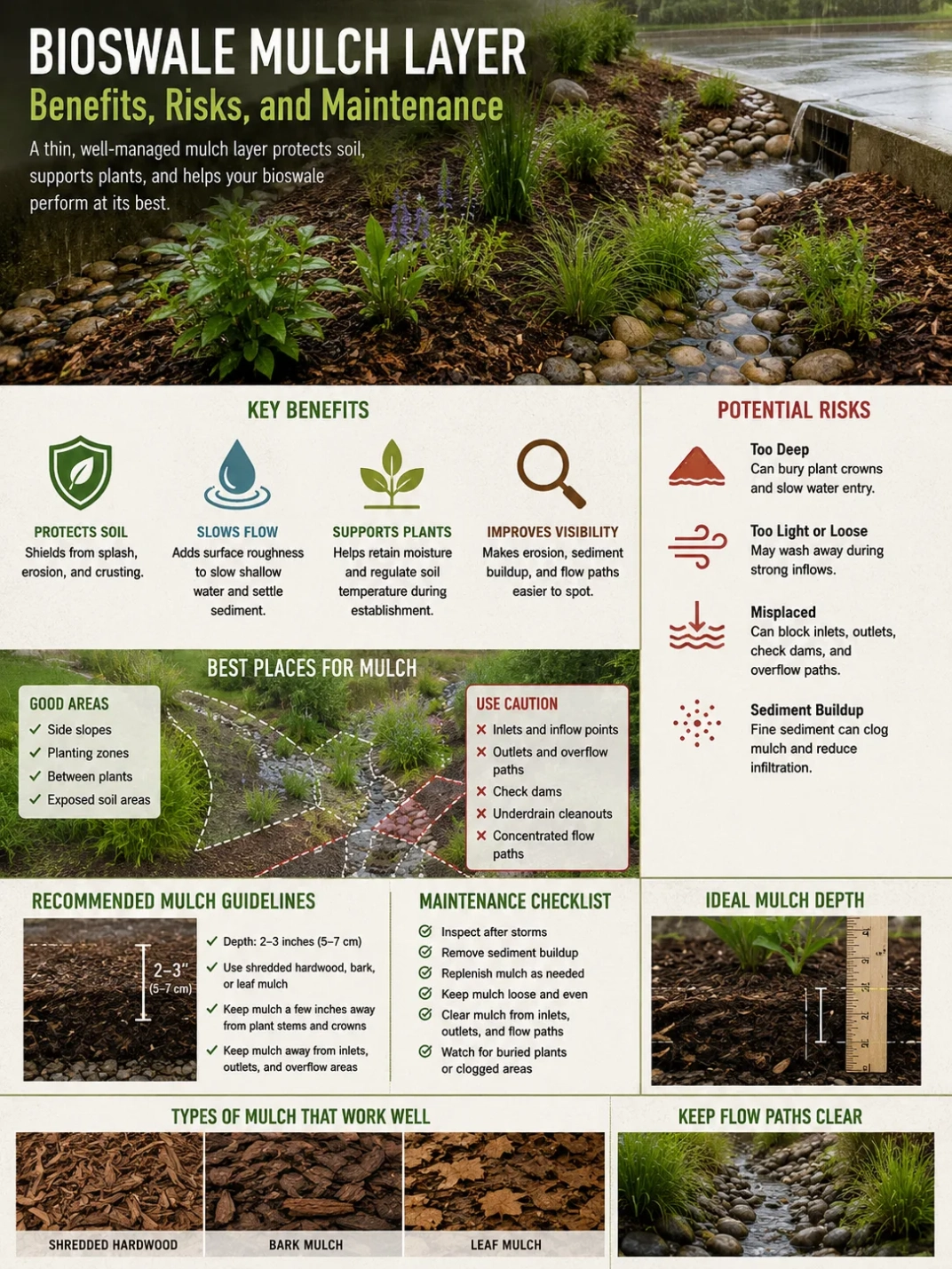
A bioswale mulch layer can protect exposed soil, slow small surface flows, limit erosion, and support young plants while they establish. It can also create problems when it is too deep, too light, poorly placed, or allowed to wash into inlets, outlets, check dams, and overflow paths. Mulch in a bioswale is not decoration first. It is a thin, managed surface layer that affects water movement, sediment capture, plant health, and long-term maintenance.
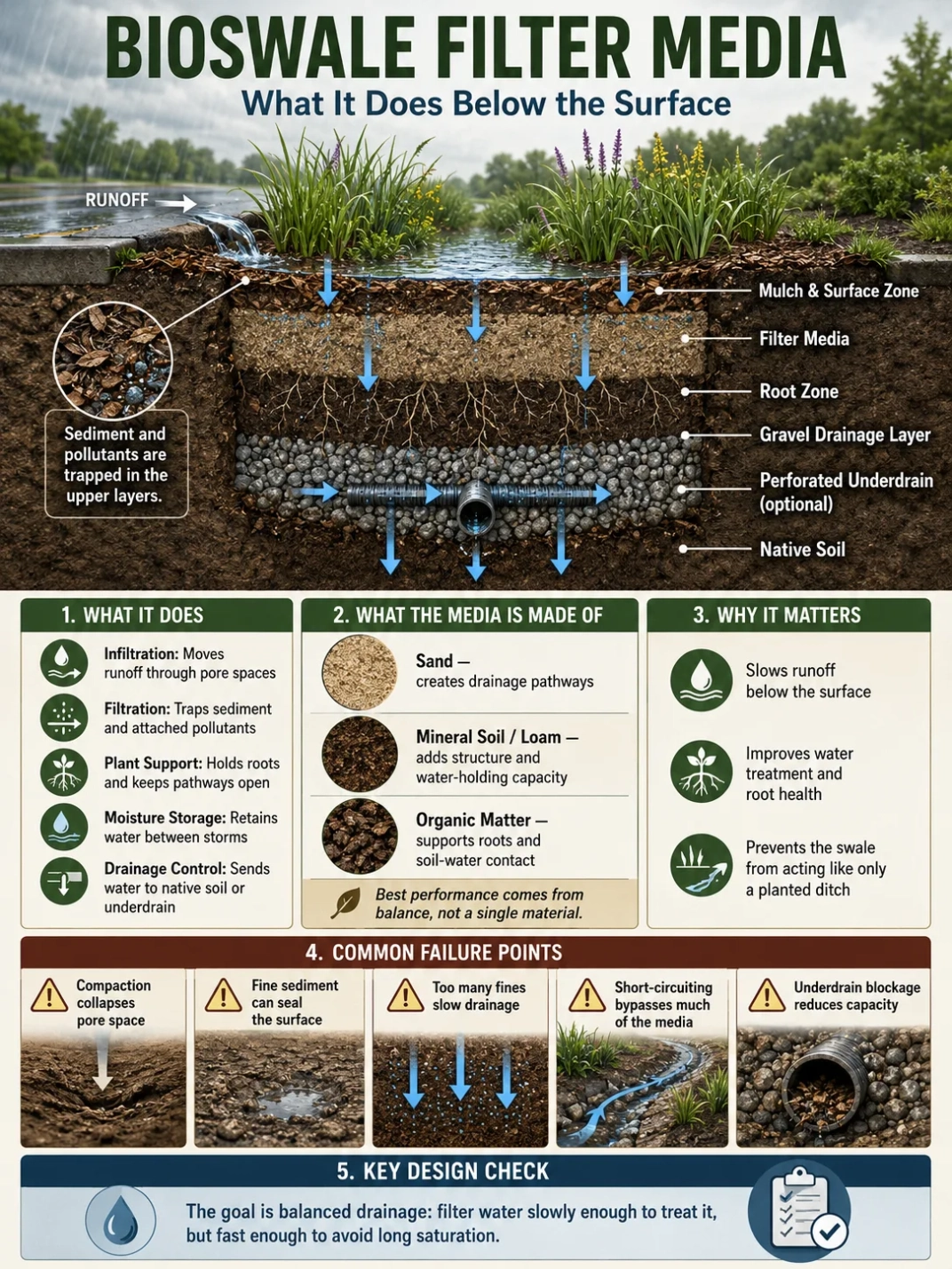
In many bioswale designs, mulch sits above the soil media where stormwater runoff first meets the planted surface. That position makes it useful, but also sensitive. If the layer floats, mats together, buries plant crowns, or traps too much fine sediment, the swale can lose part of its filtering and infiltration function.
What the Mulch Layer Does in a Bioswale
A bioswale handles runoff through a mix of surface flow, vegetation, soil infiltration, and controlled overflow. The mulch layer works at the top of that system. It helps soften the contact between moving water and bare soil.
When runoff enters from a driveway, roof leader, curb cut, parking edge, or roadside inlet, the first few feet of the bioswale often receive the highest sediment load. Mulch can help reduce splash, slow shallow sheet flow, and keep soil particles from moving before plants and roots fully stabilize the surface.
Mulch also helps moderate soil moisture near the surface. That can support plant establishment during dry periods, especially around grasses, sedges, rushes, shrubs, and other plants selected for wet-and-dry cycles.
| Function | How Mulch Helps | What Can Go Wrong |
|---|---|---|
| Erosion Control | Shields soil from splash and shallow flow near the surface. | Loose mulch can wash away during strong inflow if it is not suited to the site. |
| Sediment Capture | Traps some coarse particles before they move deeper into the swale. | Fine sediment can build up in the mulch and reduce surface infiltration. |
| Plant Support | Helps keep surface soil cooler and more even in moisture during establishment. | Mulch piled against stems or crowns can stress plants. |
| Soil Protection | Limits crusting and bare patches in exposed areas. | A matted layer can act like a cap and slow water entry into the soil media. |
| Maintenance Visibility | Makes erosion, sediment deposits, and flow paths easier to spot when kept thin and even. | Excess mulch can hide clogging, buried plants, or damaged inlet areas. |
Best Places for Mulch Inside the Swale
Mulch is most useful where the bioswale needs soil cover while vegetation is still filling in. This often includes side slopes, planting zones, and lightly exposed areas between plants.
The most sensitive locations are different. Near an inlet, outlet, underdrain cleanout, check dam, overflow route, or concentrated flow path, mulch must be placed with more care. These areas move water faster or control where water leaves the system.
Design Note: In zones where runoff enters with speed, mulch should not be treated as the main erosion-control measure. Stone, dense vegetation, turf reinforcement, check dams, or other site-specific details may be needed depending on flow, slope, soil, and local design practice.
In a residential swale, mulch may be helpful around new plantings and along gentle side slopes. In a roadside or parking lot bioswale, mulch faces heavier sediment loads and more frequent flow. That setting often needs closer inspection and stronger inlet protection.
Benefits of a Well-Managed Mulch Layer
It Protects Exposed Soil
Bare soil in a bioswale can crust, erode, or move downslope before roots hold it in place. A thin mulch layer helps protect the soil surface from raindrop impact and shallow runoff. This is most useful during the early plant establishment period.
It Helps Slow Small Surface Flows
Mulch adds roughness to the surface. That roughness can slow shallow water and give sediment more time to settle. It does not replace the swale’s shape, slope, soil media, plants, or overflow route, but it can support them.
It Supports Plant Establishment
New bioswale plants often face changing conditions: wet after storms, dry between storms, and exposed during hot weather. Mulch can reduce surface drying and protect young root zones while plants spread.
This matters because vegetation is not just visual cover. Roots help stabilize soil, create small pathways for water movement, and support the living soil zone where filtering processes occur.
It Can Reduce Weed Pressure
A managed mulch layer can reduce some weed germination by shading exposed soil. It will not stop all weeds. Seeds can arrive with runoff, wind, birds, maintenance equipment, or nearby disturbed soil.
Mulch helps most when it is paired with dense planting and regular inspection. Open mulch beds with widely spaced plants may invite more maintenance than expected.
Risks When Mulch Is Used the Wrong Way
Mulch can harm performance when it blocks water movement instead of helping it. The problem is usually not the presence of mulch. It is the wrong material, wrong depth, wrong location, or lack of upkeep.
Floating and Washout
Light mulch can float during ponding or move during higher flows. Washed-out mulch may collect at the outlet, cover an overflow structure, block a curb opening, or leave bare soil behind.
Shredded hardwood-type mulch is often more stable than very light chips in many landscape drainage settings, but material choice should still match site conditions. Fast inflow, steep slopes, and concentrated runoff change the risk.
Surface Clogging
Runoff can carry fine sediment, organic debris, leaves, sand, and road grit. Over time, these materials may settle into the mulch layer. If the surface becomes sealed or matted, water may pond longer than intended or bypass the soil media.
This is one reason mulch inspection matters after storms. A bioswale that looks tidy from a distance may still have a clogged surface near the inlet.
Plant Stress from Over-Mulching
Mulch placed too thickly can bury small plants, cover crowns, or hold excess moisture against stems. In wet zones, this can weaken plants that are already dealing with ponding and drying cycles.
Plants in a bioswale need air as well as water. A dense, smothering surface layer can work against that balance.
Hidden Erosion and Flow Shortcuts
Mulch can hide small rills, scour marks, and low spots. If water starts cutting a narrow path through the swale, it may move too quickly and reduce contact with vegetation and soil media.
A healthy bioswale spreads and slows runoff where the design allows. A narrow shortcut is a maintenance warning.
Maintenance Note: Mulch should not cover the evidence of how water actually moves. After a storm, check for displaced mulch, exposed soil, sediment fans, blocked outlets, and water lines on stems or slopes.
Mulch Depth and Placement Need Care
There is no single mulch depth that fits every bioswale. Site slope, expected runoff, plant size, soil media, ponding behavior, and maintenance access all matter. A thinner, even layer is often easier to manage than a deep layer that traps debris and moves during storms.
Mulch should usually be kept away from plant crowns, small seedlings, drain openings, underdrain access points, and overflow structures. It should also avoid forming raised berms that change the intended flow path.
The goal is contact, not burial: mulch should cover exposed soil while still letting water reach the soil media and plants.
Organic Mulch, Mineral Mulch, and Living Cover
Different surface covers behave differently in a bioswale. Organic mulch breaks down and may support soil life, but it also needs renewal and can move. Mineral materials may stay in place better in some high-flow zones, but they can affect appearance, heat, and plant establishment. Living cover from dense vegetation may become the most stable long-term surface where plants are well matched to the site.
| Surface Cover | Useful For | Watch For |
|---|---|---|
| Organic Mulch | Planting areas, soil protection, moisture moderation, early establishment. | Floating, matting, decay, sediment buildup, plant crown burial. |
| Stone or Mineral Cover | Some inlet zones, splash areas, and places with higher surface energy. | Heat, poor fit with some plantings, difficult weed removal, possible sediment filling. |
| Dense Vegetation | Long-term stabilization, root support, pollutant filtering, surface roughness. | Slow establishment, seasonal dieback, weed competition, gaps after plant loss. |
The right choice may change within the same bioswale. A curb cut may need a more durable treatment, while side slopes may use mulch around plantings until vegetation fills in.
How Mulch Interacts with Soil and Infiltration
The mulch layer sits above the soil media, but it can still affect infiltration. If it stays open and loose enough for water to pass, it helps protect the soil surface. If it becomes compacted with sediment and decomposed material, it can slow entry into the soil.
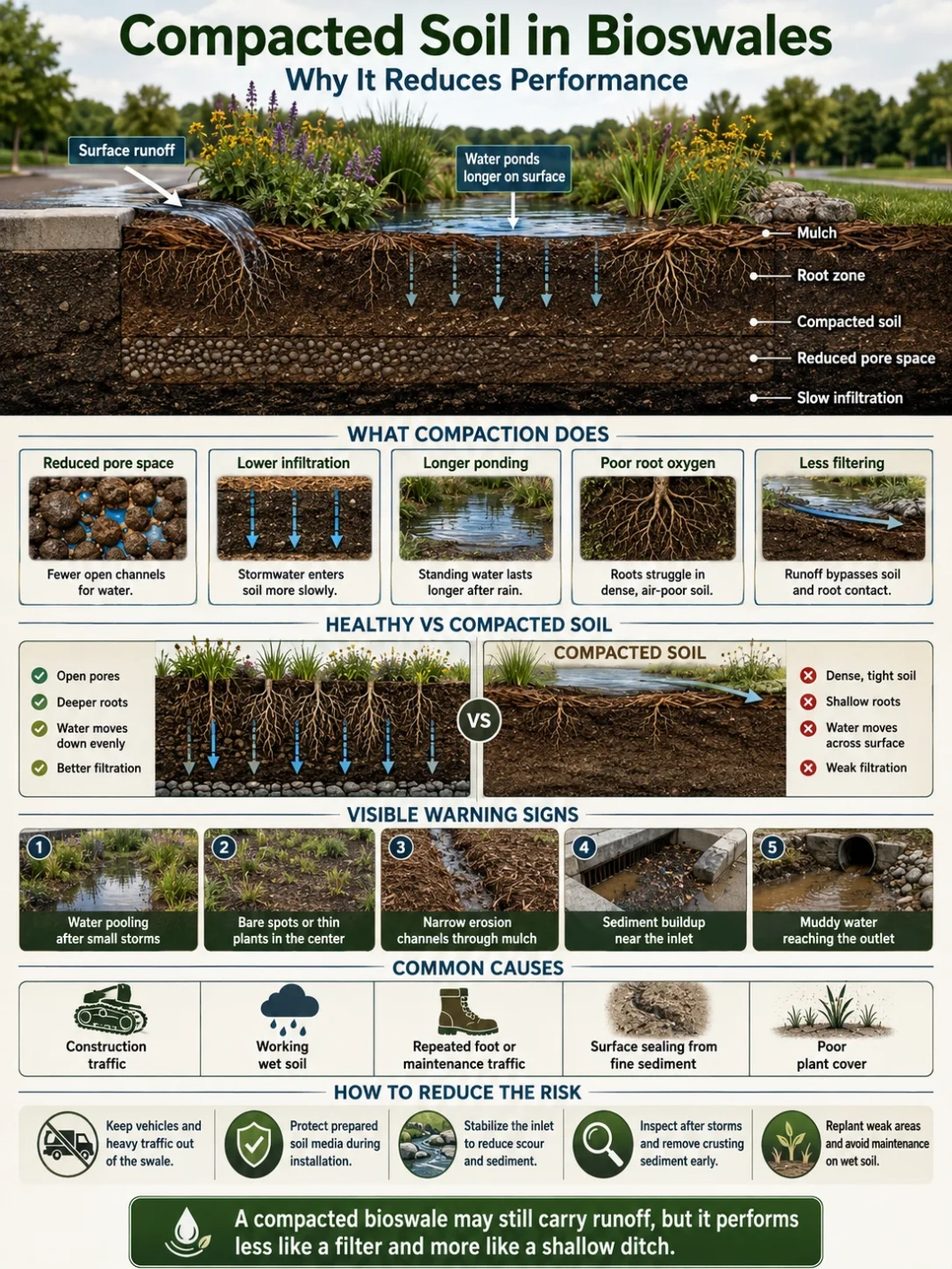
Clayey native soil, compacted subgrade, or poorly draining areas already have limits. A clogged mulch layer can make those limits more visible by extending ponding or causing runoff to flow around the planted zone.
Soil Note: If water regularly remains longer than expected, do not assume the mulch is the only problem. Soil compaction, fine sediment, clogged filter media, blocked underdrain components, poor grading, or an undersized overflow route may also be involved.
Maintenance Tasks for a Bioswale Mulch Layer
Mulch maintenance is mainly about keeping the surface open, stable, and clear of blocked drainage points. It should be checked as part of routine bioswale inspection, especially after larger storms and after nearby construction, paving, grading, or landscaping work.
- Remove sediment deposits near inlets before they seal the surface.
- Redistribute displaced mulch only if it remains clean and suitable for reuse.
- Replace washed-out areas where soil has become exposed.
- Keep mulch away from outlets and overflow paths so water can leave safely when the swale is full.
- Pull weeds early before roots disturb the surface or crowd intended plants.
- Check plant crowns and move mulch away from stems when needed.
- Look for rills and scour marks under or beside the mulch.
Fresh mulch should not simply be added on top of old, clogged mulch year after year. In areas with sediment buildup, removal and replacement may be better than layering new material over a sealed surface.
Signs the Mulch Layer Is Causing Trouble
A bioswale does not need to look perfectly manicured to work well. Still, certain surface signs deserve attention because they show that water, sediment, or plants are no longer behaving as intended.
- Mulch collects in one low area after storms.
- Inlets or curb cuts are partly blocked by mulch and debris.
- Water flows around the planted bed instead of through it.
- The surface feels sealed, greasy, or packed with fine sediment.
- Small plants are buried or leaning under mulch.
- Bare soil appears on slopes or near inflow points.
- Standing water lasts longer than typical for the site.
- Overflow routes are hidden or blocked.
One symptom may have several causes. For example, displaced mulch near an inlet may point to high inflow velocity, a clogged curb opening, undersized pretreatment, poor grading, or a mulch material that is too light for the location.
Mulch and Plant Zones
Plants in a bioswale do not all experience the same conditions. The bottom may receive more frequent ponding. Side slopes may dry faster. Edges may receive splash, salt, sand, or foot traffic depending on the setting.
Mulch should respect those zones. Around wet-tolerant sedges, rushes, and grasses in the lower zone, a heavy layer can interfere with small shoots. Around shrubs or larger perennials on upper slopes, mulch may help protect the soil while the root system develops.
Planting Note: Dense, site-suited vegetation can reduce long-term dependence on mulch. The surface should not remain a mostly open mulch bed if the design intent is a vegetated swale with active root structure and surface roughness.
Where Mulch Differs from a Rain Garden Surface
Bioswales and rain gardens can both use mulch, but they are not identical systems. A rain garden often receives and holds runoff in a basin-like planted area. A bioswale is shaped to move runoff along a path while also slowing, filtering, and sometimes infiltrating it.
Because flow path matters more in a bioswale, mulch movement can be more disruptive. If mulch shifts downslope or collects at a check dam, outlet, or low point, it may change how the swale distributes water.
This is why bioswale mulch should be viewed through drainage behavior, not only landscape appearance.
When Another Surface Treatment May Fit Better
Mulch is not the best answer in every part of every bioswale. Some locations receive runoff with enough speed or sediment that organic mulch may move too often or clog too quickly.
Another treatment may fit better where the swale receives concentrated flow, heavy roadside grit, steep drainage, frequent maintenance equipment access, or repeated washout. Options can include denser planting, stone at inflow points, check dams, pretreatment areas, or revised grading. The right choice depends on site conditions and local design expectations.
Site Planning Note: If a bioswale protects a building, receives public-road runoff, connects to a storm drain, or affects neighboring drainage, mulch decisions should be part of a broader site review. Surface cover cannot correct a poorly planned overflow route or grading problem.
Practical Maintenance Rhythm
Maintenance timing depends on rainfall, sediment load, plant cover, and surrounding land use. A residential swale that receives roof or driveway runoff may need light seasonal checks. A commercial or roadside bioswale may need more frequent inspection because sediment and debris arrive faster.
A practical rhythm is to inspect the mulch layer after major storms, during plant establishment, after fall leaf drop where relevant, and before the wettest season for the local climate. The inspection should focus on function: water entry, water movement, plant health, soil exposure, and safe overflow.
Good maintenance is not just adding more mulch. It is knowing when to remove, thin, shift, replace, or stop using mulch in a problem area.
Common Mistakes with Bioswale Mulch
- Using mulch as a substitute for proper grading or erosion control.
- Placing loose mulch directly in a fast inflow path.
- Adding new mulch over clogged, sediment-filled material.
- Burying small plants or covering crowns.
- Blocking overflow routes, drain openings, or underdrain access points.
- Ignoring repeated washout instead of checking the cause.
- Treating a bioswale surface like a decorative garden bed instead of a drainage feature.
Repeated mulch loss is a message from the site. It may show that runoff is entering too quickly, the slope is too steep for the selected surface cover, or the inflow area needs a different detail.
FAQ About Bioswale Mulch Layers
Does every bioswale need mulch?
No. Mulch is common in many planted stormwater features, especially during establishment, but some bioswales rely more on dense vegetation, stone at inflow points, or other surface treatments. The choice depends on flow, soil, plants, slope, and maintenance needs.
Can mulch improve bioswale infiltration?
Mulch can help protect the soil surface so water can enter more evenly, but it does not fix poor infiltration by itself. If the soil media is compacted, clogged, or poorly matched to the site, mulch will not solve the underlying drainage issue.
Why does mulch wash out of a bioswale?
Mulch may wash out when runoff enters too fast, the swale has a steeper flow path, the material is too light, or an inlet concentrates water in one place. Repeated washout usually means the inflow area or surface treatment needs closer review.
Should old mulch be removed or covered with new mulch?
If old mulch is clean, loose, and still allows water through, light renewal may be enough. If it is packed with sediment, matted, or blocking water movement, removal and replacement are usually better than covering the problem with a new layer.
Can mulch hurt bioswale plants?
Yes, if it is piled too deeply or placed against crowns and stems. Mulch should protect exposed soil without burying plants. Young grasses, sedges, rushes, and small perennials are especially easy to cover by accident.
Is stone better than organic mulch in a bioswale?
Stone may work better in some high-energy inlet zones, but it is not automatically better for the whole swale. Organic mulch can support planting areas, while dense vegetation may offer better long-term surface stability. Many designs use different treatments in different zones.