Bioswale filter media is the engineered soil layer that turns a shallow planted channel into more than a drainage path. Above the surface, a bioswale slows stormwater runoff with plants, mulch, and shape. Below the surface, the filter media gives that water a controlled route through mineral particles, organic matter, roots, pores, and sometimes an underdrain.
That underground layer affects how fast water moves, how much sediment stays in the swale, how plants survive wet and dry periods, and whether the system keeps working after repeated storms. A bioswale can look healthy on the surface and still perform poorly if the media below is compacted, poorly graded, or clogged with fine sediment.
What Bioswale Filter Media Is
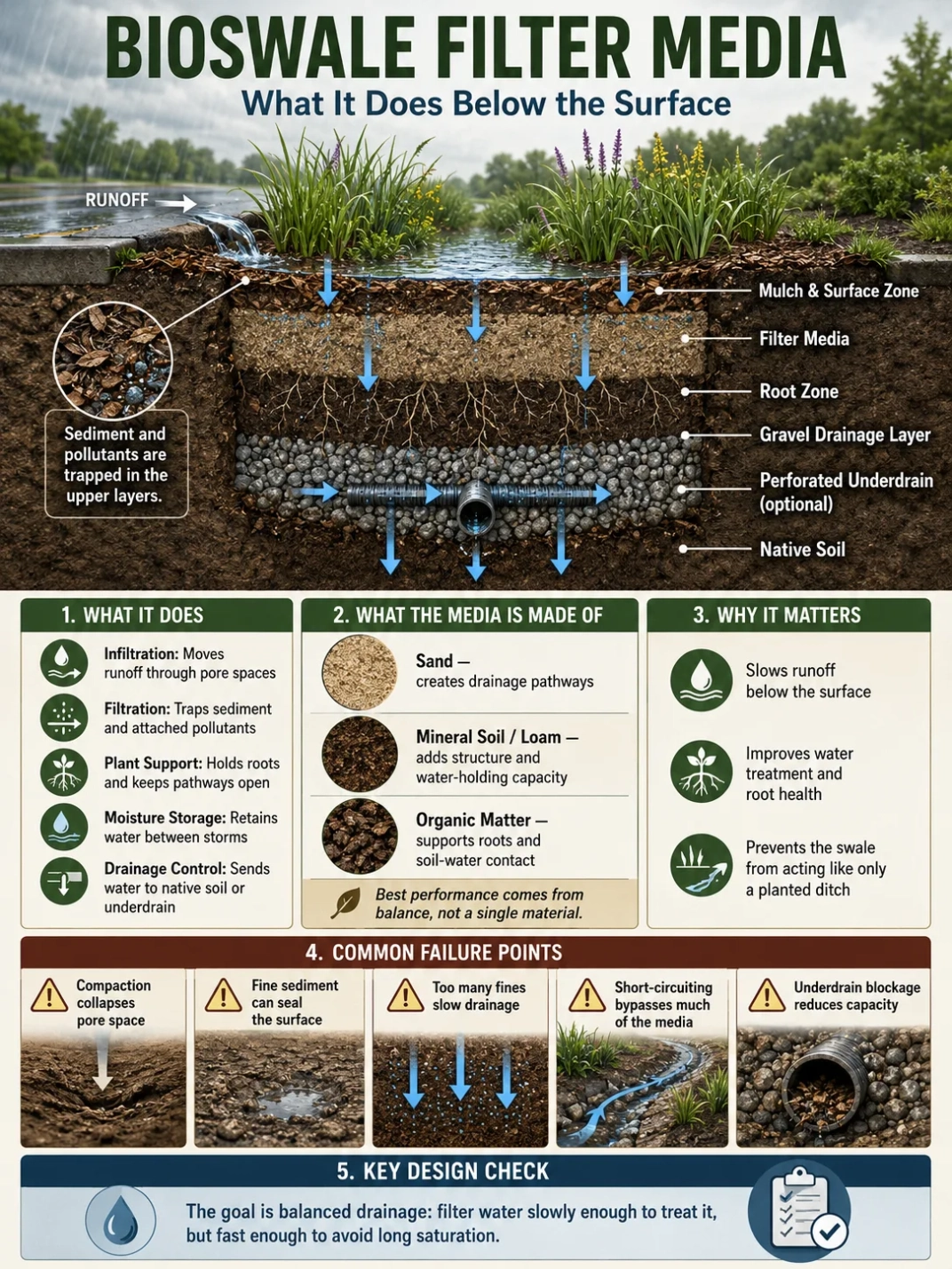
Bioswale filter media is a designed soil blend placed below the planting and mulch layer of a bioswale. It is not ordinary garden soil, and it is not only sand. In many designs, it includes a balance of sand, soil, and organic material so runoff can pass through while plants still have enough support to grow.
The exact blend depends on the site, rainfall pattern, local soil, expected runoff volume, pollutant load, planting plan, and local stormwater rules. A roadside bioswale that receives sediment from pavement may need different media behavior than a small residential swale receiving roof runoff.
The goal is simple to describe but hard to fake: move water slowly enough to filter it, but not so slowly that the swale stays saturated too long.
| Media Function | What Happens Underground | Why It Matters |
|---|---|---|
| Infiltration | Water enters pore spaces between sand, soil particles, roots, and organic material. | Helps reduce surface ponding and supports gradual drainage. |
| Filtration | Sediment and some attached pollutants are held near the upper media and mulch zone. | Keeps more material from moving directly into downstream drainage systems. |
| Plant Support | Roots grow through the media and help keep pore pathways open. | Supports vegetation that slows flow, stabilizes soil, and improves surface roughness. |
| Moisture Storage | The media holds some water after storms before it drains or is used by plants. | Helps plants survive dry intervals without turning the swale into a wet basin. |
| Drainage Control | Water may move downward into native soil or into a gravel layer and underdrain. | Allows the system to fit sites where native soil alone drains too slowly. |
Why the Media Layer Matters More Than It Looks
A bioswale surface is easy to notice: plants, side slopes, mulch, stones, curb cuts, and the shallow channel shape. The filter media is less visible, but it often decides whether the swale behaves as a green infrastructure system or only as a planted ditch.
When runoff enters the bioswale, it should spread, slow, and pass through the upper surface without cutting a narrow erosion path. Once the water reaches the media, three processes begin working together: physical straining, soil-water contact, and root-zone interaction.
Physical straining catches sediment and debris. Soil-water contact gives fine particles and organic matter more opportunity to hold pollutants attached to sediment. Root-zone interaction supports plant growth and soil structure, especially where the media is not compacted by foot traffic, equipment, or repeated sediment loading.
Filter media does not make runoff disappear. It shapes the path and speed of water so the bioswale has time to slow, filter, infiltrate, store, and drain within the limits of the site.
What Happens When Runoff Enters the Media
Runoff usually arrives from an impervious surface such as a roof, driveway, street edge, sidewalk, or parking lot. At the inlet, the water may carry leaf litter, grit, soil, tire dust, mulch fragments, or small debris. The surface zone catches the coarser material first.
Below that, the filter media begins to control the smaller movement. Water follows pore spaces, not a perfect straight line. If the media has open structure, runoff can move downward and sideways through a connected network of pores. If the media is compacted or too fine, water may stall near the surface and form standing water.
Good media supports distributed flow. That means the water does not all rush through one trench, one root gap, or one eroded line. Distributed flow gives more of the media a chance to do useful work.
Sand, Soil, and Organic Matter Each Do Different Work
A bioswale soil mix often uses several materials because one material alone usually creates a tradeoff. Coarse sand drains well but may not hold much moisture or support every planting plan. Fine soil can hold water and nutrients but may slow drainage if used too heavily. Organic matter can support plants and pollutant binding, but too much may settle, decompose, or affect drainage behavior over time.
The right balance depends on the project. A media mix should be selected for both hydrologic function and plant performance, not only for easy installation.
Sand Helps Create Drainage Pathways
Sand-sized particles create larger pore spaces than clay or silt. This helps water move through the media after storms. In a bioswale, that movement can reduce long surface ponding and help the system reset before the next rainfall.
Sand alone is not a full answer. If the media is too loose, dry, or low in organic material, plants may struggle to establish. If the sand contains too many fine particles, the drainage benefit can drop.
Soil Particles Add Structure and Holding Capacity
Mineral soil gives the media more body. It helps hold moisture, supports roots, and provides surfaces where fine particles can interact with the media. The challenge is texture. Too much fine soil can reduce infiltration and raise clogging risk, especially where runoff carries sediment.
Clay is not useless, but clay-heavy media is usually difficult in a bioswale unless the design accounts for slow drainage. Native clay below the media may also change the design approach, especially when there is no underdrain.
Organic Matter Supports Roots and Some Filtering
Organic material helps plants establish and can improve soil-water contact. It may also help hold some pollutants that are attached to small particles. But organic matter needs restraint. Too much compost-like material can settle, float, release nutrients, or change the drainage behavior of the media.
A bioswale is not a compost trench. The organic part of the media should support function without turning the system into a soft, unstable, or nutrient-rich layer that washes out during storms.
Filter Media and Pollutant Filtering
Bioswale filter media can help reduce pollutants mainly by slowing runoff, trapping sediment, and giving water more contact with soil and plant roots. Many pollutants in urban runoff travel attached to sediment or fine particles, so sediment control is one of the main jobs of the surface and upper media layer.
It is better to think of the media as a treatment zone, not a magic filter. Performance depends on runoff quality, flow rate, media depth, maintenance, plant health, slope, inlet design, and whether the water bypasses the system during larger storms.
Fine sediment is especially important. It can carry pollutants, but it can also clog the media. A bioswale that receives heavy sediment loads may need pretreatment, such as a stable inlet, forebay, stone edge, grass strip, or routine sediment removal before material buries the media surface.
The Role of Pores, Roots, and Soil Biology
Water moves through pores. Roots help create and protect some of those pore pathways, especially when plants are well matched to the moisture pattern of the bioswale. Fine roots can hold the media together, improve surface stability, and help the soil recover after wet and dry cycles.
Grasses, sedges, rushes, and selected shrubs may all play useful roles depending on climate, sun exposure, salt exposure, soil moisture, and maintenance access. The best plant choice is usually regional. A species that works in one watershed may fail in another with different heat, freeze, drought, or soil conditions.
Planting Note: Filter media should not be designed separately from the planting plan. If the media drains very fast, plants must tolerate dry intervals. If the media stays moist longer, plants need wet-tolerant roots. Mixed moisture zones are common in longer bioswales because the inlet, center, side slopes, and outlet may not behave the same way.
How Media Connects to Native Soil and Underdrains
Below the filter media, water needs somewhere to go. On some sites, it infiltrates into native soil. On other sites, the media drains into a gravel layer and perforated underdrain that carries water to an approved outlet. Some designs use both infiltration and underdrainage.
Native soil changes the whole design. Sandy or loamy subsoil may accept water more readily. Clay, compacted fill, shallow bedrock, or a high seasonal water table may limit downward movement. In those cases, filter media alone cannot fix the site. The lower drainage layer, underdrain, overflow route, and outlet elevation may become more important.
Drainage Note: A bioswale should have a planned overflow route. During larger storms, water may exceed the media’s ability to absorb and drain flow. A safe overflow path helps protect the swale surface, nearby pavement, building areas, and adjacent properties.
Where Filter Media Can Fail
Most media problems are not visible at first. The bioswale may still have plants and mulch, but water begins to pond longer, flow around the planted area, or cut small channels across the surface. These signs often point to a media or inlet problem below the visible layer.
- Compaction: Foot traffic, parked vehicles, heavy equipment, or poor installation can collapse pore spaces.
- Sediment sealing: Fine sediment can form a dense surface layer that blocks infiltration.
- Poor media blend: Too many fines can slow drainage; too little water-holding capacity can stress plants.
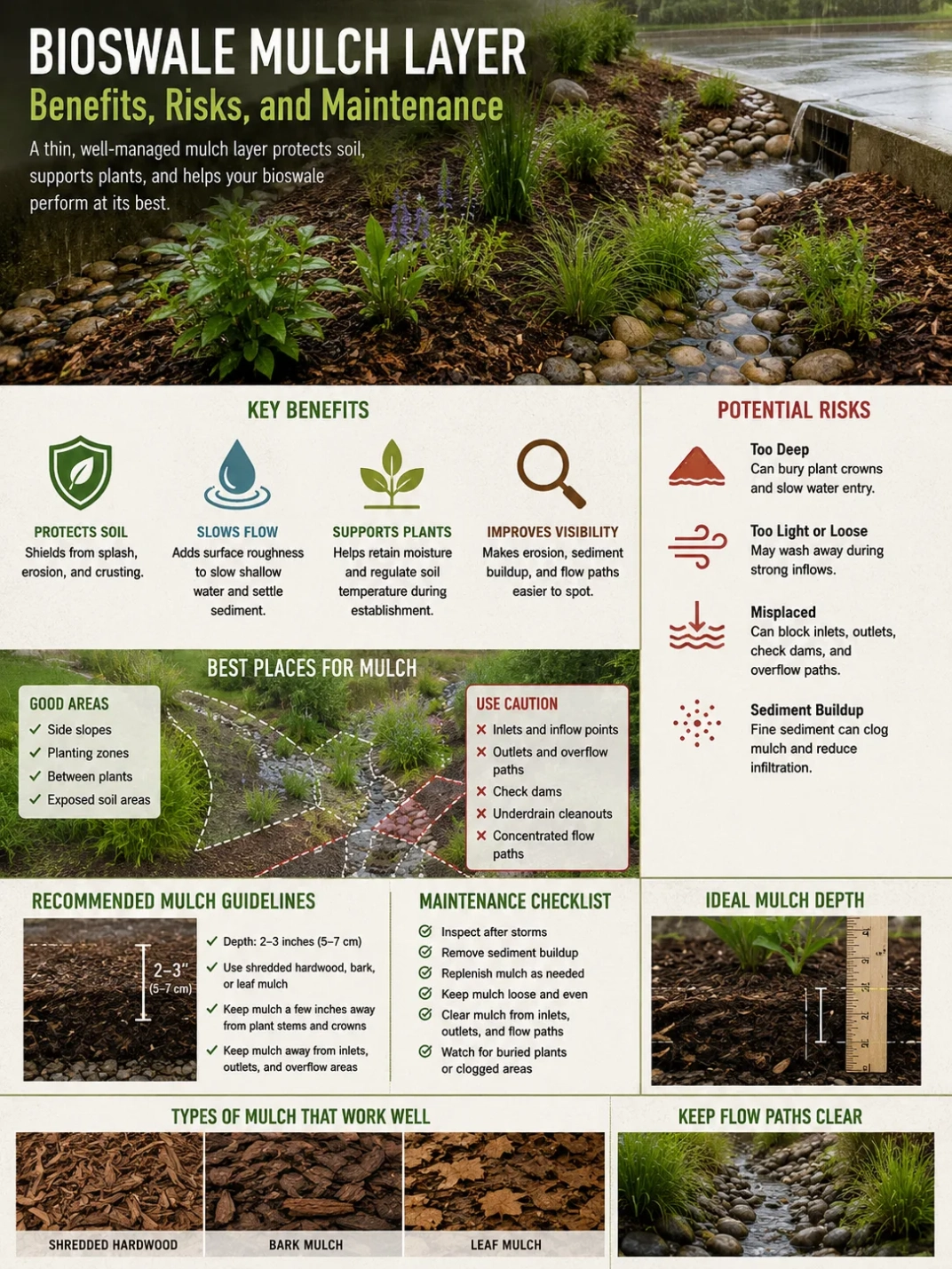
- Mulch migration: Floating or displaced mulch can clog inlets, outlets, or low spots.
- Short-circuiting: Water may carve a narrow path and bypass much of the media.
- Underdrain blockage: If present, the underdrain can lose capacity when sediment reaches the gravel layer or pipe openings.
These issues are easier to manage when the bioswale includes stable inlets, accessible inspection points, erosion-resistant surface cover, and enough maintenance access to remove sediment without damaging the media.
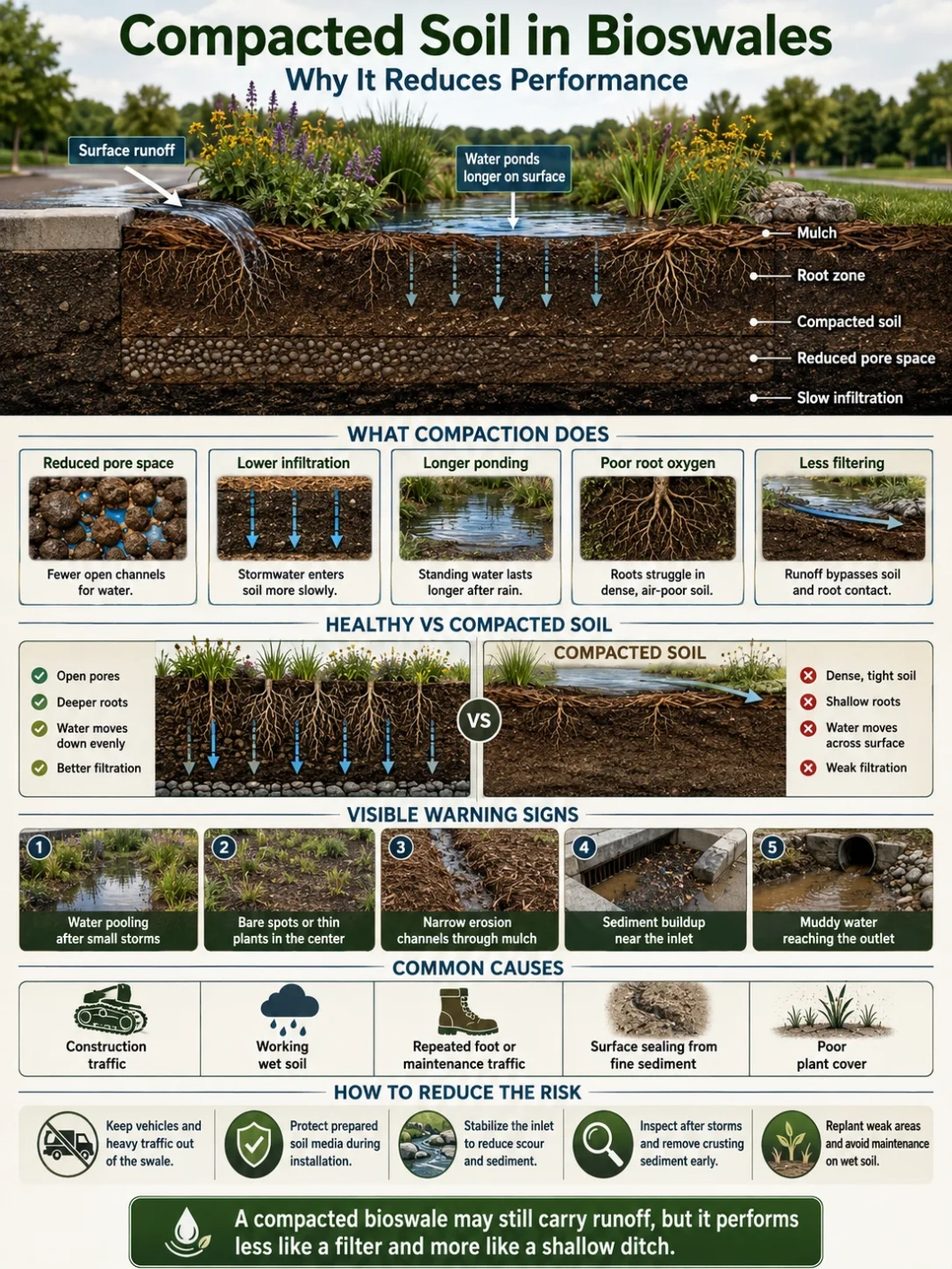
Compaction Is One of the Biggest Hidden Problems
Filter media needs pore space. Compaction removes that pore space. Once compacted, the media may drain more slowly, hold water near the surface, and limit oxygen in the root zone. Plants may decline even when rainfall seems adequate.
Compaction can happen during construction if equipment drives over the swale area, if media is placed when too wet, or if the finished swale becomes a walking route. Public-space bioswales often need edges, paths, or planting density that gently guide people away from the media surface.
Soil Note: Loosening the top layer may help minor surface sealing, but deeper compaction or poor media selection may need more than raking. Large or repeated drainage problems should be checked by someone familiar with stormwater soils and site grading.
How Filter Media Affects Ponding Time
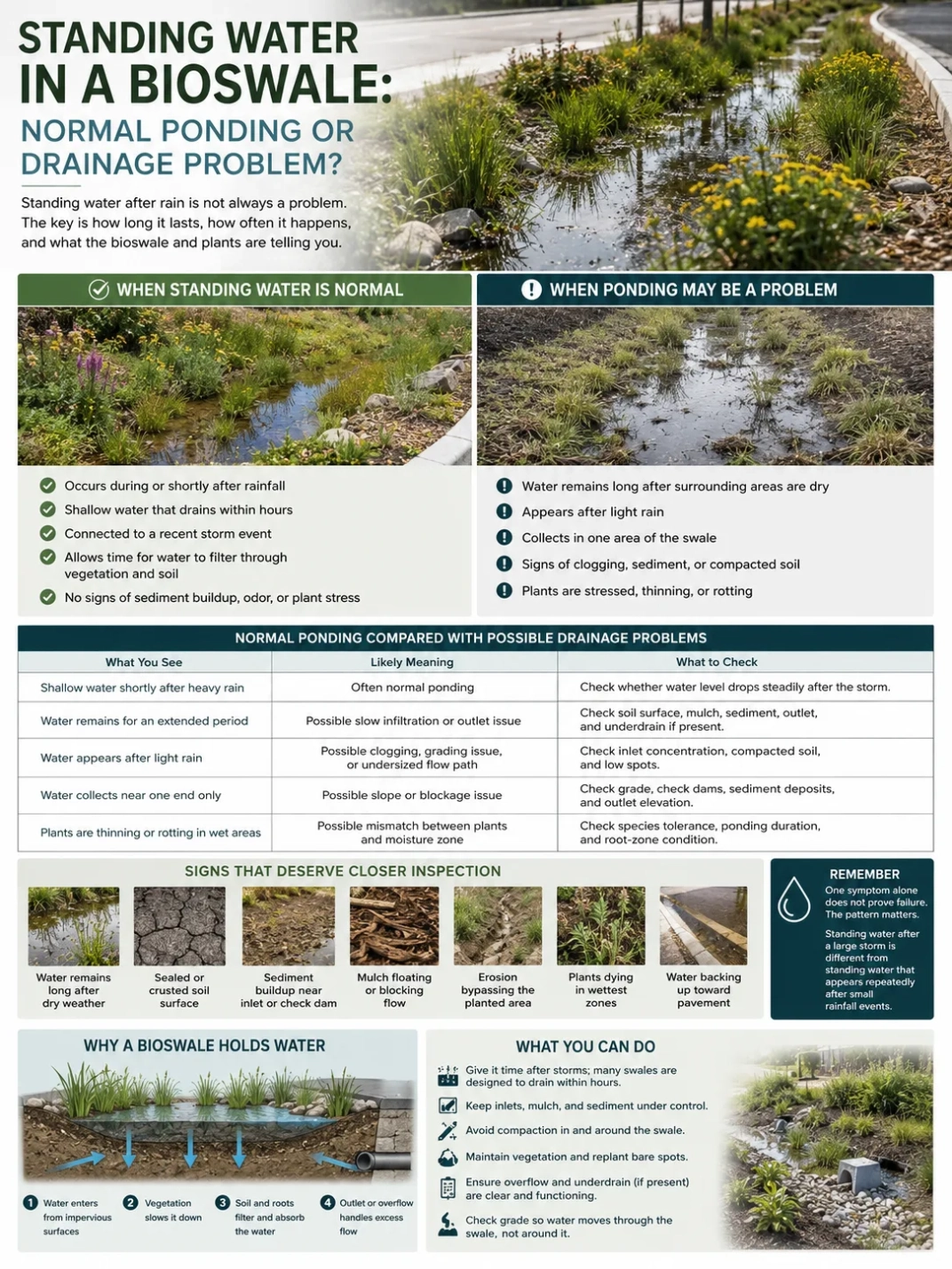
Ponding is not automatically a failure. A bioswale is expected to hold shallow water for a period after rainfall. The problem is water that remains too long for the design, the plants, or the site use.
Filter media affects ponding time by controlling how quickly water enters and moves through the root zone. If the top layer is clogged, water stays on the surface. If the media is open but the native soil below is slow, water may move through the media and then back up. If an underdrain is too high, blocked, or missing where needed, the swale may stay wetter than planned.
Because these causes look similar from above, standing water should be read as a symptom, not as a complete diagnosis.
Filter Media Is Not the Same as Ordinary Topsoil
Topsoil is made for plant growth, not necessarily stormwater movement. It may contain too much fine material, weed seed, debris, or organic matter for a bioswale. Some topsoil also varies widely from load to load, which can make drainage unpredictable.
Bioswale media needs a more controlled structure. It should support plants while allowing repeat wetting and drying. It also needs to resist sealing under stormwater flow, especially near inlets where sediment and energy are highest.
This is why many bioswale specifications treat filter media as an engineered material rather than a landscaping afterthought.
How It Differs from Gravel Drainage
Gravel can move water, but it does not replace filter media. A gravel trench or French drain is mainly a drainage feature. Bioswale media is both a drainage and treatment layer. It supports vegetation, slows water, filters sediment, and provides a root zone.
Some bioswales include gravel below the media as part of an underdrain system. In that case, the gravel is a lower drainage layer, not the main planting medium. If runoff drops directly into gravel without proper filtering above it, sediment can move into the voids and reduce capacity over time.
What to Check Before Choosing Media
A media choice should follow the site conditions, not a copied recipe. Before planning a bioswale filter media layer, several questions matter.
- Where is the runoff coming from: roof, driveway, parking lot, street, lawn, or mixed surfaces?
- How much sediment is likely to reach the inlet?
- Does the native soil drain well, slowly, or unpredictably?
- Will the bioswale need an underdrain?
- Where will overflow go during larger storms?
- What plants can tolerate the expected wet and dry pattern?
- Can the inlet, outlet, mulch, and media surface be inspected and cleaned?
- Do local stormwater rules require a tested media blend or professional design review?
Site Planning Note: Residential projects near foundations, basements, steep slopes, neighboring property lines, public sidewalks, or public drainage systems deserve extra care. The media layer is only one part of the drainage behavior.
Maintenance Below the Surface Starts at the Surface
Most filter media maintenance begins above the media. Keeping sediment, trash, displaced mulch, and eroded soil from building up at the surface helps protect the pore spaces below. Once fine sediment seals the surface, water may stop entering the media evenly.
Useful inspection points include the inlet, the first few feet of the flow path, low spots where water lingers, the outlet or overflow area, and any underdrain cleanout if the design includes one. Plant condition also gives clues. Stressed plants near the inlet may point to sediment burial, salt exposure, erosion, or long saturation.
Maintenance Note: Removing sediment early is usually easier than repairing a clogged media layer later. Maintenance should avoid compacting the swale surface, especially when the media is wet.
When Filter Media Needs Professional Review
Small landscape bioswales can be simple, but some sites need professional review. This is especially true when the swale receives runoff from large hard surfaces, sits near buildings, connects to a public drainage system, includes an underdrain, or must meet a local stormwater requirement.
Professional review can help with media depth, infiltration testing, overflow routing, underdrain placement, side slope stability, inlet protection, and plant selection. It can also prevent a common mistake: treating the filter media as a stand-alone fix when the real issue is grading, flow concentration, or poor outlet design.
Common Misunderstandings About Bioswale Filter Media
One common misunderstanding is that faster drainage is always better. Very fast drainage may reduce surface ponding, but it can also reduce water contact time and stress plants during dry periods. A bioswale needs balanced drainage, not just rapid drainage.
Another misunderstanding is that plants do all the filtering. Plants help, but the media, mulch, sediment control, and flow path all work together. Without suitable media, even well-chosen plants may struggle.
A third misunderstanding is that filter media can overcome every site limitation. It cannot. Poor overflow routing, compacted subsoil, heavy sediment loading, or an undersized drainage path can still limit performance.
FAQ
What does bioswale filter media do?
Bioswale filter media helps runoff move through the planted swale while trapping sediment, supporting plant roots, holding some moisture, and allowing drainage. It is the underground treatment and root-zone layer between the surface and the native soil or underdrain system.
Is bioswale filter media just soil?
No. It is usually a designed soil media blend rather than ordinary topsoil. It may include sand, mineral soil, and organic material in a balance selected for drainage, filtration, and plant growth. The right blend depends on site conditions and local requirements.
Can filter media stop a bioswale from flooding?
Filter media can help manage runoff, but it cannot promise flood prevention. Larger storms, poor grading, blocked outlets, slow native soil, or undersized overflow routes can still cause water to exceed the bioswale’s capacity.
Why does water sit on top of the bioswale media?
Water may sit on the surface because the media is clogged, compacted, too fine, or backed up by slow native soil below. It may also happen if the inlet sends more water than the swale can handle. The cause should be checked before replacing plants or adding more mulch.
Does a bioswale need an underdrain below the filter media?
Some bioswales use an underdrain, and some do not. Sites with slow-draining soil, limited infiltration, or specific stormwater requirements may need one. Sites with suitable native soil may allow more infiltration without an underdrain, where local rules allow.
How can filter media be protected over time?
Protecting the media usually means controlling sediment at the inlet, preventing compaction, maintaining plants, keeping outlets clear, and removing debris before it forms a sealing layer. Good surface maintenance helps preserve the underground pore spaces that make the media work.