A bioswale stays effective when small issues are found early. Most maintenance takes only a few minutes during routine inspections, while delayed care can allow sediment, compacted soil, blocked inlets, or unhealthy vegetation to reduce infiltration and slow stormwater treatment. A practical checklist helps homeowners and site managers identify changes before they develop into larger drainage or landscape problems.
Maintenance Checklist by Inspection Area
| Component | What to Check | Typical Response |
|---|---|---|
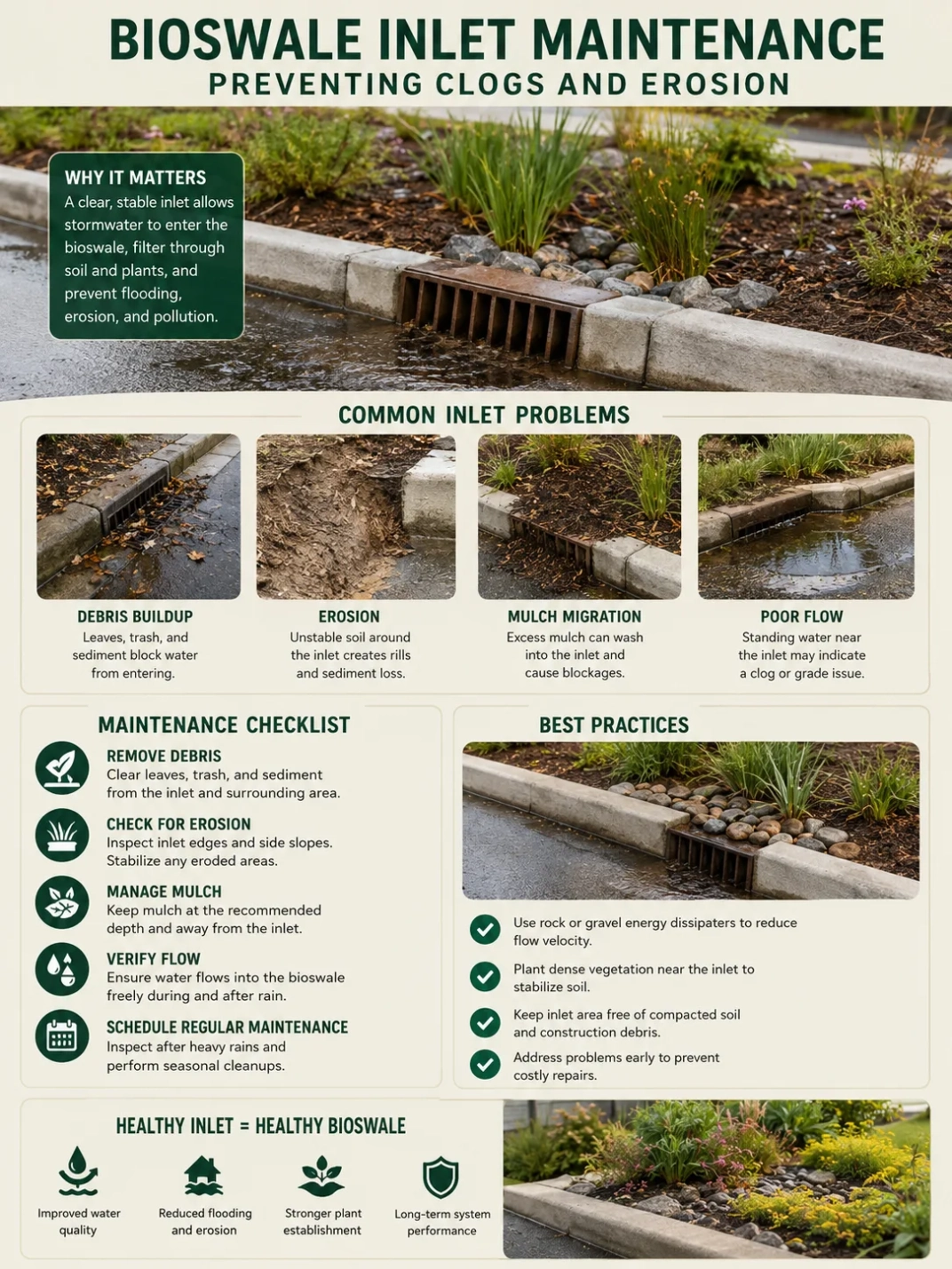
| Inlet | Leaves, litter, sediment buildup, blocked openings | Remove debris and restore clear flow |
| Flow Path | Scour marks, erosion, uneven flow | Repair damaged areas and stabilize soil if needed |
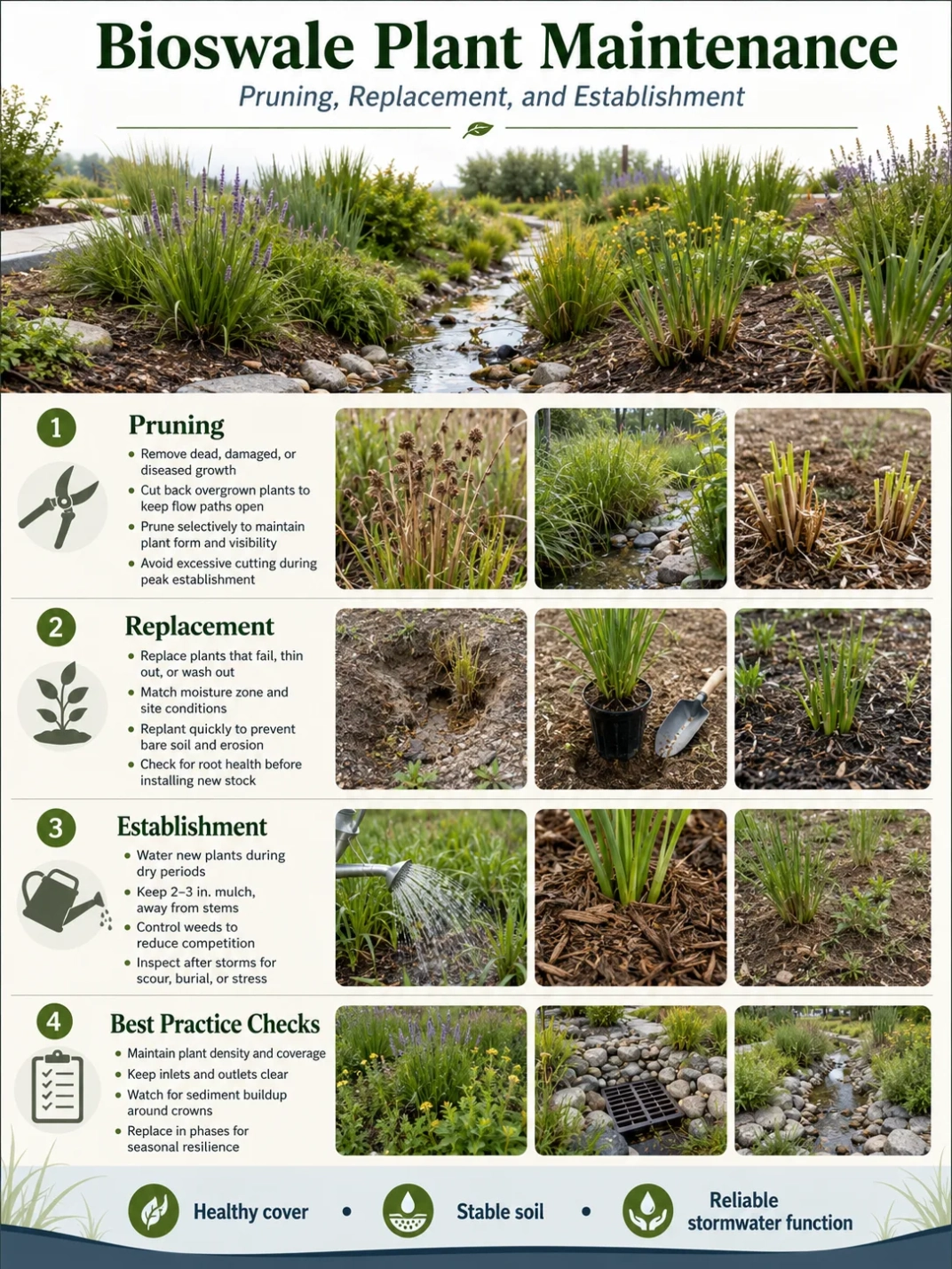
| Plants | Dead plants, invasive weeds, poor coverage | Replace unhealthy plants and remove unwanted species |
| Mulch | Thin coverage, displacement, excessive accumulation | Refresh or redistribute mulch where appropriate |
| Soil Surface | Compaction, crusting, exposed roots | Reduce foot traffic and restore surface where necessary |
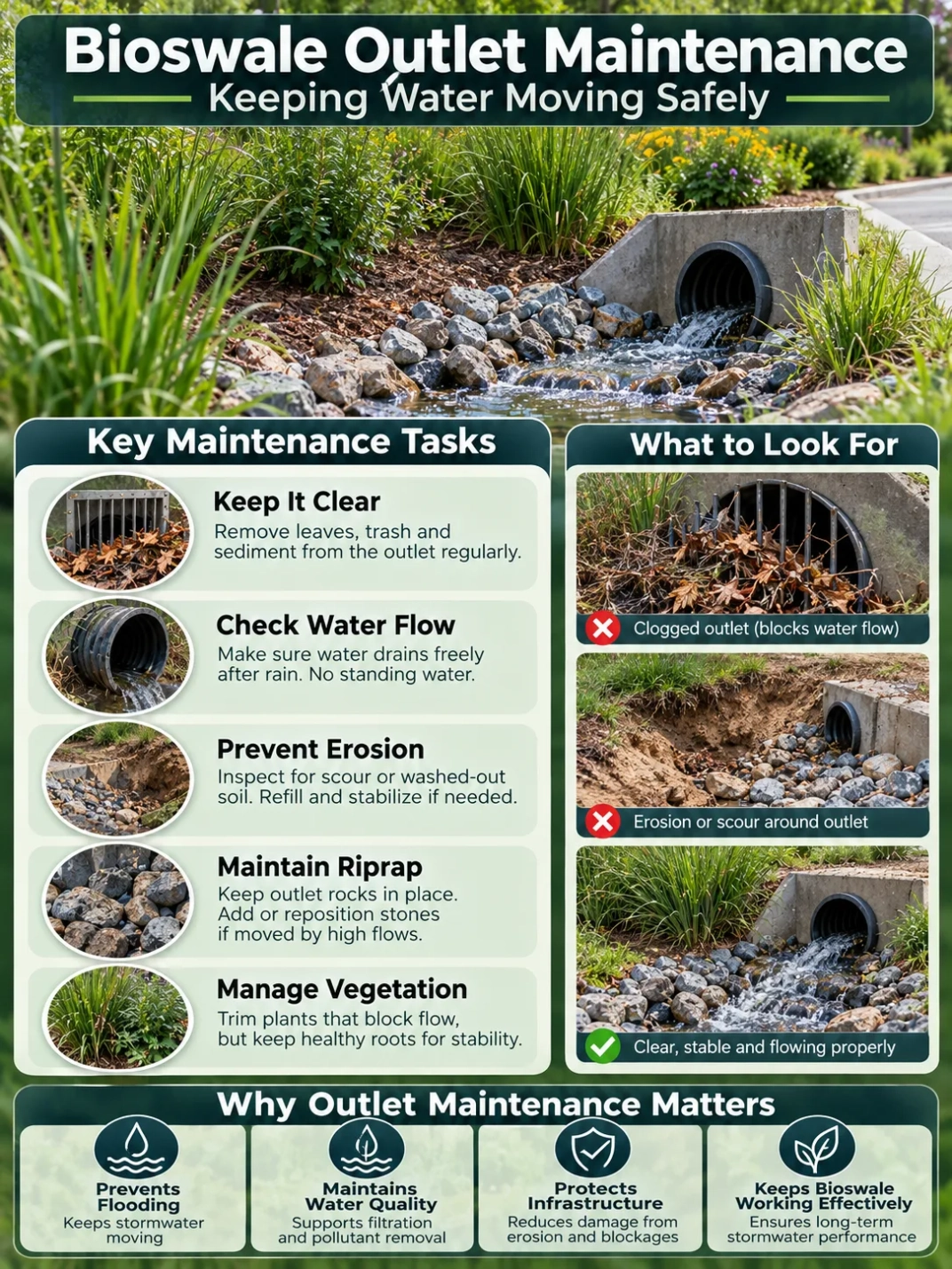
| Outlet | Obstructions, erosion, standing water nearby | Clear the outlet and inspect downstream drainage |
Monthly Visual Inspection
A short monthly walk-through keeps most residential and commercial bioswales functioning as intended. Focus on visible changes rather than performing major maintenance every visit.
- Remove litter, branches, and accumulated leaves.
- Check whether stormwater enters the bioswale without bypassing the inlet.
- Look for fresh sediment deposits.
- Inspect for exposed soil that could begin eroding.
- Confirm that vegetation still covers most planting areas.
- Watch for signs of repeated vehicle or foot traffic causing soil compaction.
After Heavy Rain
Rain events provide the best opportunity to observe how runoff actually moves through the system. Standing beside the bioswale during or shortly after rainfall can reveal issues that remain hidden during dry weather.
- Verify that runoff enters through designated inlets.
- Look for water escaping over side slopes.
- Check whether sediment is collecting at one location.
- Observe whether ponded water begins to drain within a reasonable period for local soil conditions.
- Inspect the overflow route for erosion or blockage.
Plant Health Checklist
Healthy vegetation does more than improve appearance. Dense root systems help stabilize soil, slow runoff, and support infiltration.
- Replace dead plants before bare patches expand.
- Remove invasive weeds before seed production.
- Trim damaged stems without removing excessive living growth.
- Watch for mulch covering plant crowns.
- Check that moisture-zone planting still matches wet and dry portions of the bioswale.
Native species often recover more easily from seasonal rainfall changes because they are adapted to local growing conditions.
Soil and Surface Condition
The soil surface should accept runoff without becoming sealed or heavily compacted.
- Look for hard crusts forming after repeated rainfall.
- Check for tire tracks or worn walking paths.
- Inspect for exposed filter media caused by erosion.
- Identify areas where fine sediment has formed a dense layer.
Inspecting Inlets, Outlets, and Overflow Routes
Even healthy vegetation cannot compensate for blocked hydraulic components.
- Confirm that inlet openings remain unobstructed.
- Remove accumulated sediment that changes flow direction.
- Check outlet structures for debris.
- Inspect energy dissipation areas for displaced stone or erosion.
- Verify that emergency overflow paths remain open and stable.
Seasonal Maintenance Tasks
| Season | Priority Tasks |
|---|---|
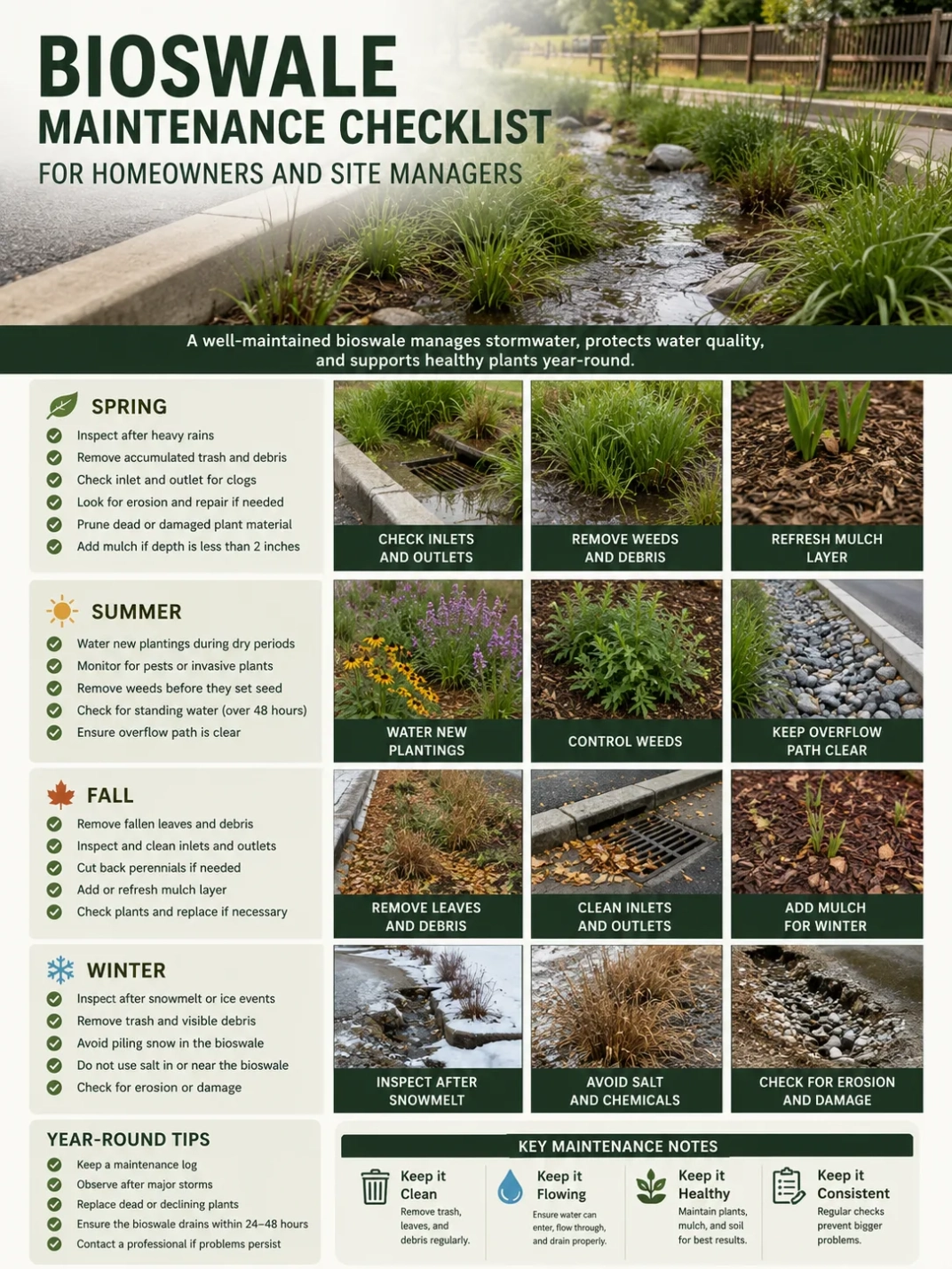
| Spring | Replace winter-damaged plants, remove accumulated debris, inspect mulch. |
| Summer | Control weeds, monitor plant establishment, inspect after intense storms. |
| Autumn | Remove excessive leaf buildup, clear inlets, inspect erosion. |
| Winter | Watch for sediment movement, avoid unnecessary soil disturbance when wet. |
Homeowners and Site Managers Have Different Priorities
Residential bioswales generally require simple inspections focused on roof runoff, driveway drainage, mulch, and plant health.
Commercial or public sites often require additional attention because larger impervious surfaces generate more runoff and sediment. Parking lots, sidewalks, and roadways can introduce heavier sediment loads, making inlet inspections and sediment removal more frequent.
Common Signs That Maintenance Is Being Delayed
- Repeated standing water after moderate rainfall.
- Large bare areas where plants no longer recover.
- Sediment reaching the outlet.
- Water flowing around, instead of through, the bioswale.
- Persistent weed dominance replacing intended vegetation.
- Visible erosion along side slopes or the main flow path.
FAQ
How often should a bioswale be inspected?
Monthly inspections are suitable for many sites, with additional checks after larger rainfall events or seasonal changes.
Should leaves be removed from a bioswale?
A light natural layer is usually not a problem, but thick accumulations can block inlets and reduce water movement. Excess debris should be removed.
What is the first area to inspect after a storm?
The inlet is usually the best starting point because debris and sediment often collect where runoff first enters the bioswale.
Does every bare patch require replanting?
Small seasonal gaps may recover naturally. Areas that remain bare or continue to erode generally benefit from replanting with suitable vegetation.
Can standing water mean the bioswale has failed?
Not necessarily. Temporary ponding is part of many designs. Water that persists well beyond expected drainage times may indicate clogging, soil compaction, or another condition that deserves further inspection.