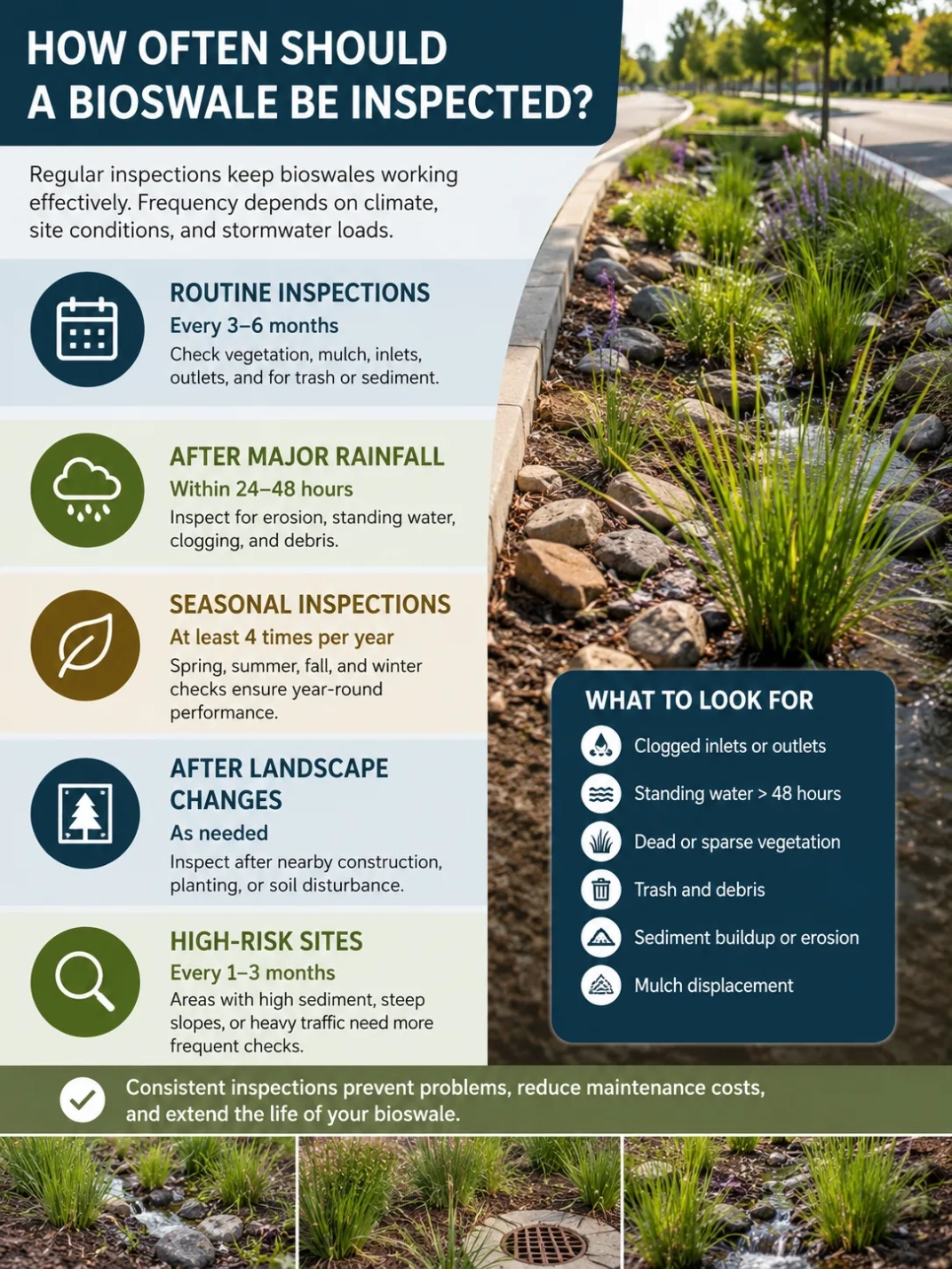
A bioswale should be inspected on a regular schedule rather than only after problems appear. Most sites benefit from a routine visual inspection every few months, with additional checks after heavy rainfall, seasonal changes, construction activity nearby, or any event that may carry extra sediment into the system. Frequent inspections during the first year are especially helpful because plants, soil, and drainage patterns are still becoming established.
Recommended Inspection Frequency
| Situation | Suggested Inspection Timing | Primary Focus |
|---|---|---|
| Newly installed bioswale | Several times during the first growing season | Plant establishment, erosion, mulch movement, early drainage performance |
| Established residential bioswale | Every few months and after major storms | Standing water, sediment buildup, vegetation health |
| Commercial or public-site bioswale | Routine scheduled inspections with additional post-storm checks | Inlets, outlets, sediment loads, public safety, maintenance access |
| Following nearby construction | As soon as practical after runoff reaches the site | Excess sediment, clogged flow paths, damaged vegetation |
Inspection frequency may increase where runoff volumes are higher, rainfall is frequent, or surrounding impervious surfaces contribute larger sediment loads. A bioswale serving a busy parking lot often requires closer attention than one collecting runoff from a small residential landscape.
What Should Be Checked During an Inspection?
An inspection is not only about looking for obvious damage. It also helps confirm that water continues to move through the system as intended. A well-performing bioswale normally slows runoff, allows infiltration where soil conditions permit, and directs excess water safely toward its outlet or overflow route.
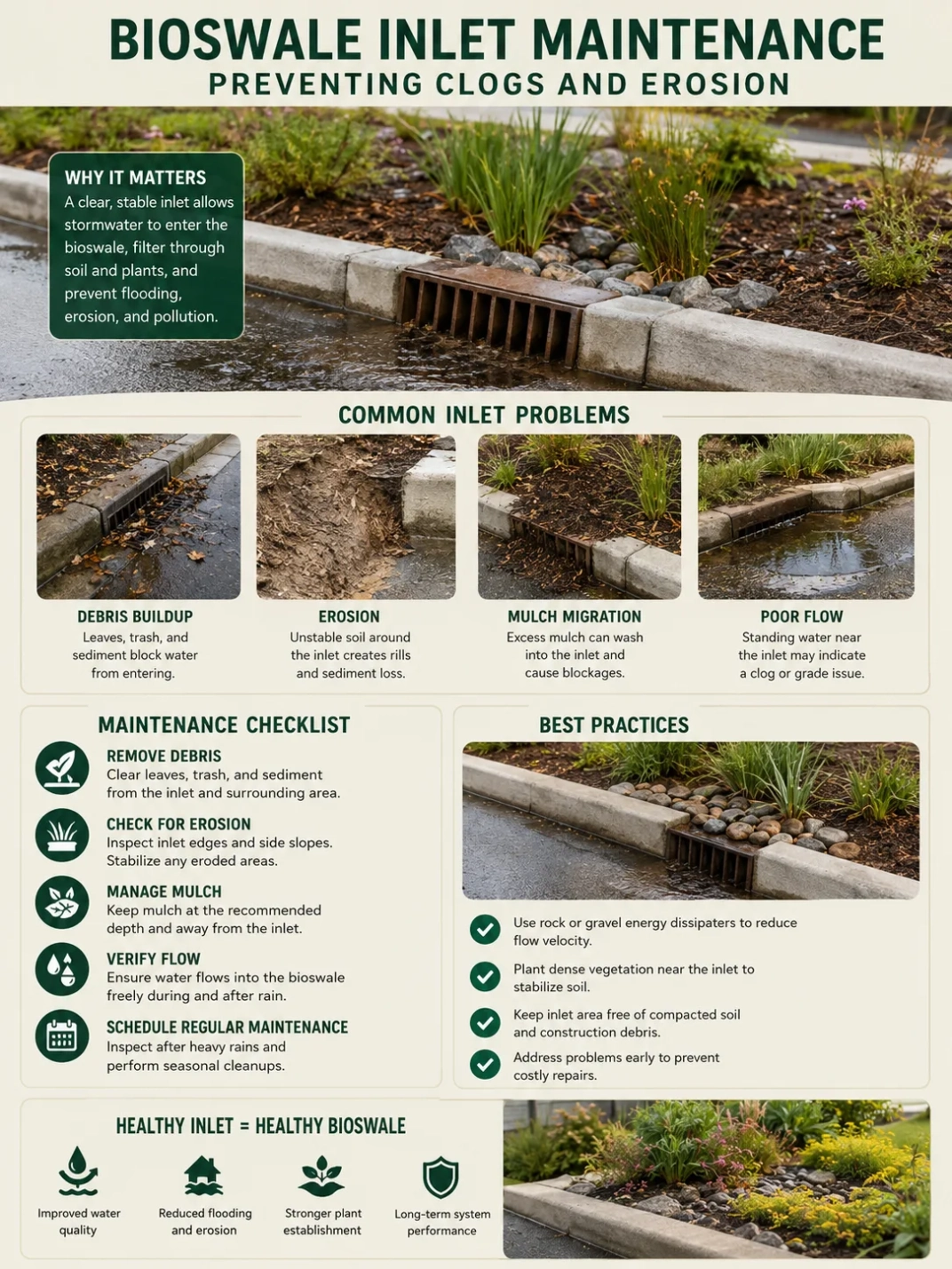
- Check whether the inlet is free of leaves, litter, gravel, and accumulated sediment.
- Look for erosion around inflow points, check dams, and side slopes.
- Confirm that runoff follows the designed flow path instead of cutting new channels.
- Observe whether water drains within a reasonable period after rainfall. Persistent standing water may indicate clogging or unsuitable soil conditions.
- Inspect the outlet and overflow area for blockages or signs of scour.
- Look for compacted soil caused by maintenance vehicles or repeated foot traffic.
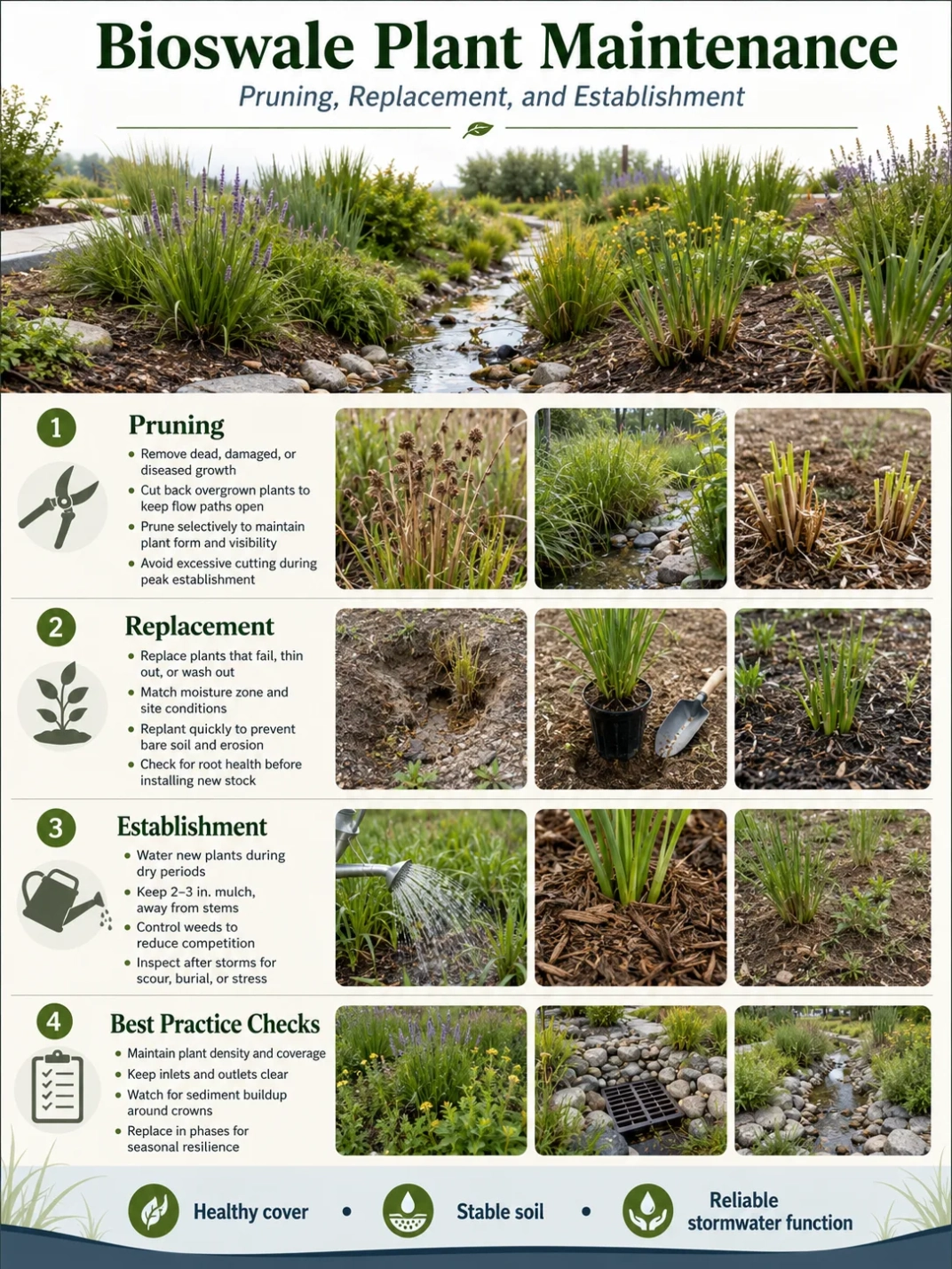
- Assess plant coverage, noting bare areas, dead plants, invasive weeds, or excessive woody growth.
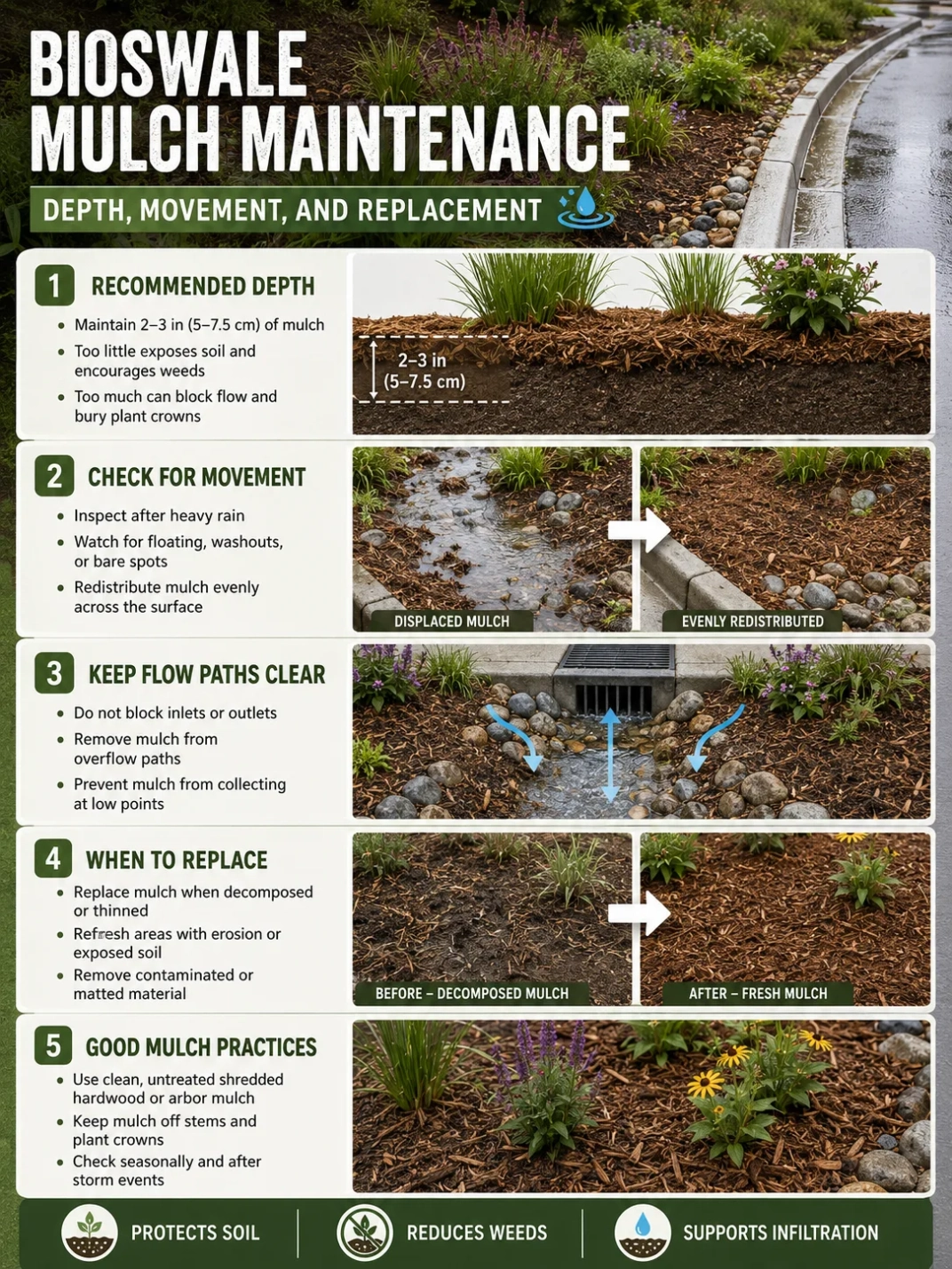
- Check mulch where it is part of the design, replacing or redistributing it if large sections have washed away.
Inspection identifies developing issues before they become expensive repairs. Removing a small sediment deposit or replacing a few damaged plants is usually much simpler than restoring a heavily clogged bioswale.
Seasonal Inspection Priorities
Spring
Inspect for winter debris, damaged vegetation, displaced mulch, and sediment left by seasonal runoff. Spring is also a good time to identify areas needing replanting before active growth begins.
Summer
Evaluate plant health during dry periods. Some temporary wilting may occur, especially during establishment, but widespread decline can indicate drainage or soil problems rather than lack of rainfall alone.
Autumn
Remove excessive leaf litter where it blocks inlets or forms dense mats over vegetation. Organic material can support healthy soil, but heavy accumulations may interfere with water movement.
Winter
Where freezing conditions occur, inspect for erosion caused by freeze-thaw cycles, displaced soil, or damage from snow management equipment if the bioswale is located beside roads or parking areas.
Signs That an Inspection Should Happen Immediately
Some conditions justify an inspection even if the routine schedule has not yet arrived.
- Water remains ponded much longer than usual after rainfall.
- Runoff bypasses the bioswale instead of entering it.
- Noticeable erosion develops along the flow path.
- Sediment buries vegetation or covers filter media.
- Large sections of plants die unexpectedly.
- Nearby construction produces muddy runoff.
- Trash repeatedly blocks curb openings or drainage inlets.
If repeated inspections reveal persistent standing water, severe erosion, or recurring structural damage, the issue may extend beyond routine maintenance. Site grading, drainage routing, soil conditions, or hydraulic capacity may need professional evaluation.
Inspection and Maintenance Are Not the Same
Inspection identifies conditions that need attention, while maintenance corrects them. A bioswale may pass an inspection with only minor maintenance, such as removing debris or replacing a few plants. Other inspections may reveal more extensive work, including sediment removal, soil rehabilitation, erosion repair, or restoration of damaged inlet and outlet structures.
Regular observation helps preserve infiltration capacity, supports healthy vegetation, and reduces the likelihood that runoff will bypass the intended drainage pathway.
FAQ
How often should a newly installed bioswale be inspected?
More frequent inspections are useful during the first growing season because plants are establishing, mulch may shift, and early drainage patterns become easier to evaluate after several rainfall events.
Should every heavy rain be followed by an inspection?
Not necessarily, but inspecting after unusually intense storms or prolonged rainfall helps identify erosion, sediment deposits, blocked inlets, and overflow issues before they worsen.
How long should water remain in a bioswale after rain?
The exact drainage time depends on soil conditions, design, and local rainfall. Water should gradually infiltrate or drain away rather than remain standing for extended periods under normal operating conditions.
Can healthy plants hide drainage problems?
Yes. Dense vegetation may appear healthy while sediment accumulates beneath the canopy or runoff bypasses parts of the intended flow path. Inspection should include both plants and drainage features.
Who usually performs bioswale inspections?
Residential owners, landscape maintenance crews, facility managers, or public works staff may perform routine visual inspections. More complex drainage or structural concerns may require qualified stormwater or landscape professionals.