Bioswale drainage works by giving stormwater a slower, planted route instead of sending it straight into a pipe or hard channel. Water enters from a roof, driveway, street, parking lot, sidewalk, or other hard surface, spreads through a shallow vegetated channel, settles some sediment, soaks into the soil where conditions allow, and leaves through an outlet, overflow route, or underdrain when the swale has taken in as much water as it can handle.
The movement is simple to picture but easy to misunderstand. A bioswale is not just a ditch with plants. It is a drainage feature shaped to manage flow, storage, infiltration, filtering, and safe overflow at the same time. The best results come from the way these parts work together.
Water does not disappear the moment it enters a bioswale. It moves in stages. Some water travels across the surface, some rests briefly in shallow ponding areas, some moves downward through soil media, and some may exit through a designed drainage path. The balance depends on rainfall, soil texture, slope, compaction, plant cover, and whether the system includes an underdrain.
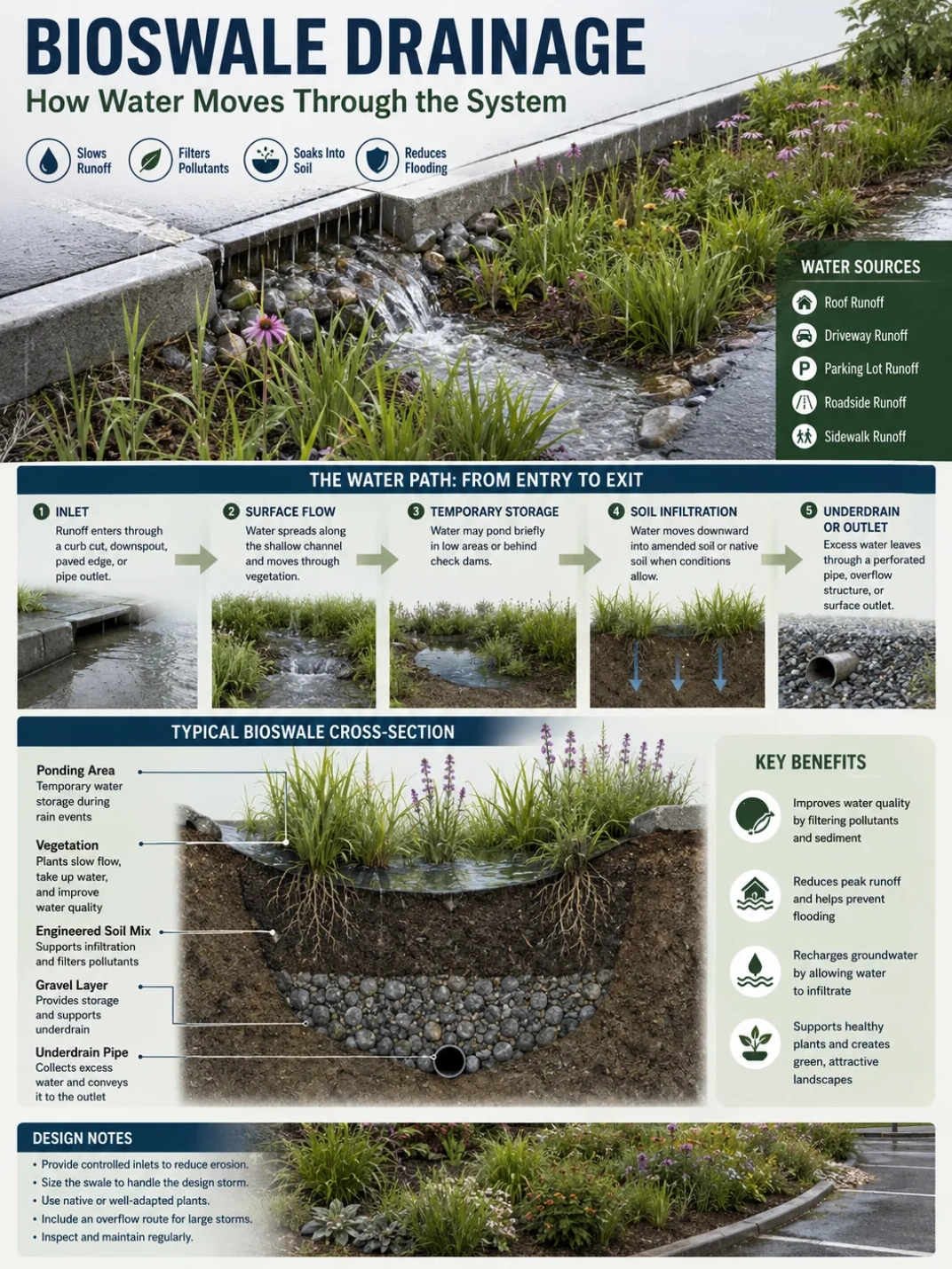
The Basic Water Path Through a Bioswale
A working bioswale drainage path usually follows a sequence: entry, spreading, slowing, filtering, soaking, conveying, and overflow. Not every site uses the exact same layout, but the water behavior is often similar.
| Stage | What Happens | Why It Matters |
|---|---|---|
| Inlet | Runoff enters from a curb cut, downspout, paved edge, pipe, or sheet flow area. | A controlled entry point helps reduce erosion and keeps water moving into the swale instead of around it. |
| Surface Flow | Water spreads along the shallow channel and moves through vegetation. | Slower water has more contact with plants, mulch, soil, and small surface roughness. |
| Temporary Storage | Water may pond briefly in low areas or behind check dams. | Short holding time can support infiltration and reduce fast runoff peaks. |
| Soil Infiltration | Water moves downward into amended soil or native soil when conditions allow. | The soil zone can filter fine particles and allow part of the runoff to leave the surface system. |
| Underdrain or Outlet | Excess water may leave through a perforated pipe, overflow structure, or surface outlet. | A planned exit route helps the system drain without uncontrolled spreading. |
Where the Water Comes From
Bioswale drainage usually begins with runoff from impervious surfaces. These are surfaces that shed water faster than soil, such as pavement, rooftops, compacted paths, and driveways. Instead of letting that water rush directly into a storm drain, the swale receives it and reshapes the flow.
Common runoff sources include:
- Roof runoff directed from downspouts
- Driveway runoff moving toward a yard or street edge
- Parking lot runoff entering through curb openings
- Roadside runoff entering a long vegetated swale
- Sidewalk or plaza runoff draining into a planted strip
The runoff source affects how the bioswale behaves. Roof runoff may carry fewer coarse particles than a parking lot edge. Roadside runoff may bring more sediment, leaf litter, grit, or debris. A public-space bioswale may need stronger inlet protection and easier maintenance access than a small residential swale.
Drainage Note: Water should enter the bioswale in a controlled way. If runoff pours into one bare spot at high speed, it can cut a channel through the soil, expose roots, displace mulch, and reduce filtering contact.
What Happens at the Inlet
The inlet is the first test of the system. It decides whether water enters smoothly or arrives with enough force to cause erosion. In many designs, the inlet may be a curb cut, level spreader, pipe outlet, rock apron, shallow depression, or paved edge that lets water pass into the swale.
A good inlet does three things. It directs water into the swale, slows the first rush, and spreads flow across a wider area. This matters because bioswales work better when water has contact with the channel, not when it shoots through a narrow trench like a small stream.
Inlets often collect the most sediment because heavier particles drop out when fast water slows. That is useful, but it also means the inlet needs inspection. A clogged inlet can make water bypass the bioswale, pond in the wrong place, or cut around the edge of the planted area.
How the Channel Slows Surface Flow
Once water enters, the bioswale channel changes its speed. The shallow shape, side slopes, plants, mulch, stones, soil surface, and small grade changes create friction. That friction is not a flaw. It is part of the drainage function.
Fast runoff has less time to drop sediment or soak into the soil. Slower runoff has more contact with plant stems, leaf litter, mulch, roots, and filter media. This contact helps the swale treat the water while still moving it toward a safe outlet.
The channel may be straight, gently curved, or shaped to fit the site. A longer flow path can give water more contact time, but only when the slope, soil, and outlet are planned together. A long swale with compacted soil and blocked outlets may still perform poorly.
Design Note: A bioswale is not meant to hold water indefinitely. It should slow water enough to support infiltration and filtering, while still draining through a planned surface or subsurface route.
Surface Ponding and Temporary Storage
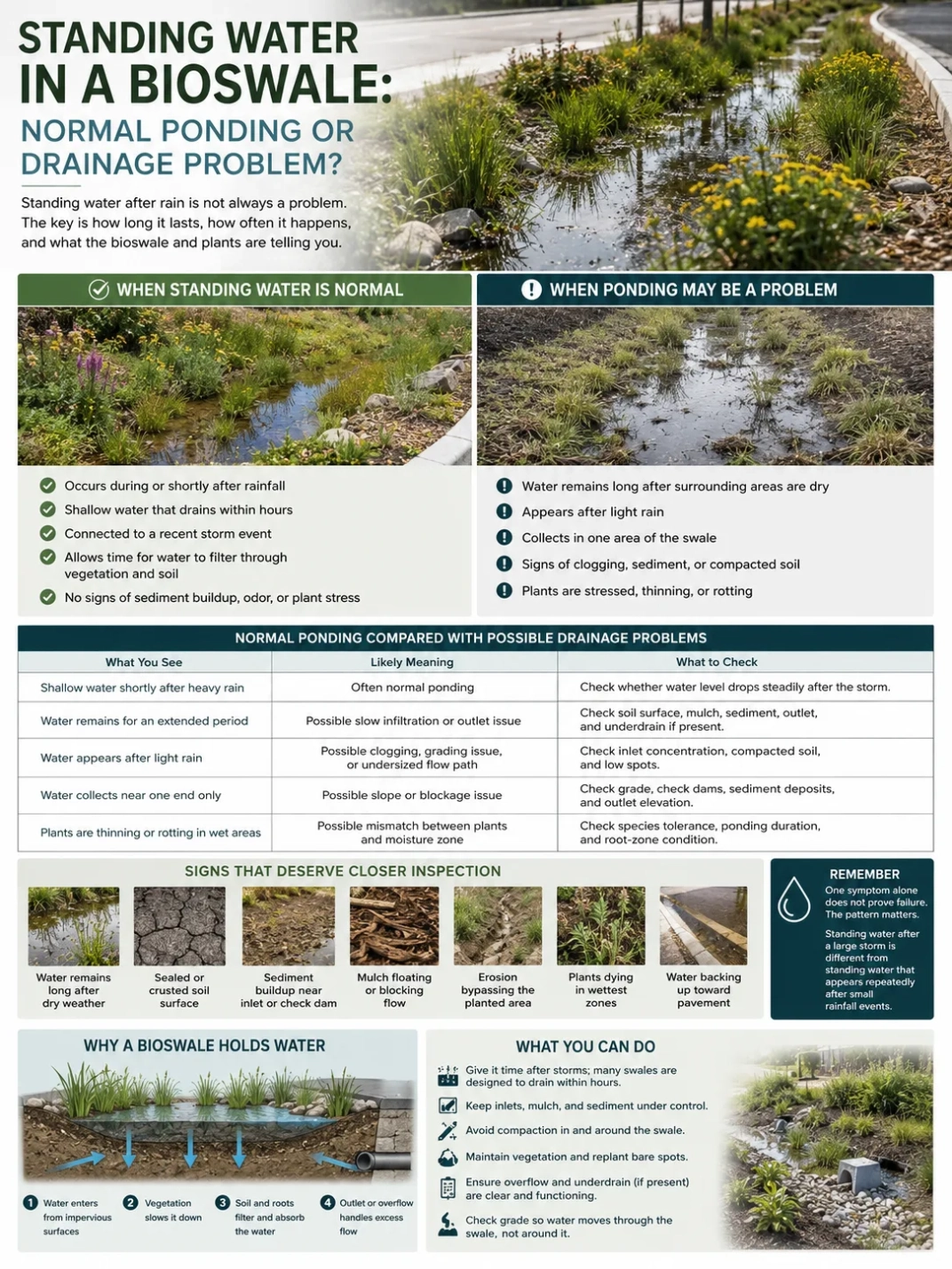
During rain, water may collect shallowly in the bottom of the bioswale. This temporary ponding gives runoff time to settle and soak into the soil. It is different from permanent standing water, which may point to clogging, poor soil drainage, outlet problems, or a design that does not match the site.
Some bioswales use check dams, small raised features placed across the channel. These can slow water, reduce erosion, and create small storage zones. Check dams may be made from stone, wood, soil, or other site-appropriate materials, depending on the design and local rules.
Temporary storage is especially useful during moderate rainfall. During larger storms, the bioswale may fill faster than the soil can absorb water. That is why the outlet and overflow route are just as important as the planted channel.
How Water Soaks Into the Soil
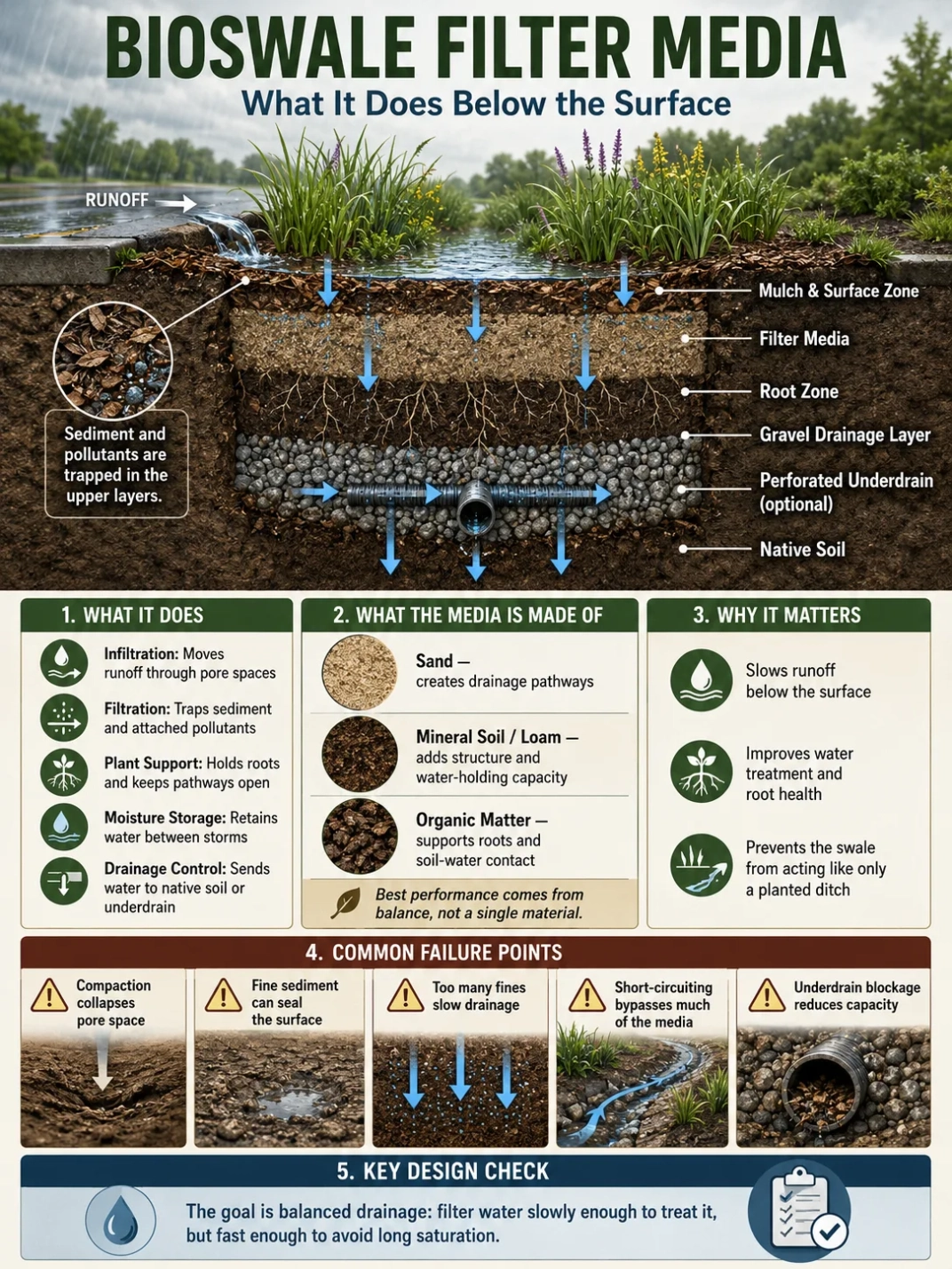
Infiltration is the downward movement of water into soil. In a bioswale, infiltration may happen through native soil, amended soil, engineered soil media, or a layered filter media profile. The exact approach depends on site conditions and project goals.
Soil texture shapes drainage. Sandy soils often let water pass more quickly. Clay-rich soils may drain more slowly. Compacted soils can block infiltration even when the original soil type seems suitable. For that reason, soil testing and site observation are often more useful than guessing from appearance alone.
The soil zone can also filter runoff. As water moves downward, fine particles may be trapped in pore spaces, organic matter, root zones, and soil surfaces. Some pollutants can attach to soil particles or be processed by plant and microbial activity. The level of treatment varies by design, soil chemistry, maintenance, and runoff type.
Soil Note: A bioswale with poor infiltration can still convey runoff, but it may not provide the same volume reduction as a design where water can move into the ground. Where native soils drain slowly, an underdrain or amended media may be considered during design review.
The Role of Plants in Moving Water
Plants do more than make the swale look finished. Their stems slow shallow flow. Their roots help hold soil in place. Their root channels can support water movement through the upper soil layer. Their seasonal growth also affects how the surface catches sediment and leaf litter.
Good bioswale planting often uses species that can handle both wet and dry periods. The bottom of the swale may stay moist after rain, while upper side slopes may dry faster. That means planting zones matter. A plant that fits the upper edge may fail in the lowest part, and a moisture-loving plant may not fit a dry slope.
Native grasses, sedges, rushes, shrubs, and deep-rooted perennials are often considered because they can support soil structure and tolerate local conditions when chosen well. The right plant choice still depends on climate, sun exposure, maintenance level, salt exposure, local species guidance, and how often the swale receives runoff.
Planting Note: Dense plant cover helps protect the channel from erosion. Bare soil in the main flow path is often a warning sign, especially near inlets, bends, and outlet areas.
Underdrains: When Water Leaves Below the Surface
Some bioswales include an underdrain, usually a perforated pipe placed below the soil media or within a drainage layer. This pipe collects water that has moved down through the soil and carries it to a safe discharge point.
An underdrain does not mean the bioswale has failed. It means the design is using soil filtering before releasing water through a controlled subsurface route. This can be useful where native soil drains slowly, groundwater sits high, or a site cannot rely only on infiltration.
Without an underdrain, more water may rely on infiltration into native soil or surface discharge through the outlet. With an underdrain, the system may act more like a planted filter channel. Both approaches can be valid when matched to the site.
Outlet and Overflow Behavior
Every bioswale drainage system needs a planned way for extra water to leave. Even a well-built swale can receive more water than it can hold or infiltrate during a large storm. The outlet and overflow route protect the swale from damage and help prevent water from spreading into unwanted areas.
Surface outlets may be low points, spillways, curb openings, overflow risers, or connections to another drainage feature. Subsurface outlets may connect to underdrains. The right outlet depends on site grading, local drainage rules, nearby structures, and the larger stormwater system.
A safe overflow route should be visible in the grading. Water should have a place to go after the bioswale reaches capacity. That route may lead to another vegetated area, a storm drain, a detention feature, or another approved discharge point. It should not rely on accidental gaps, eroded edges, or water finding its own way across a property.
Site Planning Note: Where runoff could affect a building foundation, basement, neighboring property, public sidewalk, road edge, or utility area, bioswale drainage should be reviewed with local site conditions in mind.
Bioswale Drainage in Small and Large Storms
A bioswale does not behave the same way in every rainfall event. During a light shower, runoff may enter slowly and soak into the soil with little visible surface flow. During a moderate storm, water may move along the channel, pond shallowly, and drain through soil and outlet routes. During a larger storm, overflow may become part of normal system behavior.
This is why bioswale drainage should not be judged only by whether water appears in the channel. Water in the swale during rain can be expected. The better question is whether the water enters cleanly, moves slowly, avoids erosion, drains within a suitable period for the design, and leaves through the intended path.
Persistent standing water after rainfall may need attention, especially if it lasts longer than expected for that system. Possible causes include sediment buildup, clogged media, compacted soil, blocked outlets, undersized overflow, or plant loss in the main flow path.
How Sediment Changes the Flow Path
Sediment is part of stormwater runoff, especially near roads, driveways, construction areas, slopes, and parking lots. A bioswale can trap some of that material as water slows. Over time, though, sediment can also change how water moves.
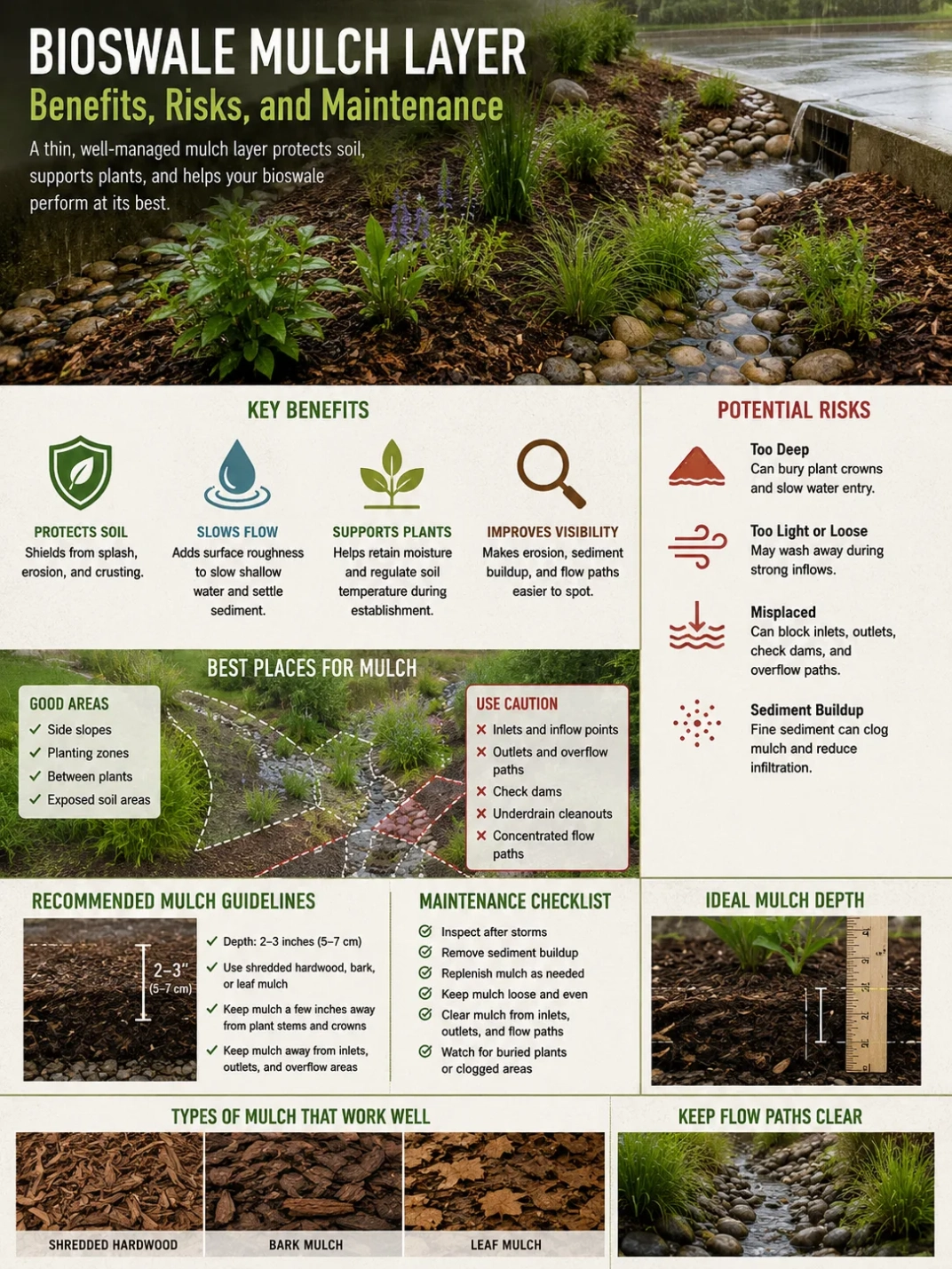
Fine sediment may seal the soil surface. Coarse sediment may build up near the inlet. Leaves and matted organic debris may block flow into the soil. Mulch can move during storms and collect around outlets. These small changes can shift water from broad, shallow flow into narrow paths.
Once water starts using one narrow path, erosion can deepen it. That reduces contact with plants and soil media. It can also make the swale behave more like a ditch than a filtering drainage feature.
Maintenance Note: The inlet, low-flow path, and outlet are the first places to check after storms. Removing sediment early is usually easier than repairing a channel after erosion has formed.
Where Bioswale Drainage Can Fail
Bioswale problems often begin when water moves faster, slower, or in a different direction than intended. The issue may not be the plants. It may be the way water enters, the soil condition, the grade, or the outlet.
- Concentrated inlet flow: Water enters too fast and cuts into the soil.
- Compacted soil: Water cannot move downward at the expected rate.
- Clogged surface: Fine sediment, leaves, or debris reduce infiltration.
- Poor plant cover: Bare areas allow erosion and faster flow.
- Blocked outlet: Water backs up and ponds longer than intended.
- No safe overflow route: Larger storms push water into nearby areas without control.
- Wrong slope: A channel that is too flat may pond poorly, while a steep one may erode.
These problems are often connected. For example, a clogged inlet may push water around the side of the swale. That bypass can erode the edge, reduce treatment, and send runoff toward a place the design did not intend.
How Bioswale Drainage Differs from a Pipe or Ditch
A storm pipe is built mainly to move water away. A basic drainage ditch also focuses on conveyance. A bioswale still conveys water, but it adds vegetation, soil contact, shallow storage, and filtering time.
That difference changes the drainage goal. The aim is not just speed. The aim is controlled movement. Water should slow enough to interact with the planted soil system, then leave through infiltration, an underdrain, a surface outlet, or overflow route.
| System | Main Water Movement | Best Fit |
|---|---|---|
| Bioswale | Shallow surface flow with soil contact, plant friction, infiltration, and planned overflow. | Runoff areas where slowing, filtering, and conveyance are all useful. |
| Drainage Ditch | Open-channel flow that moves water along a low area. | Simple conveyance where treatment is not the main goal. |
| French Drain | Subsurface flow through gravel and pipe. | Managing below-surface water or wet soil zones, depending on site conditions. |
| Rain Garden | Shallow basin storage with infiltration in a planted depression. | Smaller areas where water can collect and soak in rather than travel along a channel. |
This comparison is not about one system being better in every case. It is about matching water movement to the site. A narrow roadside area may fit a bioswale better than a round rain garden. A wet foundation area may need a different drainage strategy. A parking lot edge may need pretreatment, inlet control, and durable overflow planning.
What to Check Before Planning Bioswale Drainage
Before planning a bioswale, it helps to watch how water already moves across the site. The best clues often appear during or just after rain. Look for where water starts, where it speeds up, where it drops sediment, where it ponds, and where it leaves the property.
Useful site checks include:
- Runoff source: Identify whether water comes from a roof, driveway, street, parking area, slope, or mixed surface.
- Entry point: Decide how water can enter without cutting into the soil.
- Flow path: Trace the route water will take through the swale.
- Soil condition: Check for compaction, slow drainage, fill soil, or disturbed areas.
- Outlet location: Confirm where water will go after the swale fills.
- Overflow route: Plan for storms larger than the swale can manage.
- Maintenance access: Make sure inlets, sediment zones, and outlets can be reached.
Residential projects may also need extra care near foundations, basements, property lines, septic areas, retaining walls, or public drainage routes. Public and commercial projects often need design review, calculations, and local approval because they receive larger runoff volumes and higher sediment loads.
Why Maintenance Affects Drainage Performance
Bioswale drainage changes over time. Plants grow, roots expand, mulch breaks down, sediment settles, and debris collects. These changes can help or hurt performance, depending on how the system is maintained.
Routine inspection focuses on the parts that guide water. Inlets should be open. Outlets should be clear. The main flow path should stay vegetated and stable. Sediment should not build up so much that water bypasses the soil surface. Mulch should not block drains or float into concentrated piles after storms.
Plant care is also drainage care. Thick, healthy cover protects soil and slows flow. Dead patches, invasive weeds, exposed soil, or compacted maintenance paths can change the way water moves through the system.
Maintenance Note: Inspection after the first few storms can reveal whether water is following the intended path. Early fixes may include adding erosion protection at the inlet, clearing debris, replanting bare areas, or correcting minor sediment buildup.
A Simple Way to Visualize the System
Think of bioswale drainage as a layered route, not a single drain line. The top layer moves water across the planted channel. The soil layer receives and filters part of that water. The bottom layer may infiltrate into native soil or connect to an underdrain. The overflow layer handles water that exceeds the swale’s working capacity.
The system works best when those layers support each other. Surface flow should not be so fast that it skips soil contact. Soil should not be so compacted that water sits too long. The outlet should not be so restricted that every storm becomes a ponding problem. Overflow should not be an afterthought.
That is the practical value of a bioswale: it turns runoff into a managed sequence. Water enters, slows, spreads, filters, soaks, drains, and exits through a planned path.
FAQ
Does a bioswale drain water or hold water?
A bioswale does both for a limited time. It can hold shallow runoff briefly so water can slow, settle, and soak into the soil, but it should also have a planned way to drain through infiltration, an outlet, overflow route, or underdrain.
Where does water go after it enters a bioswale?
Water may move along the surface channel, soak into the soil, pass through filter media, enter an underdrain, or leave through a surface outlet. During larger storms, extra water may use a designed overflow path.
Why is water standing in my bioswale after rain?
Some shallow ponding during and shortly after rain can be normal. Water that remains longer than expected may point to clogged soil, compacted media, blocked outlets, poor grading, heavy sediment buildup, or soil that drains too slowly for the design.
Does every bioswale need an underdrain?
No. Some bioswales rely on infiltration into native soil and surface overflow. Others use an underdrain where native soils drain slowly, groundwater is high, or the design needs a controlled subsurface outlet.
Can a bioswale handle roof and driveway runoff?
A bioswale can be used for roof or driveway runoff when the site has a suitable flow path, soil conditions, inlet protection, and overflow route. Water should be directed away from foundations and neighboring properties according to local drainage requirements.
What part of a bioswale controls drainage the most?
No single part controls everything. Drainage depends on the inlet, slope, channel shape, plant cover, soil media, compaction, underdrain if present, outlet, overflow route, and maintenance condition.